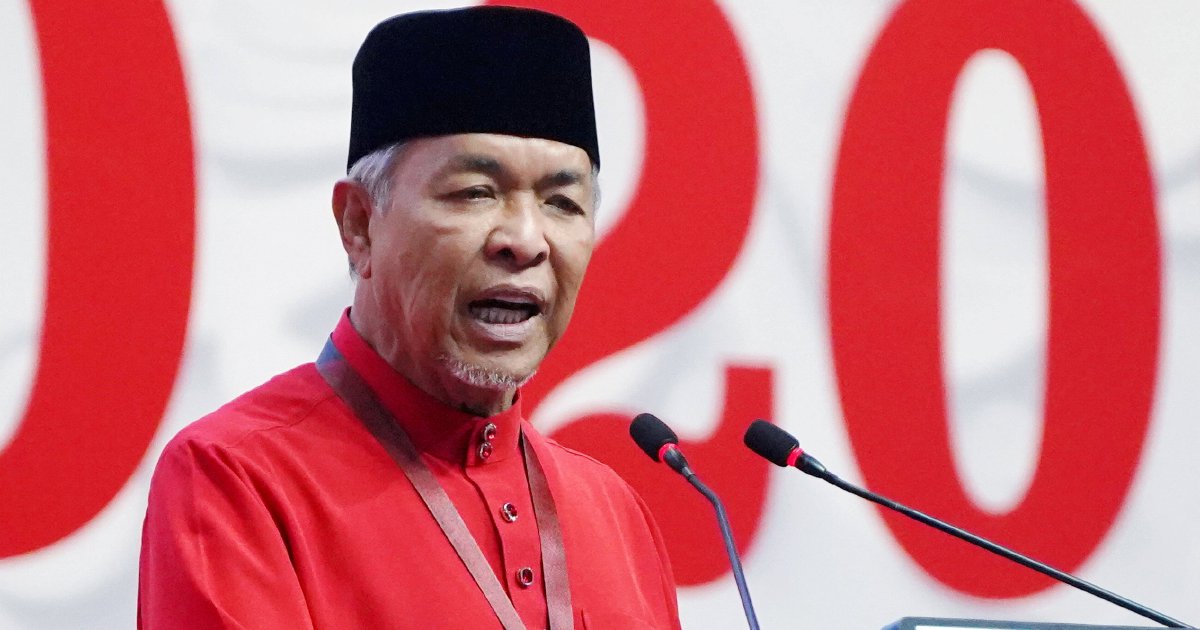
In a firm stance on corporate accountability, BN chairman and Umno president Datuk Seri Dr Ahmad Zahid Hamidi has declared that neither his coalition nor the ruling party will tolerate misconduct uncovered by the ongoing Royal Commission of Inquiry into Tabung Haji. The pledge signals the leadership's determination to confront potential institutional failures at the Hajj savings institution, signalling that political affiliation or party membership will offer no protection to individuals implicated in wrongdoing.
The Tabung Haji RCI, established to scrutinise governance practices and financial stewardship at the pilgrim fund, represents one of the most closely watched institutional reviews in Malaysia's recent corporate history. The inquiry's scope encompasses potential criminal breach of trust, misappropriation of funds, and systemic governance lapses that may have affected millions of Malaysian depositors. Zahid's public commitment to pursue accountability regardless of party ties reflects broader pressure on Malaysia's political establishment to demonstrate institutional integrity, particularly given the nation's emphasis on anti-corruption efforts and transparent governance in recent years.
The former deputy prime minister's declaration carries particular weight given his position within Umno's hierarchy and his role in shaping party policy directions. By explicitly ruling out political protection or compromise, he addresses longstanding public concerns about whether Malaysia's major political coalitions will prioritise factional loyalty over institutional accountability. This framing acknowledges the reputational damage that could accrue to BN if party members were perceived as benefiting from preferential treatment in the face of alleged misconduct.
Tabung Haji, established as a federal statutory body to facilitate Muslim Malaysians' savings for the Islamic pilgrimage, holds significant cultural and social importance across the nation. The institution manages funds from millions of contributors, making governance failures particularly consequential for ordinary Malaysians' financial security and trust in state-managed institutions. Any findings of systemic wrongdoing could undermine public confidence in similar bodies and prompt broader questions about regulatory oversight of government-linked companies and statutory authorities.
The RCI's investigative framework extends beyond individual culpability to encompass institutional weaknesses that enabled misconduct. Poor governance structures, inadequate internal controls, and ineffective oversight mechanisms represent systemic vulnerabilities that compound the impact of individual wrongdoing. Zahid's commitment suggests receptiveness to recommendations for structural reforms that extend beyond identifying and prosecuting specific individuals, potentially addressing the conditions that permitted misconduct to occur or persist.
Malaysia's political landscape has increasingly emphasised anti-corruption credentials as a differentiating factor between coalitions and competing political blocs. The apparent willingness of BN's leadership to distance the party from potential misconduct aligns with evolving expectations regarding public sector integrity. However, the credibility of such commitments ultimately depends on implementation, requiring demonstrated follow-through when the RCI produces findings implicating specific individuals with party connections.
The inquiry's potential findings carry implications extending beyond Tabung Haji itself, as they may influence public and regulatory scrutiny of other government-linked institutions. If the RCI uncovers systemic vulnerabilities or widespread governance failures, policymakers may face pressure to implement reforms across multiple statutory bodies and federal agencies. Such broader institutional changes could reshape how Malaysia's public sector manages risk and ensures accountability in the administration of public funds and citizen savings.
International perceptions of Malaysia's commitment to fighting institutional corruption and promoting transparent governance may also be affected by the RCI process and its aftermath. Malaysia's standing on global transparency indices and its attractiveness to international investors partly depend on demonstrated capacity to address corporate misconduct within major institutions. Credible institutional responses to RCI findings could strengthen Malaysia's governance reputation, while perceived protection of wrongdoers could undermine such efforts.
The statement from Zahid also reflects awareness among BN's leadership that the opposition would vigorously exploit any appearance of party members receiving preferential treatment in accountability matters. In Malaysia's increasingly competitive political environment, controlling the narrative around institutional responses to misconduct has become strategically important. By publicly committing to accountability regardless of party affiliation, BN attempts to preempt accusations that it prioritises factional interests over public welfare.
Citizens and observer organisations monitoring the RCI process and subsequent implementation of its recommendations will likely scrutinise whether political commitments translate into substantive action. The credibility of Zahid's pledge will ultimately be judged against specific outcomes, including whether individuals implicated in the inquiry face appropriate legal consequences and whether institutional reforms adequately address identified vulnerabilities. This accountability test extends to parliament, which must assess the adequacy of RCI recommendations and potential legislative responses.
The inquiry represents a critical juncture for demonstrating Malaysia's capacity for institutional self-correction in the face of alleged governance failures affecting millions of citizens. The pathway forward requires not only identifying those responsible for misconduct but also implementing systemic reforms that prevent recurrence. Zahid's commitment to pursue accountability across party lines, if genuinely implemented, could establish important precedent for how Malaysia's political establishment handles future institutional crises and corruption findings.

