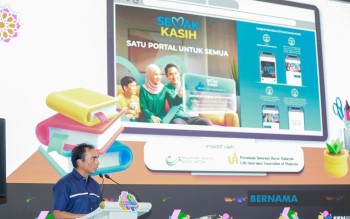
Bank Negara Malaysia has introduced a digital solution to address a growing problem affecting thousands of Malaysian households: unclaimed insurance and takaful benefits left behind by deceased relatives. The Semak Kasih portal, launched at the Terengganu Financial Literacy Carnival here, aims to streamline the process of discovering and recovering these forgotten protections, which currently total approximately 50,000 unclaimed policies and takaful certificates involving death benefits according to industry associations.
Deputy Governor Adnan Zaylani Mohamad Zahid unveiled the initiative as part of BNM's broader effort to enhance financial literacy and protection across Malaysia. The portal addresses a significant gap in Malaysia's financial ecosystem: many families remain unaware that their deceased loved ones had arranged insurance or takaful coverage specifically intended to provide financial relief during crisis periods. These forgotten benefits represent a substantial but invisible safety net that could shield households from catastrophic expenses related to medical emergencies, property damage, and other unforeseen hardships.
The development reflects collaboration between BNM and industry bodies including the Life Insurance Association of Malaysia and the Malaysian Takaful Association. Rather than relying solely on traditional outreach methods—such as physical letters and agent visits that have proven inconsistently effective—the digital portal democratises access to this information. Beneficiaries can now independently verify coverage existence and initiate claims directly through a single consolidated platform, eliminating the need to contact multiple providers or navigate complex documentation systems.
Adnan Zaylani emphasised that insurance and takaful arrangements represent more than bureaucratic financial products; they constitute essential protection mechanisms designed to preserve family welfare during periods of vulnerability. In Malaysian society, where immediate family members often bear responsibility for funeral expenses, outstanding debts, and living costs after a primary earner's death, these benefits provide critical breathing room for grieving households to stabilise their finances and adapt to changed circumstances.
The Semak Kasih initiative arrives amid broader concerns about Malaysian financial preparedness. Research presented at the carnival revealed that approximately 37 per cent of Malaysians engage in impulsive online purchasing behaviour, while 26 per cent carry unsustainable debt burdens. These statistics underscore a troubling pattern: while many Malaysians accumulate financial obligations rapidly, fewer demonstrate equivalent discipline in building protective coverage or developing long-term financial resilience strategies.
Beyond the Semak Kasih portal, BNM has implemented comprehensive support mechanisms targeting different demographic segments and economic circumstances. The central bank allocated RM5 billion through the SME Stabilisation Relief Facility to assist businesses impacted by regional conflicts, offering working capital financing up to RM750,000. Simultaneously, microfinancing schemes provide access to capital up to RM100,000 without requiring guarantors or collateral—critical provisions for Malaysia's estimated three million small enterprises that typically lack substantial asset bases.
The iTekad initiative represents another complementary intervention, having already benefited more than 14,000 participants nationally, including approximately 600 in Terengganu, by directly improving income generation and living standards. These programmes acknowledge that financial security emerges not solely from purchasing insurance products, but from enabling employment opportunities, entrepreneurial ventures, and income diversification across society's economic strata.
Financial education constitutes the underlying pillar supporting these initiatives. The newly developed Financial Education Forum website functions as a centralised knowledge repository designed to serve all population segments, including persons with disabilities who historically face barriers accessing conventional financial advisory services. Companion programmes including the MyDuitStory competition and FEN Proaktif 2.0 in partnership with Universiti Malaysia Terengganu introduce financial management principles to student populations before they encounter real-world economic pressures and decision-making responsibilities.
Adnan Zaylani's messaging emphasised individual agency within broader economic constraints. While policymakers cannot control international market fluctuations or technological disruption, households can systematically manage spending patterns, prioritise protection mechanisms, and cultivate savings discipline from childhood onward. The compounding effect of consistent early-age savings accumulation remains one of finance's most powerful mechanisms for generating long-term security, yet remains underutilised across Malaysian demographics accustomed to immediate consumption patterns.
For Malaysian readers, the Semak Kasih portal carries specific relevance to family financial planning conversations. The portal's existence signals BNM's formal recognition that beneficiary ignorance—rather than provider unwillingness—creates the primary barrier preventing claims processing. Families should now engage in deliberate discussions about insurance and takaful arrangements held by older generations, treating this information with the same importance afforded to property deeds or bank account documentation. Such conversations, while potentially uncomfortable, represent essential groundwork for preventing substantial financial resources from remaining perpetually unclaimed.
The portal's launch also reflects evolving regulatory philosophy emphasising proactive consumer protection over reactive complaint management. Rather than waiting for frustrated beneficiaries to pursue regulatory interventions, BNM positioned itself as an enabler of efficient benefit distribution. This approach aligns with regional trends toward consumer-centric financial regulation, particularly across Southeast Asia where regulatory authorities increasingly recognise that financial stability depends substantially on household-level economic resilience.
Looking forward, the Semak Kasih initiative establishes baseline infrastructure for broader financial inclusion objectives. As digital literacy expands across Malaysian demographics, similar portals could address other unclaimed financial assets—dormant accounts, unclaimed dividends, or forgotten investment certificates—creating comprehensive financial transparency systems benefiting millions of households currently unaware of resources rightfully belonging to them.

