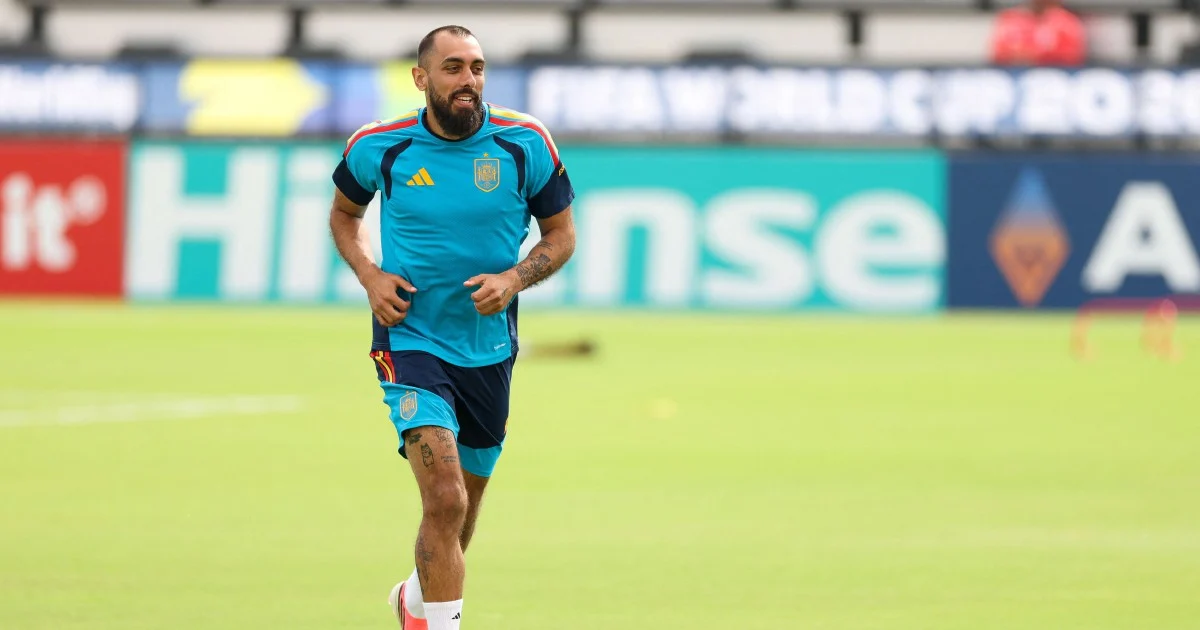
Borja Iglesias has carved out a distinctive identity in professional football, one defined not by trophy cabinets or goal tallies alone, but by a determination to engage with difficult social questions that most athletes avoid. The Spanish striker, who represented his nation at the World Cup, refuses to confine his public discourse to the familiar terrain of match statistics and training sessions. Instead, he openly discusses matters ranging from the humanitarian crisis in Gaza to the persistent problem of homophobia within football, wielding his platform with a directness that has invited both admiration and criticism.
This willingness to speak candidly on contentious topics has earned Iglesias an unusual epithet within the sport: some have taken to calling him "the alien of football," a designation that reflects how unusual his approach appears within an industry where athletes typically navigate public statements with considerable caution. His decision to paint his nails, a personal choice that might seem unremarkable in many other contexts, takes on greater significance within the culture of professional sport, where masculine presentation remains tightly policed. For Iglesias, such gestures represent a coherent philosophy about authenticity and individual expression that extends logically into his willingness to address systemic injustices.
The Spanish forward's approach to activism differs markedly from the cautious positioning adopted by many of his peers. Where some footballers content themselves with donating anonymously to causes or issuing carefully worded statements through official channels, Iglesias has chosen direct engagement. He appears willing to accept the discomfort and potential backlash that accompanies public stands on polarising issues. This stance carries particular significance given football's traditionally conservative institutional culture, where club managements frequently discourage players from endorsing any position that might alienate supporters or commercial partners.
For Malaysian and Southeast Asian audiences, Iglesias's approach offers an instructive counterpoint to regional sporting cultures where athlete activism remains relatively nascent. The phenomenon of prominent footballers using their visibility to advocate for social change remains far less developed in Southeast Asia than in Western markets, partly reflecting different historical trajectories and partly stemming from structural constraints within the sport itself. Iglesias's example demonstrates both the possibilities and the costs associated with such activism within a globally interconnected sporting ecosystem.
The striker's engagement with the Gaza crisis represents a particularly significant dimension of his public activism. This issue has polarised global opinion, creating pressure on public figures to either remain silent or carefully modulate their positions. By speaking openly about Gaza, Iglesias has positioned himself alongside a smaller cohort of athletes willing to address Israeli-Palestinian dynamics, a topic that many brands and sports organisations prefer that their ambassadors avoid entirely. His candour on this matter has generated substantial online debate, with supporters applauding his moral courage and detractors questioning whether footballers should engage with geopolitical issues at all.
Equally important to Iglesias's public stance has been his willingness to confront homophobia within football itself. This remains a significant problem within the sport, manifesting through discriminatory language from supporters, institutional barriers facing LGBTQ+ athletes, and a broader cultural resistance to sexual orientation diversity among players and coaching staff. By positioning himself as an advocate on these issues, Iglesias helps expand the boundaries of permissible discussion within professional sport. His visibility as a World Cup player lends particular weight to such interventions, as elite athletes retain disproportionate influence over public discourse within their sport.
The cumulative effect of these various forms of expression—from sartorial choices to explicit political commentary—constitutes a comprehensive challenge to football's traditional norms around what constitutes appropriate behaviour for professional players. Institutions within sport have long policed player behaviour through both explicit rules and informal social pressure, incentivising conformity to conservative standards of presentation and opinion. Iglesias's refusal to comply with these expectations effectively broadens the conversation about what footballers can and should discuss in public forums.
For Southeast Asian sports audiences, Iglesias's example raises important questions about the role of athletes as public voices. The region has produced numerous sporting figures of comparable or greater prominence, yet few have deployed their platforms as explicitly for social commentary. This discrepancy reflects not merely individual choices but structural differences in how professional athletes in Southeast Asia relate to political and social discourse. Understanding these differences becomes particularly important as globalisation exposes regional sporting communities to international standards and expectations around athlete activism.
The Spanish striker's position also illuminates broader tensions within contemporary professional football regarding commercialisation and authenticity. As sports organisations increasingly market athletes as lifestyle brands and cultural influencers, the stakes associated with player speech have simultaneously risen. Companies investing millions in athlete endorsements face reputational risk should those athletes make public statements that alienate portions of their customer base. Iglesias's willingness to accept these risks, and the costs they might impose on his commercial opportunities, represents a genuine choice to prioritise conviction over financial maximisation—a stance increasingly rare among elite athletes across all sports.
Looking forward, Iglesias's trajectory will likely influence broader conversations within football about the boundaries of acceptable player activism. Whether his approach encourages greater willingness among other athletes to speak candidly on social issues, or whether institutional pressures ultimately reassert themselves against such outspokenness, remains an open question. What seems certain, however, is that his example has permanently altered perceptions of what professional footballers can achieve through their public voices. In an era when athlete advocacy increasingly shapes global conversations, Iglesias has demonstrated that genuine engagement with difficult questions remains possible, even within the highly commercialised and conservative world of professional sport.

