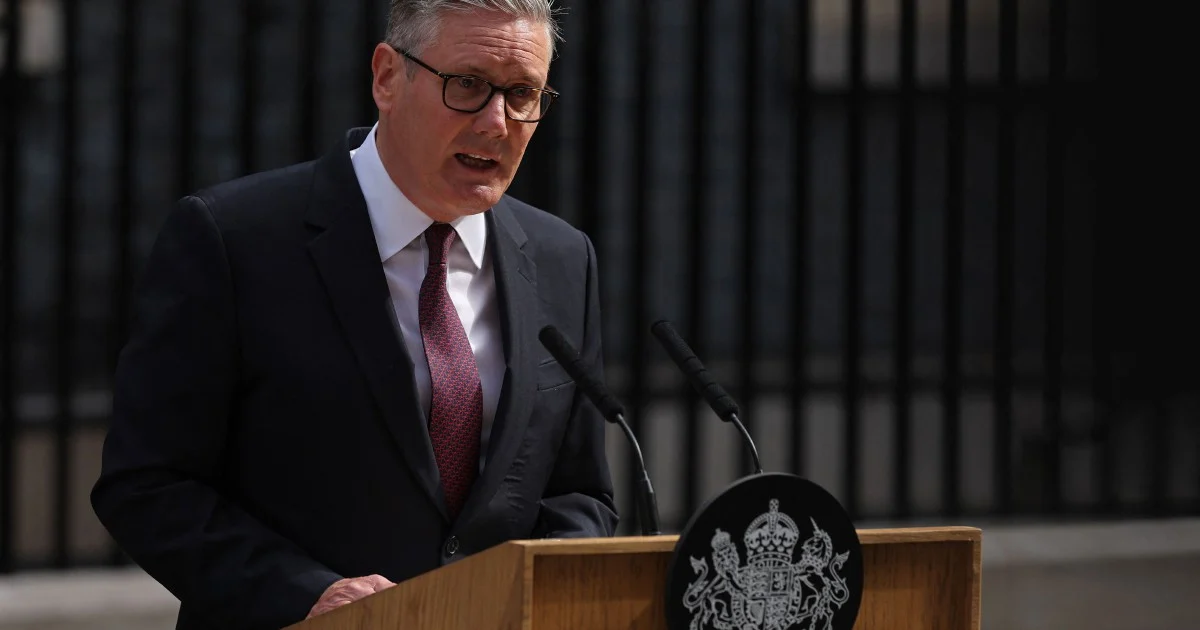
Prime Minister Keir Starmer confirmed on Monday that he would be stepping down from office, initiating a process to identify a successor before lawmakers return to Westminster in September. The announcement marks another abrupt change at the helm of British politics, setting the stage for the nation to cycle through its seventh chief executive in just ten years—a pattern that underscores the volatility affecting the UK's highest office and raising questions about institutional stability at a critical time.
The timeline for finding Starmer's replacement compresses an already complex selection process into a matter of weeks. With parliament expected to resume in early September, the Labour Party leadership will need to move swiftly through nomination procedures, candidate vetting, and party member voting. This accelerated schedule stands in sharp contrast to more leisurely transitions of decades past, when parties had months to deliberate and test the mettle of potential successors.
Britain's prime ministerial succession system differs markedly from the American model and other Westminster democracies. Rather than a national election immediately upon a leader's departure, the ruling party—in this case Labour—must first identify a new leader from among its Members of Parliament. The process begins with nominations: prospective candidates require backing from a minimum threshold of Labour MPs, a hurdle designed to ensure serious contenders rather than frivolous challengers.
Once nominations close and candidates meet the threshold, the Labour Party membership votes to determine the winner. The current rules require contenders to secure support from at least 34 of the party's 326 MPs to proceed to the membership ballot. This two-stage approach has been refined over recent years, though the specific percentages and procedures have shifted multiple times as Labour sought to balance grassroots democracy against perceived vulnerabilities in past contests.
The membership vote carries significant weight, as it reflects the broader Labour constituency beyond the parliamentary cohort. However, the concentrated nature of British politics means that the victor in a party leadership contest automatically becomes Prime Minister, since the ruling party controls the House of Commons. Unlike a general election requiring public engagement across the entire electorate, this succession hinges entirely on Labour dynamics and preferences.
Historical context proves illuminating for Malaysian and Southeast Asian observers accustomed to different systems of governance. A decade ago, David Cameron held the office; since his 2016 departure, Britain has been led by Theresa May, Boris Johnson, Liz Truss, Rishi Sunak, and now Starmer's exit opens a new chapter. This frenetic turnover contrasts sharply with more stable regional patterns, where leaders typically serve longer tenures. Such instability raises concerns about policy continuity and international credibility.
Starmer's resignation arrives amid internal Labour tensions and broader dissatisfaction with his administration's direction. The party faces pressure from multiple flanks: managing expectations among a membership that supported his leadership nearly two years ago, addressing Parliamentary grievances, and charting a course that distinguishes his successor from perceived missteps. Any new leader must immediately grapple with economic challenges, public service pressures, and Labour's positioning ahead of inevitable electoral reckoning.
For neighbouring nations and trading partners, frequent leadership changes create complications. Bilateral relationships, trade negotiations, and diplomatic initiatives require consistent messaging and sustained engagement. When cabinet-level positions turn over repeatedly within a single term, institutional memory fragments and policy coherence suffers. Southeast Asian governments, many of which maintain long-standing commercial ties with Britain post-Brexit, must invest resources in constantly building rapport with new administrations.
The compressed timeline also risks alienating candidates who might otherwise compete. High-profile Labour figures may decline to stand if they perceive insufficient time to campaign and articulate their vision, potentially limiting the field to ambitious younger MPs or those already positioned for a bid. A rushed process can produce a leader chosen more by default than robust deliberation, raising questions about legitimacy and mandate.
Regional implications warrant consideration. Britain's approach to Asia-Pacific relationships, investment policies, and strategic partnerships may shift depending on the new Prime Minister's priorities and perspectives. Some potential successors have previously articulated distinct visions regarding engagement with China, India, and Southeast Asian economies. The transition period, though brief, will signal whether Labour maintains continuity on key dossiers or plots a new direction.
The Labour Party's mechanisms for selecting leaders reflect broader British institutional flexibility—the capacity to reshape rules and processes relatively swiftly when circumstances demand. Yet this adaptability, while sometimes valuable, also contributes to the impression of institutional fragility when rapid leadership turnover becomes routine. Voters and international observers alike increasingly question whether such frequent changes serve genuine democratic expression or merely reflect entrenched elite contestation.
As Labour moves toward its September deadline, candidates will position themselves as agents of renewal or stability—promising either fresh approaches or pragmatic consolidation depending on which resonates most strongly. The next Prime Minister will inherit multiple crises and face skepticism from a public fatigued by successive leadership upheavals. For Malaysia and the region, the outcome carries implications extending well beyond Westminster's gates.

