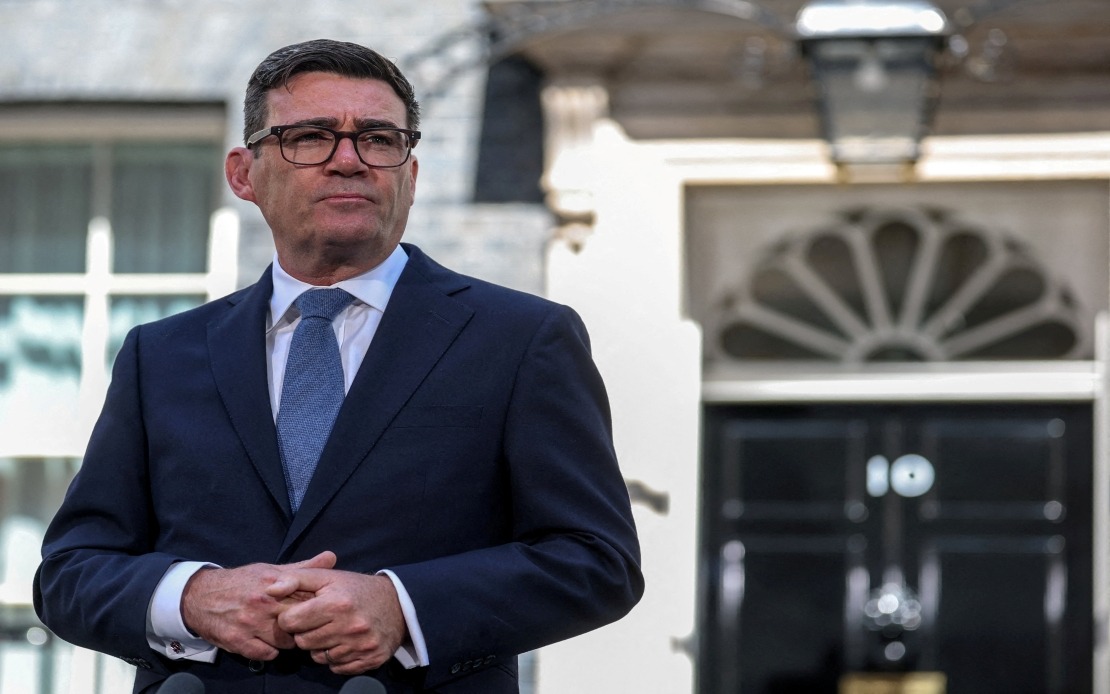
British Prime Minister Andy Burnham has begun operations from a newly established government office in Manchester this week, signalling a fundamental restructuring of how Westminster conducts economic policymaking. The facility, known colloquially as No10 North and housed within Heron House in central Manchester, represents one of the most visible symbols yet of the government's commitment to moving decision-making power away from the traditional corridors of London.
The significance of this move extends beyond mere symbolic gestures. By establishing a working office in Manchester from which he and senior government ministers will operate on a regular basis, Burnham is attempting to embed accountability and responsiveness to regional concerns directly into the machinery of central government. This approach acknowledges a long-standing frustration among regional leaders that decisions affecting their communities have historically been made in Westminster without adequate consultation or understanding of local conditions.
According to official government statements, No10 North will function as what officials describe as a "situation room for growth," a hub through which economic development initiatives and devolution arrangements will be coordinated and implemented. The framing of the office in this manner suggests that the government views regional economic development not as a peripheral concern but as central to its broader agenda. By positioning No10 North as a command centre for growth rather than simply a satellite office, the government is signalling that serious work will happen there.
Burnham's own commitment to regular engagement with the Manchester office underscores the seriousness of this initiative. Rather than relegating the space to occasional ministerial visits, the Prime Minister himself intends to work from Manchester weekly, establishing a rhythm of divided time between the capital and the regions. This practical arrangement forces alignment between central government strategy and regional implementation in ways that traditional quarterly meetings or consultation exercises rarely achieve.
The resurrection of the National Economic Council, which will hold its first meeting at No10 North on Friday, carries historical weight in British economic governance. Originally convened in 2008 during the global financial crisis, the council fell into disuse in subsequent years. Its revival now, specifically to address economic growth and devolution issues and anchored in Manchester rather than London, signals that the government views regional economic challenges as sufficiently urgent to warrant the reactivation of high-level coordinating machinery.
What distinguishes this iteration of the council is its deliberately inclusive and flexible membership structure. Rather than operating as a fixed body of permanent members, the council will convene different participants depending on the particular policy domains under discussion. Beyond government ministers and regional mayors, the meetings will regularly incorporate business leaders, trade unions, and other relevant organisations whose expertise and stakes in outcomes make them valuable contributors to deliberations. This approach reflects a recognition that durable economic growth emerges from genuine collaboration rather than top-down dictation.
For Malaysian observers and policymakers, Burnham's devolution experiment offers instructive lessons regarding the relationship between centralised decision-making and regional development. Malaysia's own federal structure assigns significant powers to state governments, yet tensions periodically emerge regarding the pace and scope of devolution from Kuala Lumpur. The British approach of embedding central government operations physically within regional centres, rather than delegating authority while remaining remote, represents a different institutional model worthy of consideration.
The timing of this initiative also warrants attention. Burnham's assertion that "the days of Whitehall resisting devolution are over, for good" reflects both a genuine policy commitment and political calculation. Regional inequality has become an increasingly salient issue in British politics, with constituencies outside London feeling economically marginalised. By visibly investing in Manchester governance infrastructure and committing his own time to working there, Burnham is attempting to address both the reality and the perception of regional neglect.
However, the ultimate success of No10 North will depend less on the symbolism of its opening than on whether it produces tangible improvements in regional economic performance and genuinely empowers local decision-makers. Sceptics might question whether an office in Manchester can truly overcome decades of Westminster-centric governance patterns, or whether it risks becoming a well-intentioned gesture that ultimately changes little in how power actually flows. The inclusion of diverse stakeholders in council meetings suggests receptiveness to external input, yet whether such input actually shapes final decisions remains to be demonstrated.
The devolution agenda that No10 North embodies touches on deeper questions about democratic governance and economic efficiency in modern states. Centralisation offers the coordination and scale necessary for major initiatives, while devolution promises greater responsiveness to local conditions and preferences. Finding the optimal balance between these competing imperatives represents an enduring challenge for governments everywhere, and Britain's latest experiment with geographic dispersal of executive capacity will generate important evidence about whether and how such balance can be achieved in practice.

