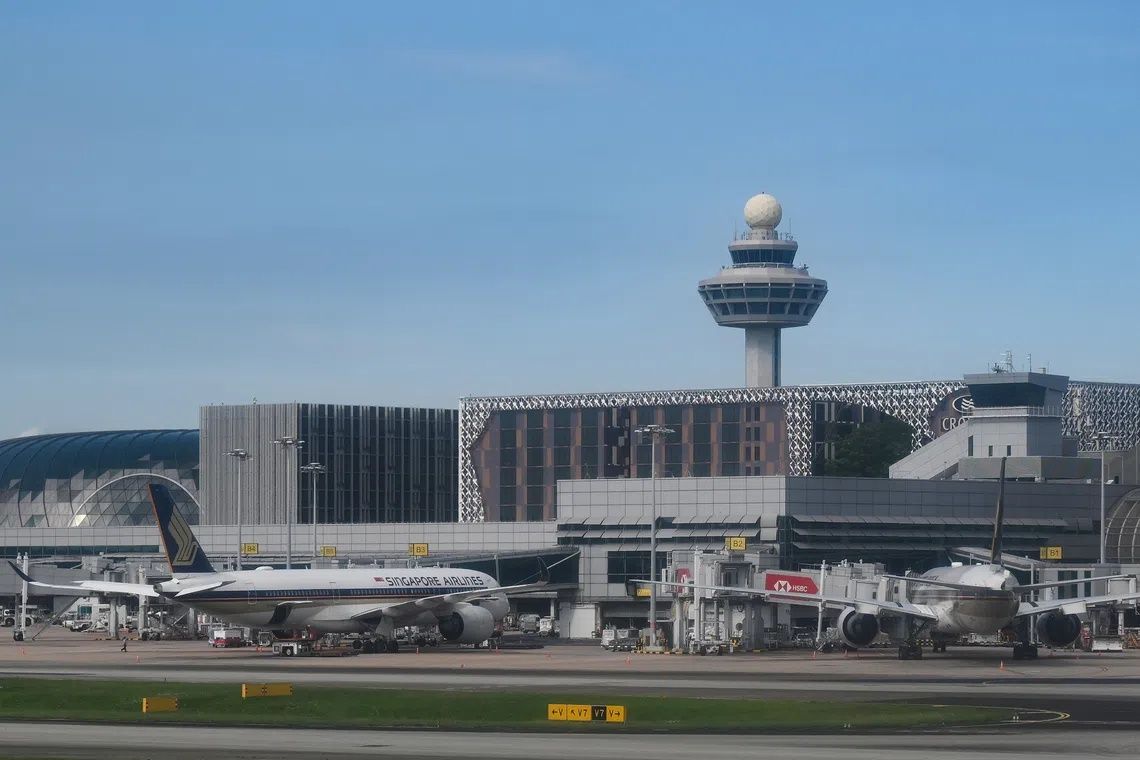
A 25-year-old British national is facing court charges in Singapore following a disruptive incident at Changi Airport Terminal 1 that resulted in a 45-minute delay to a departure bound for Kuala Lumpur. The man's behaviour on July 20 escalated from verbal disturbances to physical aggression and unauthorised entry into a restricted zone, prompting authorities to bring multiple charges against him. Police announced the matter on Tuesday, August 11, outlining the sequence of events that led to the enforcement action.
According to police statements, officers received reports around 4.05pm on July 20 of a passenger creating a disturbance at one of the boarding gates in Terminal 1. Investigation revealed that the man, believed to be intoxicated at the time, had been speaking and shouting loudly in the boarding area, behaviour that drew complaints from fellow travellers awaiting departure. His conduct during this initial phase already constituted grounds for concern among both airport staff and other passengers preparing for their flight.
When two airline personnel approached the man to address his disruptive conduct, his response was confrontational and abusive. He directed vulgarities at one of the staff members, prompting the airline to make the decision to remove him from the flight due to his intoxicated state. Such incidents are taken seriously by aviation authorities across the region, as intoxicated passenger behaviour poses potential safety and security concerns during the boarding and flight operations process.
The situation deteriorated markedly after the man was informed of the airline's decision to offload him. Rather than complying with the directive, he reportedly became aggressive and physically forced his way past airline staff in an attempt to board the aircraft despite being denied passage. During this confrontation, he penetrated into a restricted area of the airport terminal without proper authorisation, an action that carries particular gravity given the heightened security protocols maintained at international airports throughout Southeast Asia.
The consequences of his aggressive actions extended to airport personnel. One staff member fell to the ground during the physical altercation and sustained injuries to her left arm and wrist. This injury, resulting from his unauthorised push past staff, represents a direct harm caused by his conduct and will likely feature significantly in any legal proceedings. The incident also continued to involve aggressive language directed at airport security officers who responded to manage the situation.
The 45-minute delay caused by these events had cascading effects on airport operations and passenger schedules. This extended disruption underscores how individual passenger misconduct can impact broader operations at busy regional aviation hubs like Changi Airport, which serves as a critical connector for travel throughout Malaysia and Southeast Asia. Such delays can trigger knock-on effects for connecting passengers and subsequent flight schedules throughout the terminal's operation.
The man faced court appearance on August 12 with three distinct charges. The first charge relates to causing annoyance while intoxicated in a public place, a provision designed to address disruptive behaviour fuelled by alcohol consumption in settings where large numbers of people gather. The second charge concerns using threatening, abusive, or insulting words or behaviour, encompassing the vulgarities he directed at multiple staff members. The third charge addresses the unauthorised entry into a protected place, referring specifically to his forced passage into the restricted boarding area without clearance.
Penalties for these offences vary significantly in severity. A conviction on the charge of causing annoyance while intoxicated in a public place carries a maximum fine of S$1,000, a jail sentence of up to six months, or both penalties combined. The charge of using threatening, abusive, or insulting words or behaviour carries a maximum fine of S$5,000. The most serious charge, unauthorised entry into a protected place, carries substantially harsher penalties including a potential fine of up to S$20,000 and imprisonment of up to two years, or both.
This incident reflects broader concerns across Southeast Asian airports regarding passenger conduct and the enforcement of aviation security protocols. Singapore's approach, exemplified by these charges and their potential sentences, establishes clear deterrents against behaviour that jeopardises airport safety and operations. The case also highlights the challenges faced by airline and airport staff in managing intoxicated passengers, a recurring issue that necessitates robust protocols and legal frameworks.
For Malaysian readers, this incident carries particular relevance given that the disrupted flight was bound for Kuala Lumpur, indicating the interconnected nature of regional aviation networks. Changi Airport serves as a major transit hub for Malaysian travellers, and passenger conduct at Singapore's facilities directly impacts the travel experience for those connecting through these terminals. The enforcement action demonstrates the coordinated approach taken by aviation authorities throughout the region to maintain standards of passenger behaviour and airport safety.
The incident also underscores the importance of recognising how individual choices, particularly those involving alcohol consumption at airports, can result in serious legal consequences. Southeast Asian jurisdictions maintain strict regulations governing airport security zones and passenger conduct, and enforcement is increasingly rigorous. For international travellers transiting through regional hubs, understanding and respecting these standards remains essential to avoiding legal complications that could significantly disrupt travel plans and result in criminal penalties.

