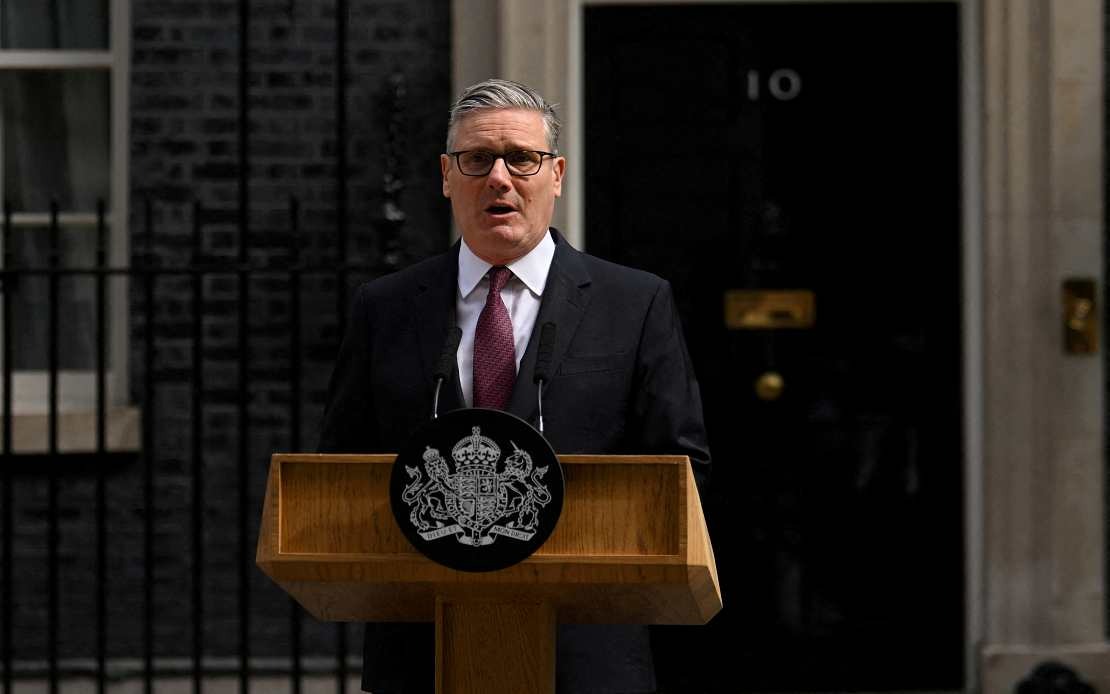
Prime Minister Keir Starmer announced on Monday that he intends to resign as leader of the United Kingdom, with a replacement to assume office by the time parliament returns in September. The declaration marks a dramatic reversal for the Labour leader, who had secured a commanding electoral victory less than two years earlier on a platform promising to restore stability to British governance. Starmer indicated his commitment to backing whomever the party selects as his successor, underscoring an attempt to manage an orderly transition despite the circumstances forcing his departure.
The collapse of Starmer's premiership reflects a broader crisis of public confidence in British political leadership. His approval ratings have deteriorated to historic lows, trailing behind any sitting prime minister in recent records. The party that returned to power with such optimism has haemorrhaged popular support, leaving Labour lawmakers searching for a figure capable of reversing their electoral trajectory and reconnecting with disaffected voters. The situation intensified dramatically on Friday when Andy Burnham, the Mayor of Greater Manchester, won a parliamentary by-election with a decisive margin, defeating a candidate representing Nigel Farage's Reform UK party, which has dominated national opinion polling for more than a year.
Burnham's by-election triumph injected new momentum into Labour circles and raised hopes that the seasoned politician could revitalise the party's prospects. Known for his communicative abilities and extensive political experience, Burnham represents a potential counterweight to Starmer's deteriorating standing. His victory demonstrated that Labour remains capable of winning contests in certain constituencies, offering a glimmer of hope to demoralised party members. However, Burnham has yet to articulate a comprehensive policy framework on crucial matters including international relations, economic management, and defence spending, leaving substantial questions about his direction should he assume the premiership.
The economic context into which any new Labour leader will step presents formidable constraints. Britain currently experiences the highest borrowing costs among Group of Seven nations, a consequence of elevated national debt levels, substantial interest payments, and years of sluggish economic expansion. The government faces a public deeply frustrated with perceived national decline, demanding solutions to the rising cost of living and deteriorating public services, particularly healthcare and immigration control. These pressures create an extraordinarily narrow operational space for whoever takes office, regardless of their policy preferences or political ambitions.
Financial markets represent another significant restraint on government action. Bond investors have demonstrated unwillingness to accommodate additional borrowing, effectively limiting the fiscal room available for new spending initiatives or tax cuts. Burnham has previously suggested that Britain must transcend its reliance on bond market sentiment, stating last September that the nation needed to move beyond "being in hock to the bond markets." Yet economists at Citibank expressed doubt that Burnham would successfully resist market pressures, warning that "a Burnham premiership would inherit a precarious fiscal situation with few tools to deliver meaningful change." This tension between political rhetoric and economic reality will likely define the next phase of British governance regardless of leadership selection.
The serial turnover of British prime ministers has reached extraordinary levels, with Starmer's successor destined to become the seventh person to hold the office since the 2016 Brexit referendum. This unprecedented churn, representing the highest rate of prime ministerial change in nearly two centuries, demonstrates the profound difficulty successive governments have faced in satisfying public expectations. Voters across the country remain angry at consistent failures to improve living standards, strengthen public services, and address immigration concerns. Each new leader inherits these accumulated grievances but possesses limited capacity to deliver the transformative change citizens demand.
Starmer's decision to remain in post during the leadership selection process while pledging to step aside upon completion reflects an attempt to provide continuity during the transition period. Earlier, he had stated his intention to contest any formal leadership election mounted against him, but this position evidently shifted over the weekend as circumstances evolved. Political analysts at Eurasia Group suggested that Starmer stepping down with a September departure date would optimise the transition, allowing him to participate in a planned United Kingdom-European Union reset summit in July while providing Burnham adequate preparation time for assuming executive office.
The implications of this leadership transition extend well beyond Westminster. For Malaysia and other Southeast Asian nations, the change signals continued British domestic preoccupation during a period when the UK has sought to elevate its regional engagement through initiatives like the Indo-Pacific tilt and expanded security partnerships. A new Labour government will require several months to establish its priorities and operational capabilities, potentially affecting the pace of bilateral relationships across Asia-Pacific. The new administration's approach to European relations, particularly the reset with the EU, could also influence broader regional geopolitical positioning as Britain navigates its post-Brexit role.
The Labour party's travails reflect deeper challenges confronting established Western democracies. Globalisation, technological disruption, immigration, and climate change have created political environments where traditional centre-left and centre-right parties struggle to retain voter loyalty. The speed of prime ministerial succession in Britain underscores how quickly public patience erodes when governments appear unable to deliver visible improvements in daily lives. Burnham, assuming he becomes the next Labour leader, will inherit not merely a difficult economic situation but a transformed political landscape where voter allegiance proves far more fragile than established parties long assumed.

