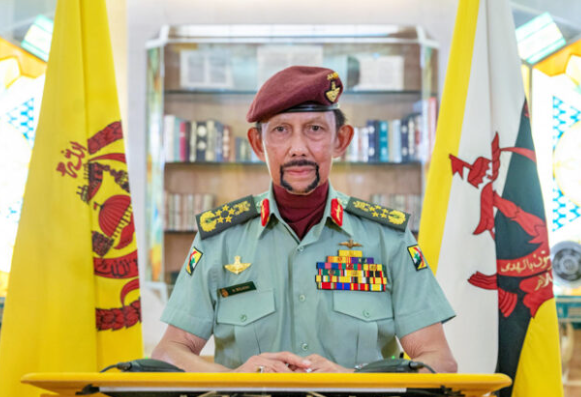
Sultan Hassanal Bolkiah has used the occasion of the Islamic New Year 1448 Hijrah to rally Brunei around a dual agenda of material prosperity and spiritual renewal, framing the calendar milestone as an opportunity for genuine recommitment rather than mere ceremonial observance. In his address, the monarch stressed that meaningful progress demands sustained dedication across all facets of national life, underscoring a philosophy that views the new year as a catalyst for deepening resolve rather than starting afresh.
The Sultan's remarks distinguish between two interconnected spheres of development that he argues cannot be pursued in isolation. Economic advancement and infrastructure investment constitute the material dimension, while intellectual growth, formal education and religious outreach—collectively termed dakwah—form the spiritual pillar. This dual-track approach reflects Brunei's broader national strategy of marrying modernisation with Islamic values, a balancing act that shapes policy across the sultanate's governance structure. By explicitly linking these domains, the Sultan signals that development divorced from ethical and spiritual grounding remains incomplete and ultimately hollow.
Central to his message was an invitation for citizens to channel gratitude into purposeful action. The Sultan framed the new year as a vehicle for collective thanksgiving, positioning Brunei's relative tranquility against a backdrop of global turbulence marked by persistent conflicts and humanitarian crises. This comparative advantage, he suggested, stems from divine blessing rather than accident, a theological framing that carries practical implications for public behaviour and national consciousness. The emphasis on gratitude as a motivating force for continued effort distinguishes his appeal from conventional secular calls for productivity and efficiency.
Yet beneath the celebratory tone lay acknowledgment of an uncomfortable reality: Brunei's internal vulnerabilities, particularly the proliferation of drug-related offences, petty crime and other antisocial conduct that undermine the nation's standing. The Sultan's candid recognition that criminal activity tarnishes Brunei's image represented an unusually direct critique of security challenges, suggesting mounting frustration with persistent problems despite the sultanate's relative wealth and development. Drug trafficking and addiction remain persistent problems across Southeast Asia, and Brunei's acknowledgment of its own struggles mirrors concerns voiced by regional governments grappling with similar issues.
The Sultan's prescription centred on institutional coordination and religious mobilisation as complementary responses to criminality. He called upon security agencies to intensify enforcement while urging the religious establishment to strengthen educational initiatives designed to foster social rejection of drugs and criminal behaviour at the grassroots level. This dual approach—hard security combined with soft persuasion through faith-based messaging—reflects a recognition that law enforcement alone cannot address underlying motivations driving drug abuse and petty criminality. By invoking religious education as a counter-narrative, the Sultan positioned Islam not as a constraint on development but as a vehicle for instilling values that support social cohesion.
Particularly significant was the Sultan's framing of collective vigilance as a religious obligation rather than merely a civic duty. His instruction that Muslims remain alert and engaged in collective prayer for national protection transformed the fight against crime into a spiritual exercise, thereby elevating it beyond technical policy implementation to a matter of faith and devotion. This rhetorical move carries weight in Brunei's religious context, where such framings carry moral authority and influence public receptiveness to messaging. For Malaysian readers familiar with similar appeals by their own religious leadership, this dimension of the Sultan's address will resonate as a recognisable governance strategy.
The Sultan's emphasis on shared responsibility for safeguarding the ummah and nation represents a deliberate attempt to distribute accountability across society rather than concentrating burden on state institutions alone. By positioning crime prevention as a communal obligation rooted in Islamic teaching, he invoked principles of collective welfare that transcend individual rights and interests. This reflects broader Southeast Asian governance philosophies where community cohesion and mutual obligation feature prominently in official rhetoric, though implementation often reveals tensions between these ideals and competing individual freedoms.
Brunei's relatively small population and centralised governance structure create conditions where such top-down messaging can gain traction more readily than in larger, more fragmented societies. The Sultan's personal intervention in articulating national priorities carries weight that similar statements by national leaders in more pluralistic democracies might lack. This concentration of moral authority in the monarchy constitutes both a structural advantage for rapid policy communication and a potential vulnerability should public confidence in institutions erode.
The address also contained implicit recognition that Brunei's prosperity and stability cannot be taken for granted in an increasingly volatile regional and global environment. References to wars and natural disasters occurring elsewhere served not merely as comparative reassurance but as cautionary reminder of fragility underlying even well-ordered societies. For regional readers accustomed to periodic natural disasters and experiencing spillover effects from conflicts in nearby regions, this perspective carries immediate resonance. The Sultan's invocation of prayer and divine protection acknowledged limits to human agency in managing existential threats, a humility that acknowledges uncertainties inherent in contemporary geopolitics.
Broadly, the Sultan's Islamic New Year message articulated a vision of national development grounded in disciplined effort, spiritual consciousness and collective vigilance. Rather than offering new policy initiatives or institutional reforms, the address functioned as a moral exhortation designed to reinvigorate public commitment to existing frameworks and shared values. This rhetorical function—reminding citizens of their obligations and interdependence—recurs regularly in monarchical systems across the region, serving as periodic recommitment ceremonies that reinforce underlying social contracts. For Brunei specifically, the emphasis on crime prevention signals genuine concern within the highest levels of government about internal security challenges that threaten the orderly development the nation prizes.