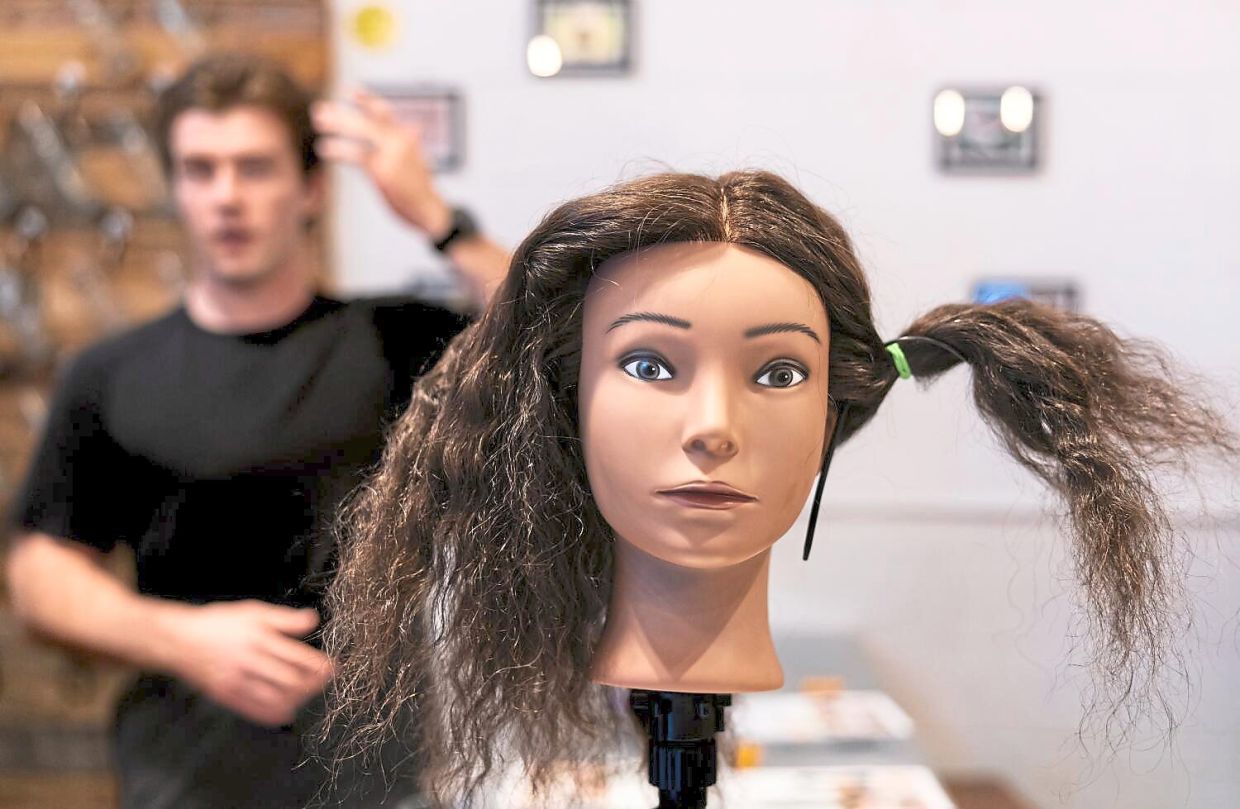
A quiet moment at Captain Fatty's Brewery in Santa Barbara County was interrupted in late May when 15 men between 30 and 60 years old set down their drinks and picked up combs. What unfolded was not the typical Friday night scene but rather an unconventional learning session where fathers trained themselves in the art of braiding hair, transforming an old British-inspired concept called "Pints and Ponytails" into a sold-out event that combined practical childcare education with male camaraderie in a brewery setting. Austin Nieves, who relocated to Santa Barbara from Pasadena just weeks earlier, had orchestrated the gathering as part of his broader initiative to create spaces where fathers could bond, learn, and support one another through the challenges of modern parenthood.
The transformation Nieves witnessed that evening—watching initially nervous fathers evolve from awkwardly perched at bar edges into engaged learners—encapsulates a larger cultural shift taking place across America. Contemporary fatherhood has fundamentally changed over recent decades, with fathers taking increasingly active roles in child rearing, yet this evolution has outpaced the availability of structured support systems that mothers have long taken for granted. When Nieves' wife gave birth to their son, she immediately accessed multiple mother groups, classes, and formal support networks designed specifically for women navigating early parenthood. In contrast, Nieves found himself relying primarily on conversations with his brothers who had children, highlighting a striking disparity in the institutional support available to new parents based on gender.
This absence of paternal support structures is not merely anecdotal inconvenience but rather a documented phenomenon supported by rigorous academic research. A 2006 study published in the Journal of Family Issues by researchers Chris Knoester and David J. Eggebeen revealed that active fatherhood correlates with declines in personal well-being and reduction in social participation as men allocate previously available leisure time toward childcare responsibilities. Clinical psychologists Hillary Halpern and Maureen Perry-Jenkins have further documented that the transition from single life to fatherhood frequently unleashes emotional turbulence comparable to a roller coaster, with men experiencing unexpected psychological strain during this life stage. Most recently, researchers at Stockholm's Karolinska Institute found in a 2021 study that fathers benefit substantially from structured transitional support during their first years of parenting, suggesting that institutional intervention during this critical period can meaningfully improve outcomes.
The evidence regarding the efficacy of father-focused groups is equally compelling. The same Karolinska Institute study demonstrated that men participating in father groups reported high satisfaction rates and described tangible improvements across multiple dimensions of their lives. Participants noted enhanced relationship quality with both partners and children, measurably improved self-confidence, greater sense of family equality, and significantly reduced feelings of loneliness—outcomes that mirror the documented benefits mothers derive from their own support networks. This research provides scientific validation for initiatives like those Nieves has pioneered, confirming that structured peer communities serve not as optional social luxuries but as legitimate mental health and family wellness interventions.
Nieves' own experience crystallized the necessity for such communities. After Hudson's birth three years ago, his conversations with longtime friends became increasingly disconnected from their reality. While friends discussed television programs and recreational activities, Nieves found himself excited about developmental milestones such as his infant's ability to lift his head. This fundamental misalignment in life priorities and daily preoccupations created an isolating effect, prompting Nieves to recognize that branching beyond his existing social network was essential for his mental health and sense of connection. Rather than passively accept this isolation, he took deliberate action to create the infrastructure that had been lacking.
In October 2023, while living in Costa Mesa with his wife Katie, Nieves established the Orange County Dads club, designing it as an explicitly male-focused community rather than a mixed-gender parenting group. The club's initial programming reflected practical and social priorities—coffee shop meetups, group visits to the zoo, communal musical jam sessions, and CPR training—offering both friendship and skill-building opportunities. What proved most interesting was the mechanism through which the group grew: wives and partners actively shared Nieves' social media content with their husbands, suggesting that even partners recognize the value of paternal peer support and actively facilitate male participation. This partner-driven recruitment dynamic reveals that father support groups address needs that extend beyond individual men to encompass entire family systems and relationships.
Mikhail Alfon, founder of social media strategy agency Blue Light Media, became an early adopter of the Orange County group, regularly attending meetups with his young son Santos. Alfon's public testimonial captured the core appeal of these communities: arriving at fatherhood represents such a comprehensive life transformation that finding peers navigating identical developmental stages provides immense psychological relief. The shared experience of being simultaneously engaged fathers, professional adults, and husbands creates a unique peer category that traditional friendships often cannot accommodate. Men who had been close friends before children sometimes discover that their life trajectories have diverged so dramatically that reconvening around old activities no longer feels authentic or fulfilling.
When Nieves and his family relocated to Santa Barbara in April 2025, he replicated his successful model immediately, establishing a Santa Barbara Dads group within a single month. The group committed to monthly gatherings, demonstrating that geographic relocation need not interrupt access to paternal community. The May 2025 iteration featured the "Pints and Ponytails" hair-braiding event, which sold out completely, suggesting strong demand for practical skills training combined with social bonding. Austin Jones, a Santa Barbara-based real estate agent and investor who discovered the group through Instagram, articulated the multilayered identity challenge that drew him in. Balancing responsibilities as husband, father, and businessman while experiencing limited institutional support created a sense of isolation despite professional success and family accomplishment.
Jones' particular motivation for attending the hair-braiding event reveals how father groups address concrete, practical gaps in parenting knowledge. His 2½-year-old daughter Noa possesses textured, curly hair requiring specialized care techniques that Jones had not previously mastered, limiting him to applying headbands as a styling solution. The "Pints and Ponytails" event provided not merely social connection but immediate practical capability enhancement. By evening's end, Jones had progressed from watching expert hairstylists demonstrate techniques on mannequins to successfully achieving ponytails himself, with sufficient confidence to attempt the skills on his daughter imminently. This transformation from incompetence to competence, achieved in a low-pressure, male-centered environment, exemplifies the multifaceted value these groups deliver.
The broader implications of this paternal community movement extend beyond individual fathers to reshape cultural expectations around gender, parenting, and family dynamics. When men participate actively in childcare and gain confidence through peer support and skill training, family systems benefit materially. Children receive more engaged parenting from both parents, partnership dynamics improve when fathers feel supported rather than isolated, and men themselves experience enhanced mental health and social connection. In the Malaysian and Southeast Asian context, where rapid urbanization and changing family structures are similarly disrupting traditional support networks, the father group model offers a potentially valuable social intervention worthy of adaptation and localization.

