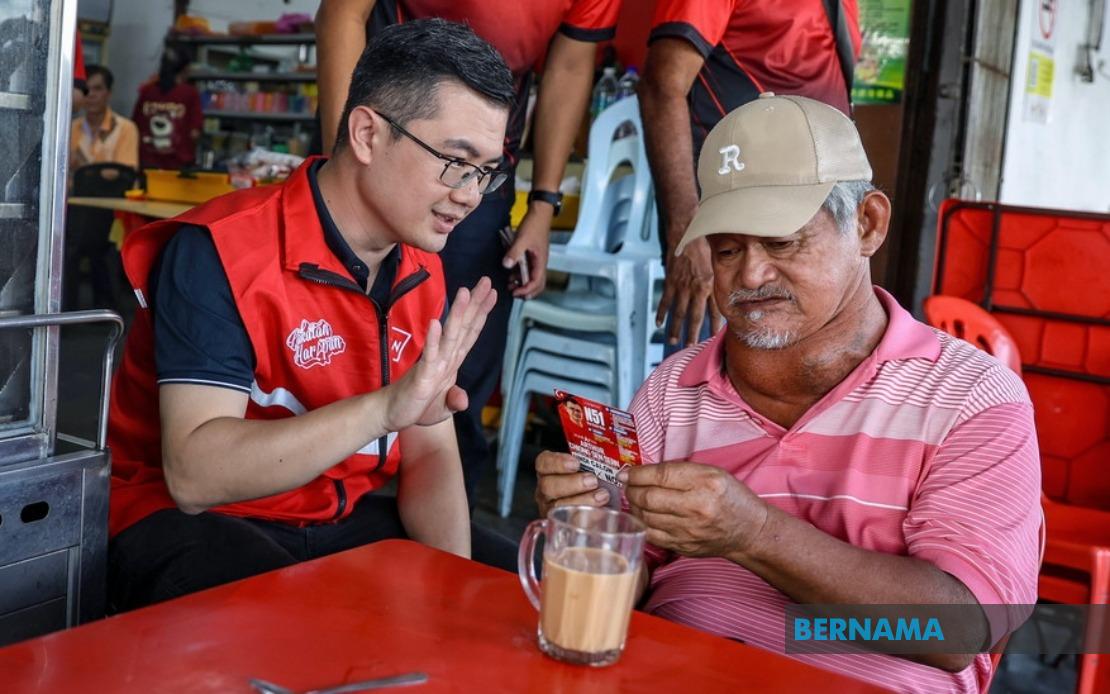
The Pakatan Harapan campaign in Johor's Bukit Batu constituency is facing organised interference as voting approaches, with the coalition's candidate Arthur Chiong Sen Sern reporting multiple instances of deliberate destruction targeting his promotional materials. The incidents, which saw party flags dumped into drains and billboards torn from their moorings in residential areas, have prompted authorities to open an investigation following a formal complaint lodged at Air Bemban police station.
Chiong disclosed the vandalism during a campaign briefing at the Bukit Batu operations centre, revealing that Kampung Sri Paya and Taman Putri both experienced coordinated attacks on PH signage. The targeting of multiple locations suggests systematic opposition rather than isolated incidents of vandalism, a pattern that raises questions about the intensity of contest building toward the July 11 polling day. While Chiong stopped short of naming any specific groups responsible, the incidents reflect the increasingly fractious nature of electoral competition in this five-way race.
The candidate maintained composure in the face of what he characterised as sabotage and treachery, refusing to allow such provocation to derail his campaign efforts. Rather than responding in kind or escalating tensions, Chiong framed his decision to pursue a police investigation as a matter of protecting democratic principles and maintaining order during the electoral process. His measured approach contrasts sharply with the aggressive tactics deployed against his campaign infrastructure, suggesting a strategic decision to occupy the moral high ground rather than engage in tit-for-tat disputes.
Chiong's statement calling for mature and harmonious campaigning carries particular weight given the immediate context of sabotage. His appeal for all contesting parties to eschew hostility and treacherous conduct appears directed at establishing norms of acceptable behaviour during what promises to be an intensely competitive election period. The timing of his remarks underscores frustration with campaign practices that threaten to poison the electoral environment, even as he continues mobilising supporters for the contested seat.
The Bukit Batu race presents one of the more complicated electoral scenarios in this Johor election cycle, with five candidates competing for a single state assembly seat. Arthur Chiong represents Pakatan Harapan through PKR, facing off against R. Kumaran from the Barisan Nasional coalition aligned with MIC, M. Premanand contesting for the newer MUDA party, G. Tamili representing Bersama, and Independent candidate Kamaruzaman Ali. This crowded field means that a fragmented opposition vote could benefit candidates better able to consolidate support within specific constituencies or demographic groups.
The broader context of this election involves 172 candidates vying for 56 state assembly seats across Johor, with early voting scheduled for July 7 ahead of the main polling day. The scale of the election reflects Johor's significance as one of Malaysia's largest and most politically consequential states. Results here typically carry implications for national political dynamics, making even individual constituency contests subject to elevated scrutiny from party leadership and observers tracking the broader trajectory of Malaysian politics.
Incidents of campaign material destruction are not unprecedented in Malaysian elections, though they remain concerning indicators of deteriorating electoral civility. When billboard and flag vandalism occur in multiple locations rather than isolated instances, they suggest either co-ordinated action or an environment where such behaviour faces insufficient community sanction. The fact that Chiong reported not knowing the perpetrators indicates either genuine anonymity achieved through stealth operations or a reluctance to make accusations without clear evidence.
For PH, these incidents in Bukit Batu add to existing challenges in defending state seats as the coalition continues recovering from the aftermath of the 2022 federal election. While PH rebounded to form government federally, state-level contests often hinge on local factors and the personal popularity of candidates, making constituency-specific dynamics crucial to overall outcomes. Campaign sabotage, whether it succeeds in demoralising supporters or simply creates negative publicity, represents an unwelcome complication for candidates already juggling multiple opponents.
The Johor election arrives at a moment of relative stability for the federal government but considerable underlying political fluidity. Several coalitions remain in competition, with MUDA and Bersama representing newer political forces attempting to establish themselves beyond their current electoral footprint. The presence of multiple candidates in individual constituencies reflects this fragmentation, though it also means that voters face complex choices without clear binary contests shaping their decisions.
Chiong's decision to pursue police channels rather than respond through counter-attacks or public accusations demonstrates awareness that electoral disputes resolved through law enforcement maintain greater legitimacy than those conducted through increasingly aggressive campaign tactics. This approach places responsibility on authorities to investigate fairly and thoroughly, ensuring that deliberate destruction of campaign materials faces appropriate consequences. Whether police action proves effective may influence future willingness among candidates to report such incidents or instead adopt retaliatory measures outside formal processes.
For Malaysian voters following the Johor election closely, these incidents serve as reminders of the challenges facing electoral democracy even within relatively stable institutional frameworks. While single incidents of material vandalism might be dismissed as isolated incidents, patterns of deliberate destruction in multiple locations signal deteriorating norms around acceptable campaign conduct. The challenge for electoral authorities and party leaders involves establishing and reinforcing expectations of behaviour that permits vigorous competition without descending into sabotage or destruction of opponents' resources.

