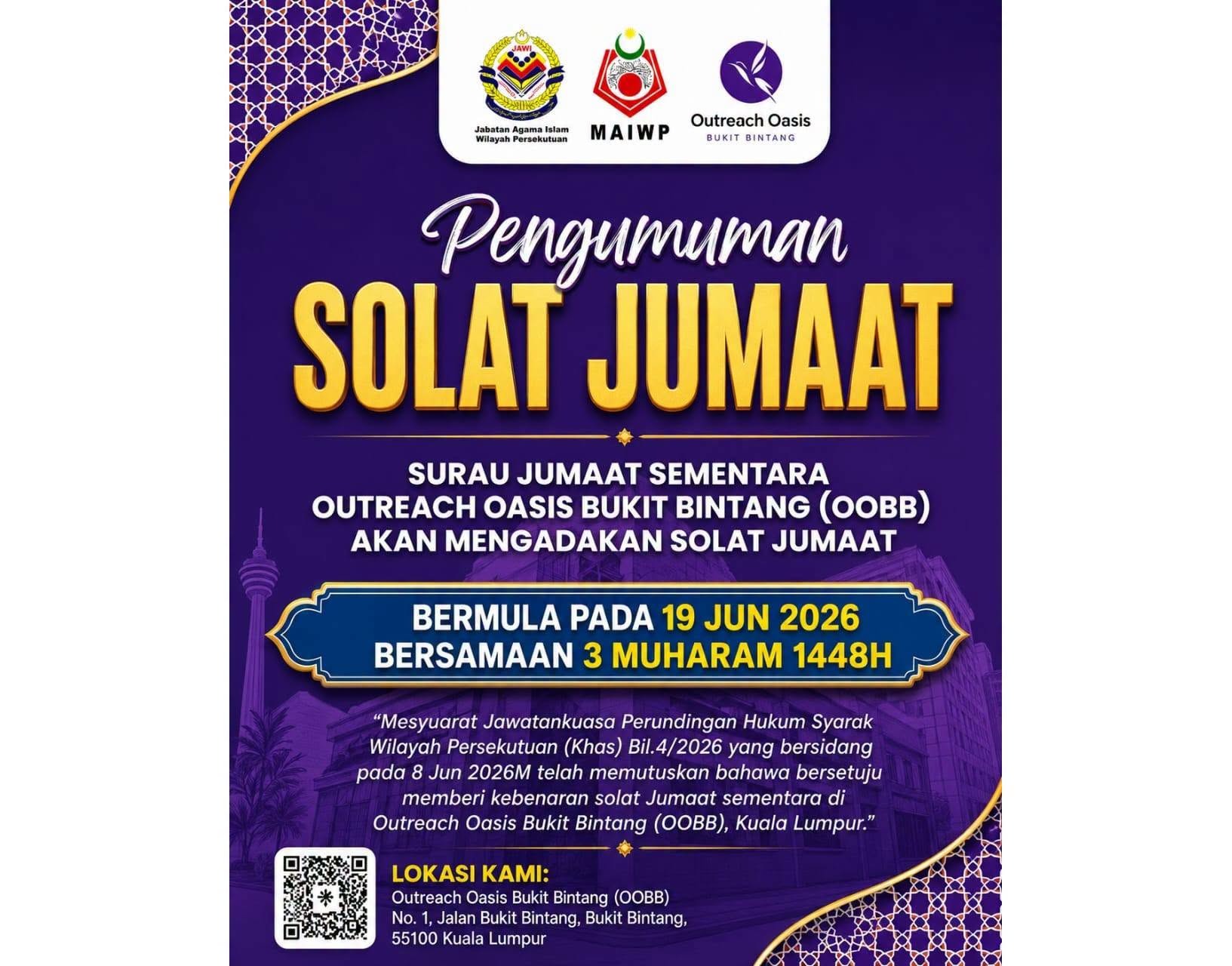
Muslims working and visiting Bukit Bintang will soon have a dedicated space to perform their Friday prayers, addressing a long-standing gap in religious facilities within one of Kuala Lumpur's most bustling commercial and tourism corridors. The Bukit Bintang Outreach Oasis, located in the heart of the shopping and entertainment district, has been granted special approval to serve as a temporary prayer venue starting June 19, with religious authorities making the arrangement to accommodate the significant Muslim population that frequents the area throughout the week.
Dr. Zulkifli Hassan, the Minister in the Prime Minister's Department (Religious Affairs), announced the development through a Facebook statement, framing the initiative as a historic moment for the Bukit Bintang community. The temporary facility represents an interim solution while construction proceeds on a permanent Friday surau purpose-built for the location, a project the government has been pursuing to enhance religious infrastructure in high-traffic urban zones.
The significance of this announcement extends beyond mere convenience. Bukit Bintang, as the commercial heart of Kuala Lumpur, attracts thousands of workers, shoppers, and tourists daily. Many Muslim workers in offices, shopping malls, and retail establishments in the vicinity have previously faced difficulties finding appropriate prayer spaces during their lunch breaks or between work commitments. The absence of accessible Friday prayer facilities in such a prominent location had been a practical and symbolic concern, as Jumu'ah (Friday prayer) holds particular importance in Islamic practice as a congregational obligation.
Dr. Zulkifli's statement emphasised the relief this arrangement would provide for the local Muslim community, noting that worshippers would no longer need to leave the area to fulfil their religious duties. His comment about eliminating the need to "rush, race against time, or squeeze through crowds to travel far" captures the real logistical challenges faced by those working in the district. The temporary status of the facility underscores that this is not a makeshift or inadequate solution but rather a pragmatic bridge measure until a more comprehensive permanent structure becomes operational.
The government's commitment to establishing permanent religious infrastructure in commercial districts reflects broader urban planning considerations. As Malaysia's major cities continue to densify and attract diverse populations, ensuring equitable access to places of worship has become a critical component of inclusive urban development. The Bukit Bintang project demonstrates recognition that religious facilities must be woven into the fabric of thriving commercial centres rather than relegated to residential peripheries.
The Outreach Oasis facility itself serves multiple community functions, and its temporary adaptation for Friday prayers shows flexibility in how multipurpose spaces can serve spiritual needs without requiring dedicated architectural interventions. This pragmatic approach may provide a model for other high-traffic commercial areas within Kuala Lumpur and other Malaysian cities facing similar gaps in prayer facilities.
Dr. Zulkifli's invitation for the Bukit Bintang community to participate actively in the Friday prayers carries social and symbolic weight. By encouraging full attendance and describing it as a sign of solidarity and support for Islamic eminence, the minister sought to frame the opening not merely as a logistical solution but as a collective affirmation of religious values within a secular commercial space. This framing is particularly relevant in Malaysia's context as a Muslim-majority nation where balancing modern urban development with religious observance remains an ongoing conversation.
The timing of this announcement in mid-June allows the community to prepare for the transition from makeshift arrangements to organised prayer sessions at a dedicated venue. For Muslim workers in Bukit Bintang's numerous office towers, retail establishments, and hospitality businesses, the availability of proper prayer facilities during working hours removes a practical barrier to religious observance and represents a tangible quality-of-life improvement.
From a broader Malaysian perspective, this initiative aligns with ongoing efforts to enhance religious infrastructure across the country. State and federal governments have increasingly prioritised the construction and designation of prayer facilities in public spaces, transport hubs, and commercial districts. The Bukit Bintang project exemplifies this trend while highlighting the creative interim solutions authorities employ when permanent facilities remain under development.
The permanent surau, once completed, is expected to provide more comprehensive facilities including ablution areas, prayer space for both men and women, and accommodation for the substantial congregations that Friday prayers at such a central location will likely attract. Planning for these permanent facilities typically involves coordination between religious affairs ministries, municipal authorities, and property developers to ensure sites meet both Islamic requirements and urban planning standards.
As Malaysia continues to position itself as a global destination for business and tourism, the availability of prayer facilities at major commercial landmarks serves both practical and diplomatic purposes. Visitors and expatriates from Muslim-majority countries who work or travel through Bukit Bintang will find their religious needs recognised and accommodated, contributing to Malaysia's reputation as a welcoming destination that respects diverse requirements.
The temporary arrangement at the Outreach Oasis ultimately reflects a responsive governance approach that acknowledges community needs and implements solutions even before permanent infrastructure reaches completion. For the Bukit Bintang community, the June 19 opening marks a meaningful step toward greater religious inclusivity in one of Malaysia's most important commercial and cultural spaces.

