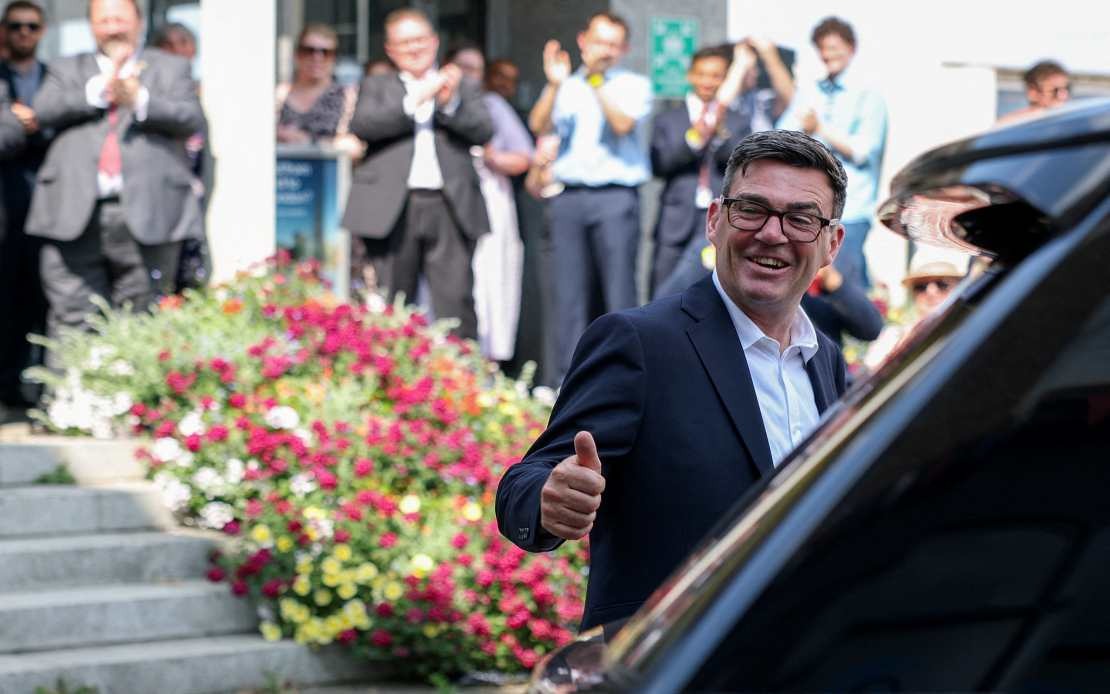
Andy Burnham will formally assume the office of prime minister on Monday following an audience with King Charles III, marking a significant transition in British politics after the departure of Keir Starmer. The former mayor of Greater Manchester enters the role with an explicit commitment to reestablish public trust in government institutions while delivering tangible improvements to households struggling with economic pressures. His inaugural address from his Downing Street office will establish the thematic foundation of his premiership, emphasizing what he characterizes as a moment demanding both "reflection and resolution" as the nation confronts its underlying structural challenges.
Burnham's ascension to the prime ministerial office represents an unusual trajectory within recent British politics. Unlike his immediate predecessor, he assumed Labour leadership without facing a competitive contest, arriving at the position merely weeks after returning to Parliament following his tenure leading Greater Manchester. This rapid elevation underscores the party's confidence in his administrative credentials and popularity, though it also means his broader policy agenda remains partially undefined as he enters Number 10. The speed of his transition has created significant anticipation regarding the direction his government will take on several contentious issues facing the country.
Central to Burnham's messaging is an acknowledgment of what he views as a fundamental problem undermining British governance: the instability created by seven changes of prime minister over the preceding decade. He intends to position his administration as a corrective to this pattern of churn, arguing that restoring stability in political leadership is essential to demonstrating that Britain can effectively address its challenges. This framing carries particular resonance with Southeast Asian observers, where questions of political continuity and competent governance similarly influence public confidence and economic performance. Burnham's emphasis on "responsible politics" suggests he believes previous administrations, regardless of party affiliation, have failed to provide the consistency citizens require.
On the immediate policy front, Burnham has signalled that cost-of-living pressures will dominate his early agenda. His pledge to provide "breathing room" on household finances reflects recognition that economic hardship has eroded public support for political institutions more broadly. His advisors have emphasized that political stability must translate into concrete improvements in people's material circumstances, not merely rhetorical commitments. This framing suggests an understanding that political legitimacy in modern Britain rests upon demonstrated competence in improving living standards, a lesson that resonates across developed democracies facing similar inflationary pressures.
One of Burnham's marquee policy commitments involves scrapping his predecessor's digital ID programme, redirecting the associated resources toward addressing cost-of-living challenges. This decision reflects a calculated political choice to prioritize immediate household relief over infrastructure projects with longer-term benefits. The scrapping of the digital identity initiative also signals Burnham's willingness to discard previous Labour commitments when circumstances or priorities shift, suggesting a pragmatic approach to governance that may extend to other inherited policies. For Malaysian observers familiar with digital identity debates, this reversal illustrates the political sensitivities surrounding such programmes even in mature democracies.
Devolution and the redistribution of power away from London's centralizing control constitute another pillar of Burnham's stated agenda. His extensive experience leading Greater Manchester has instilled in him a conviction that regional governments require greater autonomy and resources to address local challenges effectively. This commitment to decentralization reflects broader tensions within the United Kingdom regarding the concentration of economic and political power in the south-east, particularly London. The implications of this approach extend beyond internal British politics, as successful devolution models may inform governance discussions in other nations wrestling with center-periphery dynamics.
Energy policy presents an immediate crucible for Burnham's premiership and his commitment to environmental responsibility. Reports suggest his government may expand North Sea oil and gas drilling as a means of reducing energy bills, despite Labour's 2024 manifesto pledging to reject new drilling licences. Environmental campaigners have already mounted pressure, arguing that expanded extraction would not meaningfully reduce consumer bills while contradicting climate commitments. Burnham's decision on this matter will signal whether his approach to governance prioritizes immediate cost relief over longer-term environmental objectives, a tension that increasingly defines policy-making across developed economies.
The situation surrounding Thames Water, burdened by approximately £20 billion in debt, exemplifies the difficult structural problems awaiting Burnham's administration. The water utility's creditors have expressed openness to discussions regarding temporary nationalization or enhanced public control, positions Burnham has indicated supporting in principle. His willingness to consider greater state involvement in essential services diverges from the privatization orthodoxy that has dominated British policy since the 1980s, potentially signalling a broader reorientation toward mixed ownership models for critical infrastructure. Such decisions carry implications extending beyond Britain's borders, as other nations observe whether major economies are reconsidering the role of state involvement in utility provision.
Burnham's Cabinet selection process will illuminate his governing priorities and coalition-building strategy. Particular attention centres on the chancellor position, where Energy Secretary Ed Miliband and Home Secretary Shabana Mahmood are reported to be the leading contenders. The choice between these figures will signal whether Burnham prioritizes energy sector expertise—with Miliband's direct experience in green energy policy—or internal security and spending discipline reflected in Mahmood's portfolio. Cabinet construction typically reveals a new prime minister's confidence in specific policy areas and his approach to managing potential rivals within the party hierarchy.
Burnham's emergence as prime minister occurs within a broader context of established democratic governments attempting to rebuild legitimacy and effectiveness after periods of tumultuous leadership transitions. The British experience with repeated changes in prime ministerial occupants mirrors, in different contexts, governance instability that has challenged other democracies. His explicitly stated commitment to providing political stability coupled with economic improvement represents an implicit acknowledgment that democratic governments derive authority from both procedural legitimacy and demonstrated capacity to improve citizens' material circumstances. For regional observers in Southeast Asia, Burnham's approach may offer instructive lessons regarding the relationship between political continuity and public confidence in institutional governance.
The opening weeks of Burnham's tenure will prove crucial in establishing whether his pledges translate into concrete policy achievements. His government faces the substantial challenge of simultaneously addressing cost-of-living pressures, environmental commitments, infrastructure challenges, and public service reform while maintaining the political stability he has positioned as central to his premiership. The success of these endeavours will determine whether Burnham can reverse the pattern of brief prime ministerial tenures that has characterized recent British politics, or whether he becomes another transitional figure in a seemingly endless cycle of leadership changes.

