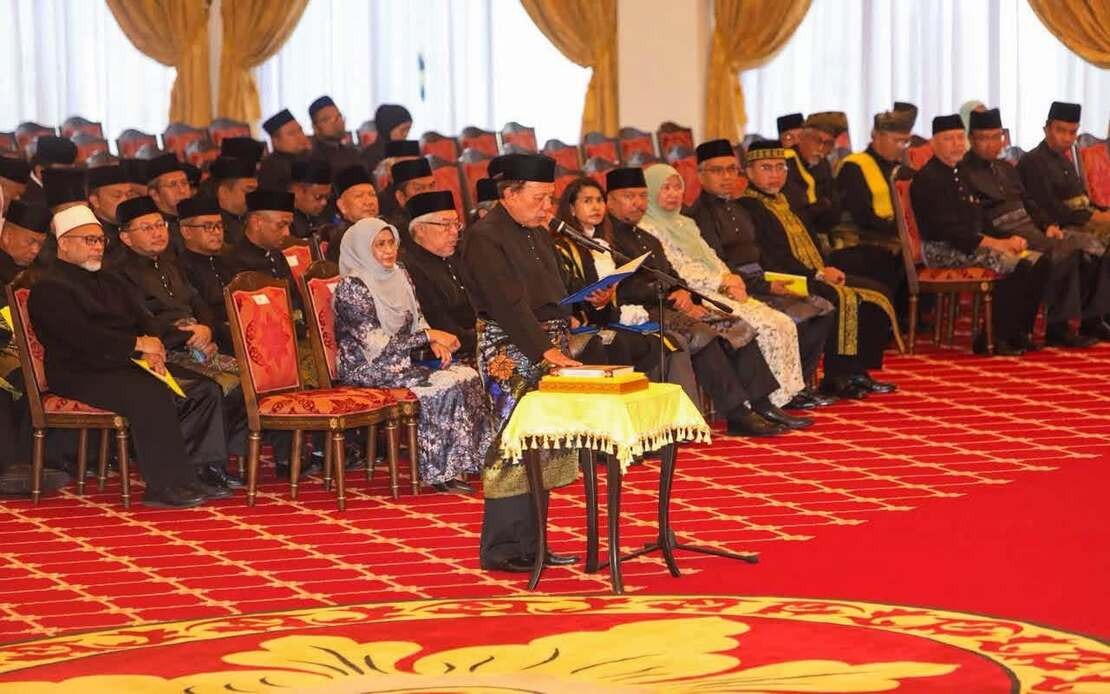
Datuk Ismail Lasim has assumed the position of Negeri Sembilan Menteri Besar following his swearing-in ceremony before the Yang Dipertuan Besar Tuanku Muhriz Tuanku Munawir at the Balairong Seri of Istana Besar Seri Menanti on August 2. The appointment has drawn congratulations from across the federal Cabinet, signalling unified support for his leadership as the state embarks on a new chapter under his stewardship.
Deputy Prime Minister Datuk Seri Dr Ahmad Zahid Hamidi, who also serves as Rural and Regional Development Minister, took to Facebook to express his well-wishes for the incoming Menteri Besar. In his message, Ahmad Zahid emphasised that the responsibility now resting on Ismail's shoulders represents both an honour and a significant obligation to deliver tangible results for the people and economic advancement of Negeri Sembilan. The DPM's endorsement carries particular weight given his position overseeing regional development matters that often intersect with state-level governance priorities.
The significance of unified Cabinet backing extends beyond mere ceremonial gesture, reflecting the government's commitment to ensuring continuity and momentum in Negeri Sembilan's development agenda. Ahmad Zahid's invocation of collective effort to restore Negeri Sembilan's prominence underscores the federal government's investment in the state's trajectory and its role within the broader regional economic framework of Peninsular Malaysia.
Defence Minister Datuk Seri Mohamed Khaled Nordin similarly conveyed his congratulations through social media, framing Ismail's appointment as a moment where popular confidence translates into tangible administrative responsibility. Mohamed Khaled articulated the expectation that the new leadership would sustain the momentum of progress already achieved whilst forging pathways toward enhanced stability and broader prosperity for all residents. His intervention indicates that security and stability considerations remain paramount in how the federal government envisions Negeri Sembilan's trajectory.
Plantation and Commodities Minister Datuk Seri Dr Noraini Ahmad characterised the leadership transition as marking a watershed moment in the state's developmental journey. Her commentary positioned Ismail's appointment as the commencement of a distinctive phase rather than merely a personnel change, suggesting that his tenure may introduce distinct policy priorities or approaches. The minister's emphasis on translating service into charitable outcomes reflects the intersection of religious values and governance principles that resonate within Malaysian political discourse.
Ismail arrives at the position with substantial credentials accumulated over nearly three decades of direct engagement in Negeri Sembilan political life. At 67 years old, his career trajectory demonstrates persistence and progressive advancement through the state's political ranks. His initial election as a state assemblyman for Juasseh in 1999 marked the beginning of his continuous involvement in representative politics, establishing a foundation upon which subsequent responsibilities have been constructed.
The Juasseh assemblyman's prior service on the state executive council commenced in 2004, positioning him at the intersection of policymaking and administrative implementation for eighteen years spanning three consecutive terms until 2018. This extended tenure provided him with deep institutional knowledge of state government operations, budgetary processes, and the complex political relationships necessary to navigate Negeri Sembilan's governance landscape. His three-term stint on the exco represents an extended apprenticeship in executive responsibility.
During his earlier exco service, Ismail held the education portfolio, an assignment that proved formative in shaping his understanding of human capital development and the relationship between educational policy and broader state advancement. The education sector afforded him opportunities to engage with fundamental questions about workforce development, institutional capacity, and intergenerational investment that typically carry significant implications for a state's long-term competitiveness. His involvement in developing and implementing education-related policies constituted substantive policymaking experience beyond ceremonial or secondary portfolios.
The Cabinet's collective expression of confidence in Ismail reflects recognition of his accumulated experience and perceived alignment with federal government priorities. The coordination visible in multiple ministers' simultaneous public endorsement suggests deliberate messaging designed to project governmental unity and stability during the leadership transition. For Negeri Sembilan residents and business stakeholders, such unified backing provides reassurance that the state's development agenda will enjoy federal-level support and institutional backing.
Ismail's appointment occurs within the context of ongoing regional competition amongst Malaysian states to attract investment, develop infrastructure, and enhance quality of life metrics. His substantial prior experience in state governance, combined with his background in education policy, suggests a potential emphasis on human capital considerations in future development frameworks. The federal government's visible enthusiasm for his leadership indicates expectations that he will pursue policies complementary to national-level initiatives around economic diversification and social advancement.
The transition to new state leadership frequently provides opportunities for strategic recalibration of priorities and the advancement of deferred initiatives. Ismail's background in education and human development suggests that Negeri Sembilan may see renewed emphasis on skills training, institutional development, and the intersection of education with economic opportunity. His three-decade engagement with state politics provides him with networks, institutional memory, and relationships that should facilitate effective governance from the outset of his tenure.
Looking forward, the coordination evident in federal Cabinet responses to Ismail's appointment suggests a governance model premised on cooperative federalism between Putrajaya and Negeri Sembilan's state administration. This alignment reduces the likelihood of jurisdictional friction and positions the state advantageously for accessing federal development resources and policy flexibility. For investors and development partners, such inter-governmental alignment typically signals a more predictable business environment and clearer strategic direction.
The appointment of Ismail Lasim thus represents not merely an individual advancement but a moment of institutional continuity coupled with renewed commitment to state-level progress. His accumulated experience, coupled with enthusiastic federal backing and his own demonstrated commitment to development priorities, suggests that Negeri Sembilan is positioned for a productive next chapter in its developmental journey. The state's residents can anticipate leadership grounded in extensive prior engagement with governance challenges, whilst investors may view the transition as creating favourable conditions for renewed focus on economic advancement and institutional strengthening.

