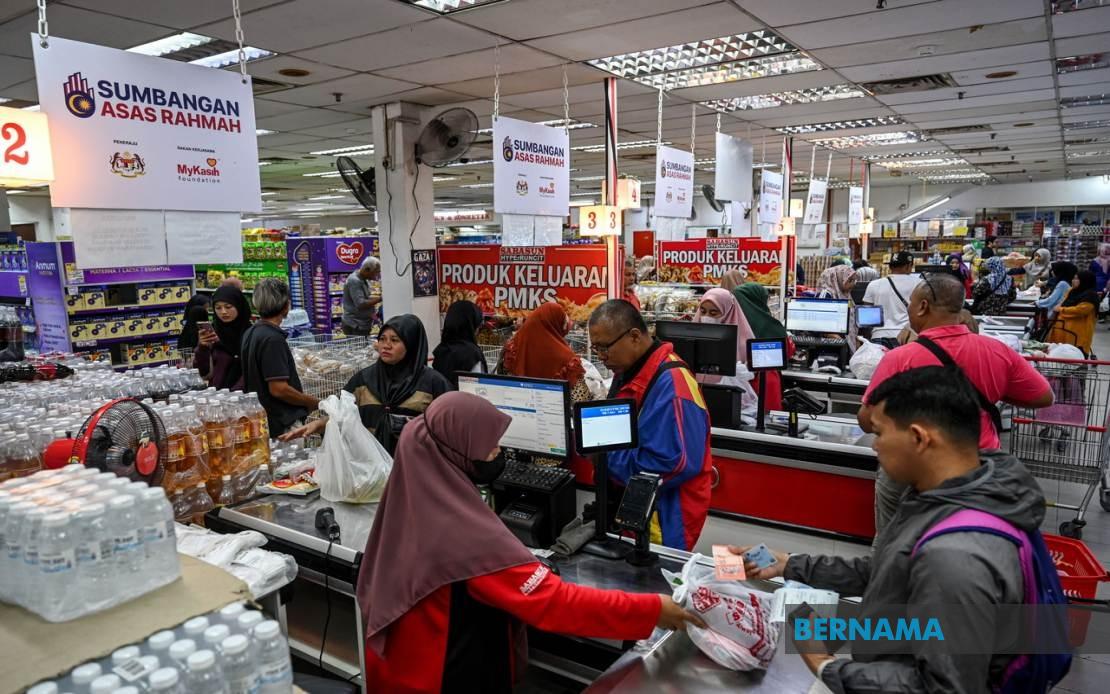
Prime Minister Datuk Seri Anwar Ibrahim has signalled that the MADANI Government remains open to lifting benefit levels under two major cash transfer initiatives if Malaysia's economic trajectory supports such an expansion. Speaking at an engagement in Ipoh on July 19, Anwar revealed the administration is actively examining whether the Sumbangan Tunai Rahmah (STR) and Sumbangan Asas Rahmah (SARA) schemes can be enhanced, with formal discussions already underway between his office and the Treasury establishment.
The prospect of increased payouts carries particular significance for Malaysia's lower-income households, who have come to rely on these schemes as a stabilising force against inflation and rising living costs. The STR and SARA initiatives have become pillars of the government's social safety net since their introduction, providing direct monetary relief to qualifying citizens during periods of economic stress. Any expansion would represent a tangible commitment to maintaining purchasing power among vulnerable populations, even as the country navigates slower global growth and domestic fiscal constraints.
Anwar, who holds the dual portfolio of Prime Minister and Finance Minister, disclosed that his recent conversation with Treasury Secretary-General Tan Sri Johan Mahmood Merican focused specifically on the feasibility of scaling up assistance under both schemes. The discussion reflects the cabinet's recognition that programme sustainability and adequacy remain live policy questions, rather than settled matters. By framing potential increases within the context of economic performance, the government appears to be taking a prudent approach that acknowledges both budgetary limits and welfare obligations.
The reference to the upcoming Budget as the vehicle for any enhancements carries institutional weight. Malaysia's annual budgetary cycle traditionally serves as the forum where the Finance Ministry signals its priorities and allocates resources across competing demands. Positioning the STR and SARA review within this framework suggests that any expansion would be formally codified and transparently justified through departmental submissions and parliamentary debate, rather than announced through ad-hoc measures.
For Malaysian households already receiving STR or SARA assistance, Anwar's remarks offer conditional hope without firm commitments. The phrase "if the economy allows" introduces an element of contingency that reflects real constraints. Malaysia's fiscal position, while stable, has been shaped by domestic challenges including sectoral weakness and external headwinds. The government must balance competing pressures—supporting vulnerable populations while maintaining debt sustainability and funding essential public services from infrastructure to healthcare.
Beyond the direct cash transfer schemes, Anwar also highlighted the government's attention to welfare provision for security and volunteer personnel who support the state's response to crises and disasters. He emphasised that RELA members, the voluntary civil defence corps, play a multifaceted role extending beyond conventional security duties into community engagement and disaster relief operations. Recognition of their contributions signals an understanding that Malaysia's security architecture and emergency response capacity depend partly on civilian volunteer participation.
The government's decision to maintain RM3 million in annual allocation for RELA member welfare, coupled with an acknowledgement that this sum remains insufficient, underscores the tension between aspiration and resource availability. Anwar's commitment to sustain the programme and maintain funding at current levels, despite his implicit recognition of its inadequacy, reflects a pragmatic acceptance of budgetary constraints while preserving institutional support for the volunteer force. This approach balances fiscal discipline with the political imperative of honouring those engaged in public service.
The timing of these announcements at a community programme in Ipoh, attended by representatives from the Home Ministry and RELA's leadership, carried implicit messaging about the government's engagement with grassroots constituencies and security agencies. By making commitments in a direct community setting rather than solely through parliamentary statement or written policy announcement, Anwar demonstrated accessibility to local concerns and a willingness to discuss welfare provision in forums where beneficiaries and implementation partners gather.
The conditional nature of potential STR and SARA increases reflects a broader theme in the MADANI Government's fiscal governance: maintaining welfare commitments while operating within perceived economic constraints. This approach differs markedly from unconditional expansion, instead tying assistance levels to objective economic metrics. For policymakers, this framework creates accountability by linking policy outcomes to measurable economic performance. For recipients, it introduces an element of uncertainty regarding whether household support will expand as inflation pressures persist.
Looking toward the next budget cycle, the Finance Ministry will face difficult prioritisation decisions. Education, healthcare, infrastructure development, and defence each make compelling claims on available resources. Any decision to increase STR and SARA payments would necessarily involve trade-offs elsewhere in the budget, or improvements in revenue collection and economic growth that create fiscal space without corresponding cuts. The cabinet's signals suggest that welfare expansion remains in the realm of possibility, contingent on the economic environment improving sufficiently to accommodate it without triggering fiscal deterioration.
For Malaysian citizens currently receiving assistance and those facing economic pressures, the government's public deliberation about potential increases carries both reassuring and cautionary undertones. The reassurance lies in acknowledgement that welfare adequacy is actively under review at the highest levels. The caution stems from the explicit conditioning of any improvements on economic circumstances beyond government control. This formulation reflects the realities of modern governance, where fiscal sovereignty increasingly intersects with global economic dynamics and domestic structural constraints that limit policymakers' room for manoeuvre.
The broader implications extend to debates about social policy in Malaysia more generally. As the economy encounters cyclical headwinds and structural challenges—including workforce transitions and regional competitive pressures—the question of whether targeted cash transfers can be sustainably expanded becomes increasingly important. The government's willingness to publicly examine this question, even while acknowledging constraints, suggests that welfare provision remains a live policy arena where technical and political considerations continue to evolve.

