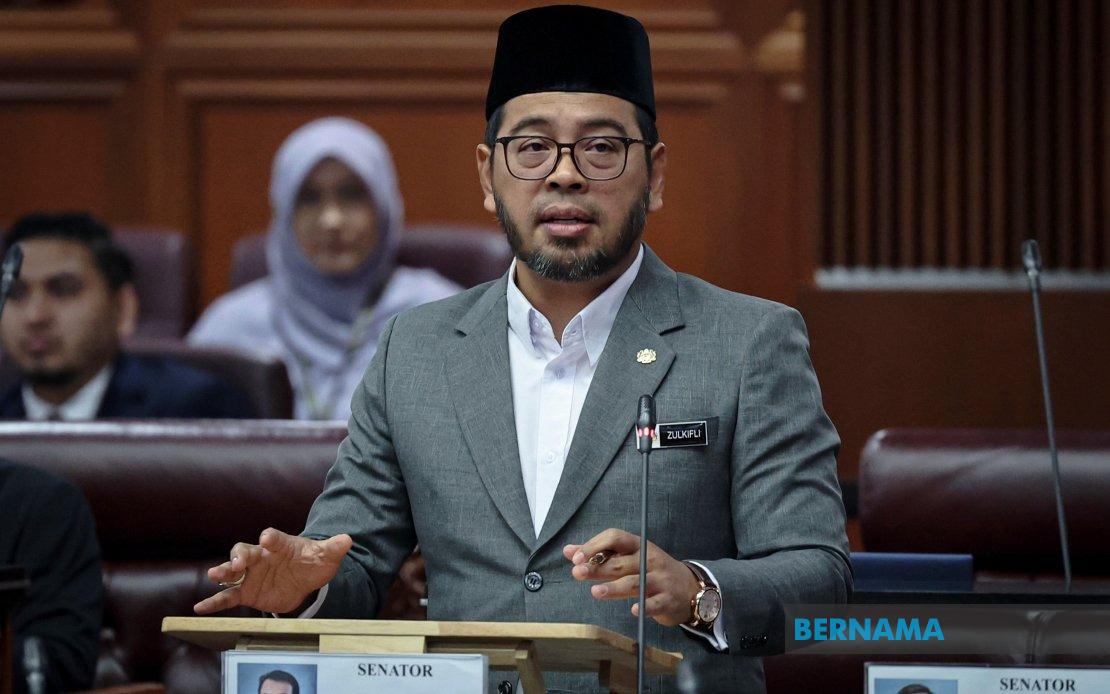
The Malaysian Cabinet will review a proposal to release the Royal Commission of Inquiry's final report on Tabung Haji (TH) before reaching a decision on the matter, according to Minister in the Prime Minister's Department (Religious Affairs) Dr Zulkifli Hasan. The announcement comes amid persistent public confusion and allegations surrounding the controversial transfer of TH's strategic assets, which has sparked debate over transparency and governance within the institution that serves Muslim pilgrims and savers across the country.
Dr Zulkifli moved to dispel what he characterised as false narratives about the asset transfers, emphasising that the former Treasury secretary-general did not sell TH's assets in a manner that constituted mismanagement or misconduct. Rather, he framed the 2018 transaction as a carefully orchestrated intervention to preserve a financial institution serving a vital religious and economic function within the Muslim community, following years of deteriorating financial health stemming from internal fraud and misappropriation that occurred prior to 2018.
The minister's clarification addressed concerns raised in parliament by Senator Datuk Seri Prof Dr Noor Inayah Ya'akub, who had questioned the legitimacy and scope of the asset transfers. According to Dr Zulkifli, the movement of underperforming and problematic TH assets to the government-owned vehicle Urusharta Jamaah Sdn Bhd (UJSB) reflected a collective Cabinet decision made in 2018, signifying that the transaction represented official government policy rather than an individual act of discretion.
The scale of TH's financial distress at that critical juncture was substantially graver than publicly recognised. The Auditor-General and Bank Negara Malaysia had jointly identified a staggering asset-liability deficit of RM10.9 billion in 2018, exposing the institution's fundamental insolvency and creating an urgent imperative for intervention. This revelation demonstrated that TH faced existential challenges that demanded immediate remedial action at the highest levels of government decision-making.
The financial crisis intensified when TH experienced a severe confidence crisis that triggered approximately RM6 billion in withdrawals over a compressed timeframe. This mass exodus of deposits threatened to accelerate the institution's collapse and potentially trigger a cascade of losses affecting hundreds of thousands of ordinary depositors, many of whom had entrusted their savings to TH based on its government-guaranteed status and its cultural significance within the Muslim community. Compounding these difficulties, government efforts to secure a standby loan to stabilise TH ultimately proved unsuccessful, leaving the bailout option as the primary remaining avenue to forestall institutional failure.
The fiscal exposure confronting the government had TH defaulted on its obligations would have been extraordinary. Dr Zulkifli disclosed that the state faced potential liability absorption of approximately RM74.5 billion should TH undergo complete collapse, given that all deposits held within the institution carried full government guarantee. This enormous contingent liability represented a substantial portion of annual government revenues and underscored why allowing TH to fail was economically untenable from a fiscal responsibility perspective.
The rescue operation has delivered measurable positive outcomes over the intervening years, providing quantifiable evidence that the 2018 intervention strategy succeeded in preserving both the institution and depositors' interests. TH's deposit base expanded substantially from approximately RM69.4 billion in 2019 to more than RM95.1 billion by mid-2025, demonstrating restored public confidence and actual growth rather than continued contraction. This recovery trajectory represents vindication of the government's decision to intervene rather than permit the institution's deterioration to continue unchecked.
Beyond deposit growth, TH has improved returns distributed to depositors, a metric directly affecting the welfare of ordinary Malaysians who depend on these payouts for retirement security and religious obligations. The profit distribution rate climbed from a meagre 1.25 percent in 2018 to 3.5 percent for 2025, marking the highest payout level achieved within an eight-year period. This improvement reflects genuine financial recovery and enhanced institutional profitability, not merely accounting adjustments or cosmetic restructuring.
Another significant achievement involves the stabilisation of hajj costs for Malaysian pilgrims, one of TH's core social functions within the Muslim community. Despite persistent inflationary pressures affecting global travel, accommodation, and transport expenses, TH maintained consistent hajj pricing from 2024 through 2026 without imposing cost increases on prospective pilgrims. This pricing stability exemplifies how the rescue operation enabled TH to fulfill its religious and social mission without burdening Malaysian Muslim households with additional financial hardship during their pilgrimage year.
Dr Zulkifli's announcement that the Cabinet will consider releasing the RCI report addresses growing public demand for transparency regarding how the government managed TH's crisis and what specific findings the inquiry uncovered. The decision to deliberate before disclosure suggests the government remains concerned about potential sensitivities related to the inquiry's conclusions, though proactive transparency could itself rebuild public trust more effectively than continued withholding of findings. For Malaysian readers and stakeholders invested in institutional governance and religious institution management, the forthcoming Cabinet discussion represents a critical juncture in determining whether TH's recovery will be matched by corresponding transparency in governance frameworks and official accountability mechanisms.

