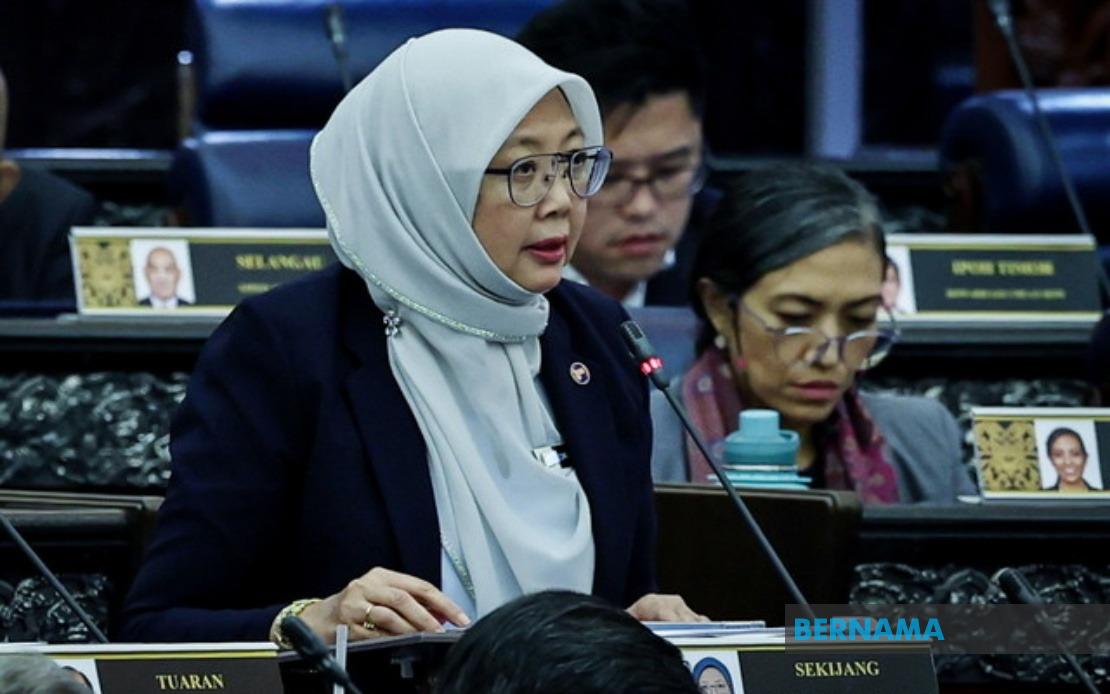
Datuk Seri Dr Zaliha Mustafa, chair of the Government Backbenchers Club and member of parliament for Sekijang, has called for comprehensive public reporting on Lembaga Tabung Haji's efforts to reform itself and recoup financial losses incurred under previous management. Speaking during parliamentary debate on the recently released Royal Commission of Inquiry report, she argued that fuller transparency would restore confidence among the millions of Malaysians who depend on the institution to safeguard their savings for the hajj pilgrimage.
Tabung Haji's financial crisis, which prompted the establishment of the RCI in 2021, has cast a shadow over one of Malaysia's most significant Islamic financial institutions. The 211-page report, formally presented to the Yang di-Pertuan Agong in August 2022 but only made public in recent weeks, contains 25 recommendations for addressing management and operational deficiencies that emerged between 2014 and 2020. As of late July this year, the institution had implemented three-quarters of these recommendations, yet details about which specific measures remain outstanding and their expected completion timelines have not been systematically shared with the public.
Dr Zaliha's intervention targets a gap between official action and public understanding. While she welcomed the progress demonstrated so far, she emphasised that parliament and the broader Muslim community deserve more granular information about the reform roadmap. Her proposal involves laying before the Dewan Rakyat a detailed status report distinguishing between completed recommendations, those currently underway, and those awaiting implementation, complete with target dates. This level of accountability, she suggested, would demonstrate genuine commitment to addressing institutional failings rather than allowing the matter to fade from public attention.
The recovery of lost funds represents another dimension requiring transparency. Tabung Haji's previous financial mismanagement resulted in substantial losses to the institution's asset base and distributions to depositors. Dr Zaliha contends that Malaysians should understand precisely what recovery mechanisms are in place, what progress has been achieved, and what further action is planned. Without such disclosure, public confidence—already shaken—risks remaining depressed, potentially affecting the institution's ability to attract and retain deposits from future pilgrims.
Dr Zaliha's remarks also touched on governance accountability, specifically addressing the role of former leadership during the crisis period. The RCI found that political pressure ahead of a general election constituted a significant factor in driving the institutional failures. She drew particular attention to Datuk Seri Abdul Azeez Abdul Rahim, who served as the institution's non-executive chairman while simultaneously holding positions across multiple TH subsidiaries and related entities. She highlighted that despite his non-executive title, evidence suggests he exercised substantial influence over major investment decisions.
The extent of the former chairman's involvement in negotiating critical investments has not been fully clarified in public discourse. Dr Zaliha specifically referenced an allegation concerning substantial cash holdings—reportedly reaching RM170 million at certain points—in accounts linked to his authority. She urged the government to address this directly, confirming the facts and explaining the arrangements that permitted such concentration of funds and decision-making power within a single individual's purview. Such clarification would help Malaysians understand how institutional safeguards failed so comprehensively.
Her intervention carries particular weight because it emanates from within the government's own backbench rather than from opposition quarters. This positioning reflects genuine concern among ruling coalition members about the reputational and operational damage the TH crisis represents for Islamic finance in Malaysia. The institution manages savings for a constituency—prospective hajj pilgrims—that spans diverse demographics and geographical regions, making its stability a matter of national Islamic policy importance.
The RCI's finding regarding electoral pressure as a precipitating factor strikes at broader questions about governance separation and institutional independence. Dr Zaliha's invocation of Muslim unity whilst questioning whether defending problematic decisions truly serves that unity suggests she believes accountability and institutional integrity are inseparable from genuine communal trust. Her rhetorical framing presents transparency not as opposition to Islamic principles but as essential to their realisation within financial institutions.
The question of what precisely happens to the institution going forward remains partly obscured by the selective disclosure to date. Malaysian depositors, who have already absorbed the shock of learning about historical mismanagement, require clarity about contemporary and future safeguards. Dr Zaliha's parliamentary intervention represents an attempt to convert RCI findings into concrete, public governance commitments that would bind officials and management to demonstrable outcomes.
Implementation of the remaining 25 per cent of recommendations, presumably the more complex or systemically significant measures, will determine whether the RCI process produces substantive change or represents merely a procedural exercise. The absence of a public timeline for completion creates space for recommendations to languish, particularly if media and parliamentary attention shifts elsewhere. Dr Zaliha's call for formal status reporting would institutionalise ongoing public scrutiny, making it harder for implementation to stall without attracting notice.
The recovery aspect of her proposal addresses a dimension sometimes overlooked in governance debates: the financial restitution to the institution and ultimately to affected depositors. Understanding what assets might be recovered, whether through legal action against responsible parties or through restructuring investments made during the crisis period, would provide concrete evidence of whether accountability extends beyond rhetoric to material remediation. This feeds directly into whether Tabung Haji can restore distributions to historical levels and regain its standing as a reliable savings vehicle.

