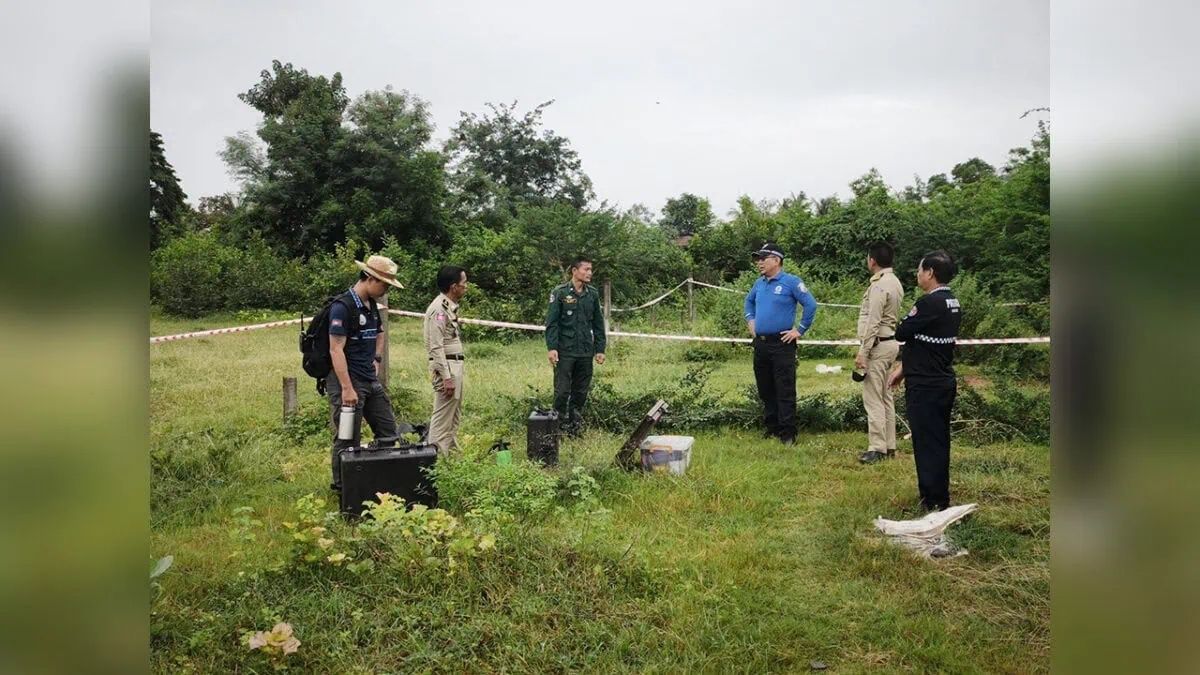
Cambodia's law enforcement authorities have mobilised a comprehensive investigative response following the discovery of two deceased children in Banteay Meanchey province on July 28, with the Cambodian National Police and the Child Protection Unit now working in tandem to pursue separate homicide inquiries. The dual investigations represent a significant commitment of resources by both state police agencies and international child protection partners, reflecting the gravity with which authorities are approaching these incidents.
According to a statement issued by the Child Protection Unit on August 3, the two cases remain entirely separate investigations with no apparent connections between them. Each death is being handled as an independent homicide matter, with authorities emphasising that they are not pursuing a unified investigation or considering the incidents as part of a broader criminal pattern. This distinction carries particular weight for investigative methodology, as separate cases require distinct evidentiary frameworks and witness interview protocols.
The first discovery occurred at approximately 8am on July 28 when authorities located the body of a 15-month-old child in a pond situated in Mongkol Borei district. The circumstances surrounding how the infant came to be in the water and the timeline of events leading to the discovery remain subjects of active investigation. Meanwhile, a second child, aged five years old, was found in Teuk Thla commune during the same morning. This child had been reported missing three days earlier on July 25, meaning authorities were already engaged in a search operation when the body was discovered.
The rapid mobilisation of investigative resources underscores the institutional priority placed on child protection cases within Cambodia's law enforcement system. The homicide investigation team of the Child Protection Unit worked immediately alongside Banteay Meanchey provincial police forces and personnel from the Ministry of Interior's Department of Technical and Scientific Police. This multi-agency approach reflects international best practices in criminal investigation, particularly for cases involving child victims where forensic expertise and specialised interviewing techniques are essential.
Forensic examination of both crime scenes and preliminary investigative work conducted in the immediate aftermath of the discoveries led authorities to formally classify both incidents as child homicides. The transition from initial response to formal homicide designation indicates that preliminary findings eliminated accidental death or natural causes as explanations, pointing instead toward criminal conduct. However, authorities have maintained strict operational secrecy regarding the nature of the evidence collected or the preliminary conclusions emerging from forensic analysis.
Child Protection Unit Director James McCabe articulated the organisation's resolve in pursuing comprehensive investigations, stating that all available investigative resources and capabilities would be deployed to ensure both cases receive thorough examination. McCabe's assertion that anyone found to have involvement in either death would face prosecution through the court system represents a public commitment to accountability and justice. Such declarations serve both practical and symbolic functions—signalling to potential witnesses that information will be acted upon, whilst simultaneously reassuring the public that these matters are being treated with appropriate seriousness.
The collaborative framework between the Cambodian National Police and the Child Protection Unit reflects broader regional trends toward strengthening child protection mechanisms across Southeast Asia. Many nations in the region have increasingly recognised that effective child homicide investigation requires not merely police expertise but also specialised child protection knowledge, trauma-informed interviewing approaches, and international standards compliance. Cambodia's engagement of the Child Protection Unit suggests an institutional commitment to these evolving standards, even as the country continues developing its overall forensic and investigative capabilities.
Both the national police and the Child Protection Unit extended formal condolences to the families of the two deceased children whilst reaffirming their commitment to securing justice. Such statements, whilst appearing formulaic, carry genuine significance in Cambodia's cultural and legal context, where public acknowledgement of victims' families and institutional accountability represents an important aspect of the justice process. The formal reaffirmation of commitment to justice signals that these are not cases that will be shelved or deprioritised as bureaucratic attention shifts elsewhere.
Authorities have explicitly stated that no further operational details regarding either investigation will be disclosed whilst the cases remain under active investigation. This restriction on information release represents a deliberate strategic choice, as premature disclosure of investigative findings or evidence can compromise witness cooperation, allow suspects to adjust their narratives, or prejudice eventual judicial proceedings. The commitment to operational confidentiality, even whilst maintaining public transparency about the fact that investigations are proceeding, represents a balance between institutional accountability and investigative necessity.
The emergence of these cases in Banteay Meanchey, a province in northwestern Cambodia bordering Thailand, draws attention to child protection challenges in more remote provincial areas where resources and institutional capacity may be more limited than in the capital. The response mobilised here suggests central authorities are committed to ensuring that child protection standards do not vary significantly between Phnom Penh and provincial jurisdictions. For Southeast Asian observers, the case illustrates both the ongoing challenges child protection systems face across the region and the gradual institutional development occurring as nations enhance their investigative capabilities and inter-agency cooperation mechanisms.

