Cambodia is pursuing an ambitious economic transformation, working to attract South Korean capital into capital-intensive and technology-driven sectors rather than relying on the low-wage garment factories that have anchored its development for decades. The country's commitment to this strategic shift became evident during Deputy Prime Minister Sun Chanthol's recent investment promotion visit to South Korea, where he led a delegation representing the Council for the Development of Cambodia and other government bodies on a series of high-profile company visits and an investment roadshow in Incheon on June 16. The mission underscores Phnom Penh's determination to position itself as a regional hub for automotive components, electric vehicle systems, logistics, energy, construction and digital healthcare—sectors that promise higher value creation and stronger integration into regional supply chains.
During the 2026 Incheon-Cambodia Investment Roadshow, Sun Chanthol publicly reaffirmed the kingdom's commitment to Korean investors, pledging comprehensive facilitation and support under Cambodia's new investment framework. This message resonated particularly with companies already operating in the country, as the government sought to encourage existing investors to expand their footprint across complementary sectors. The delegation's focus on firms with established Cambodian operations reflects a pragmatic strategy: building on existing relationships and demonstrating proof of concept rather than starting from scratch. By engaging companies that know Cambodia's operating environment, the government increases the likelihood of follow-on investment and technology transfer.
The mission's first major engagement involved Daejoo KC Group, a sprawling South Korean conglomerate with interests spanning metallurgy, chemicals, logistics, construction, automotive components and energy. While the company's presence in Cambodia might be less visible than multinational household names, its track record offers genuine substance. Through two subsidiaries, Daejoo operates Camko Motor, which assembles Hyundai vehicles for Cambodia's domestic market while simultaneously producing automotive wire harnesses for export, generating nearly 500 jobs in the process. A second subsidiary, Camko Infracore, handles vehicle distribution, maintenance services and spare parts supply. These operations exemplify the kind of integrated manufacturing and service ecosystem that Cambodia hopes to expand—combining local assembly with export-oriented components production and higher-margin service revenues.
The significance of targeting Daejoo and similar companies extends beyond their immediate employment contribution. Cambodia's garment sector, while labour-intensive and export-oriented, offers limited prospects for technological advancement or productivity improvements. By contrast, automotive component manufacturing—particularly in the electric vehicle space—demands precision engineering, quality control systems, and supply-chain coordination that raise skill levels across the economy. When Daejoo was encouraged to consider expanding into Cambodia, the implicit message was that the country could handle increasingly sophisticated production stages. This approach contrasts sharply with the beggar-thy-neighbour competition that often characterises Southeast Asian investment promotion; instead, Cambodia is positioning itself within existing corporate ecosystems where it can add value.
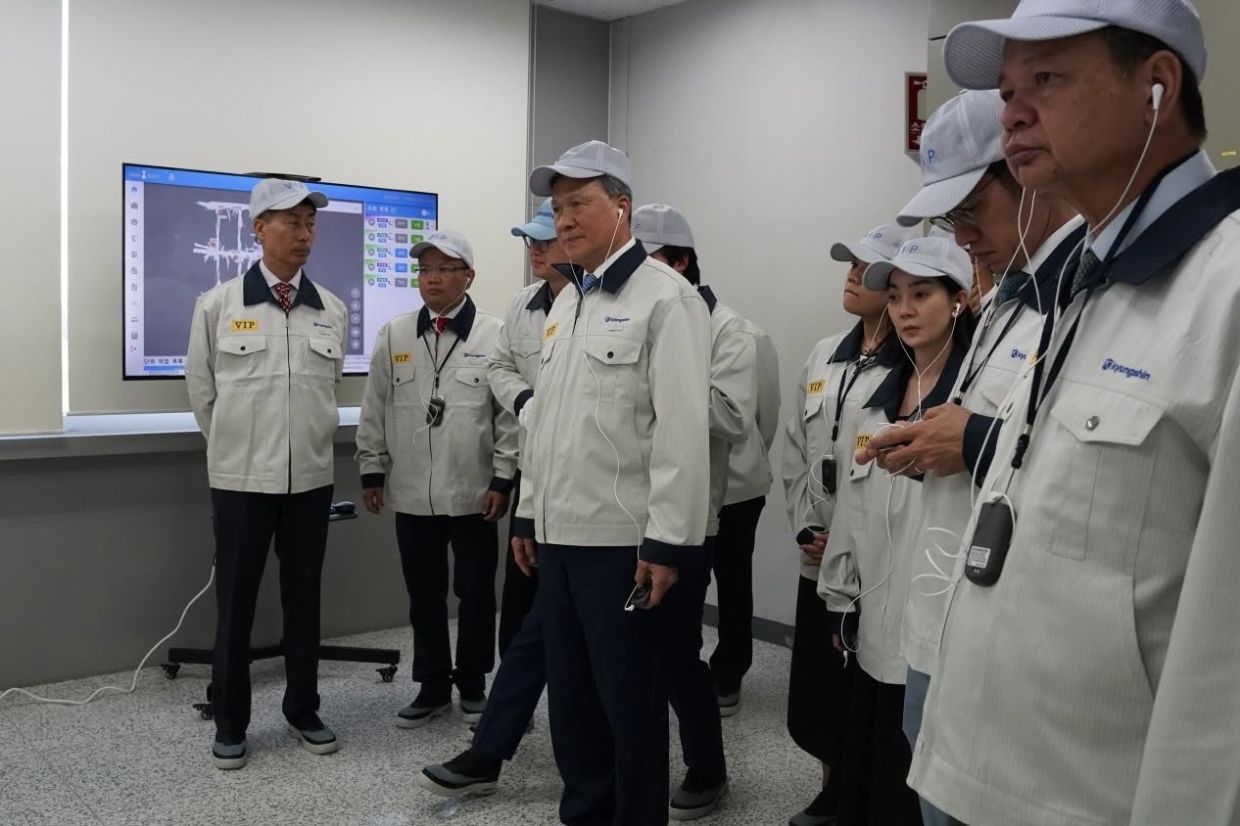
Kyungshin Co., Ltd. represented an even more explicit signal of Cambodia's strategic ambitions. Founded in 1974 and specialising in automotive electronic components and wire harness manufacturing, Kyungshin has become essential to modern vehicle production as the automotive industry undergoes its most dramatic transformation in a century. The company's product portfolio—wiring harnesses, connectors, junction blocks, cables and electrical systems—sits at the heart of electric vehicle architecture. Kyungshin's presence in Cambodia since 2012, through a Kandal province factory employing 1,467 workers with approximately US$20 million in capital, provided concrete evidence that the country can retain complex manufacturing operations. Sun Chanthol's inspection of these facilities and discussions with management signalled that Phnom Penh recognises the timing imperative: as global automakers accelerate electrification, Cambodia must position itself within EV supply chains now or risk being marginalised in the next phase of automotive manufacturing.
The inclusion of healthcare technology in the mission revealed that Cambodia's economic diversification strategy extends beyond manufacturing into services and digital platforms. The delegation's visit to Incheon Baek Hospital, a respected South Korean medical institution, moved the conversation beyond factories and production lines into medical innovation, digital health management systems, and training protocols. Sun Chanthol's description of healthcare development and international-standard hospitals as government priorities indicated that Cambodia sees opportunity in medical technology transfer and the establishment of advanced healthcare infrastructure. This diversification into services makes economic sense: successful middle-income countries typically develop service sectors alongside manufacturing, and medical tourism combined with domestic healthcare improvement offers multiple revenue streams and employment possibilities.
Cambodia's strategic positioning within regional dynamics adds further context to this mission. Vietnam and Thailand have already established themselves as significant automotive manufacturing hubs, capturing substantial shares of Japanese and South Korean investment in the sector. Cambodia enters this competition as a relative latecomer with several inherent disadvantages—smaller population, less developed infrastructure, and less industrial experience in precision manufacturing. However, the country possesses potential advantages that astute promotion can leverage: lower labour costs than Thailand, significant remaining land availability for industrial parks, political stability under long-established leadership, and importantly, existing relationships with Korean companies who understand the local operating environment. The mission's success depends partly on convincing Korean firms that Cambodia offers a credible alternative or complementary location for production expansion.
The broader investment framework that Cambodia presented during the roadshow carries genuine significance for potential investors. The government's new investment law promises incentive packages, attractive fiscal benefits, macroeconomic stability and reliable protection mechanisms. While such promises require careful scrutiny—implementation quality often diverges from stated intentions in Southeast Asia—the framework's existence provides the formal architecture that international companies require for major capital commitments. More importantly, the law's existence signals that Cambodia's government recognises what long-term investors need and has acted to provide it. Whether these provisions prove generous or restrictive in practice will likely determine whether the promotion mission generates sustained investment flows or merely gestures toward ambition.
The composition of Sun Chanthol's delegation itself merits attention, as it reflected the government's attempt to align diplomatic, regulatory, and private-sector interests around the investment promotion agenda. The participation of the Cambodian ambassador to South Korea, CDC officials, Ministry of Commerce representatives, the Korean Chamber of Commerce in Cambodia, and Cambodia's business elite through the Oknha Association demonstrated institutional commitment to attracting Korean capital. This coordination suggests that the mission was not a one-off diplomatic exercise but part of a sustained effort to recalibrate Cambodia's economic engagement with South Korea. The involvement of multiple government agencies and business groups increased the likelihood that promising leads would receive follow-up and that investor concerns would navigate through appropriate institutional channels.
Cambodia's dependence on garment, footwear and travel goods manufacturing has provided genuine economic benefits—particularly employment for rural workers migrating to urban centers—but structural vulnerabilities persist. Labour cost increases, rising automation, and shifting global supply chains threaten the sector's continued dominance in Cambodia's economy. Chinese competition in low-cost apparel manufacturing intensifies these pressures. Meanwhile, technological advancement and rising incomes in Thailand and Vietnam have enabled those countries to capture higher-value manufacturing segments. Cambodia's strategic imperative is therefore clear: develop manufacturing capabilities in higher-value sectors before labour cost advantages erode completely, and before the global shift toward automation renders low-wage labour irrelevant across manufacturing generally.
The Korea mission fits logically into this broader economic trajectory. By targeting companies in automotive components, EV systems, logistics, energy and healthcare technology, Cambodia signalled its intention to participate in the next generation of Asian manufacturing rather than remaining trapped in commoditised, low-margin garment production. Automotive electronics and EV systems represent growth sectors where demand will expand substantially over the next decade as vehicle electrification accelerates across Asia. Kyungshin's investment demonstrates that sophisticated manufacturers can successfully operate in Cambodia; expansion of such operations would generate higher wages, stronger skills development, and deeper integration into regional supply chains than garment production typically achieves. The healthcare technology angle broadens the diversification logic beyond manufacturing into services and digital platforms where Cambodia can potentially develop genuine competitive advantages.
Whether this mission translates into substantial new investment flows remains uncertain. South Korean companies already present in Cambodia must weigh expansion opportunities against investment possibilities elsewhere in Southeast Asia or beyond. New Korean entrants would require confidence in Cambodia's infrastructure, regulatory stability, and workforce quality—assessments that promotional missions can influence but not guarantee. However, the mission's real significance lies in signalling a clear policy direction. Cambodia's government has publicly committed to economic diversification, identified plausible target sectors aligned with global manufacturing trends, and taken concrete steps to engage major potential investors. For Malaysian observers, the mission illustrates how a lower-middle-income country in the region approaches the challenge of moving up the manufacturing value chain—a challenge that remains relevant as Malaysia itself faces competition in semiconductors, electronics and automotive components from emerging competitors.