Cambodia's leadership is moving to elevate girls' education to the forefront of national development strategy, recognising that female empowerment holds the key to sustained economic progress. Prime Minister Hun Manet made this commitment at the 39th World Conference of the World Association of Girl Guides and Girl Scouts on Tuesday, June 16, positioning quality schooling for girls as fundamental to building the human capital necessary for long-term prosperity. His remarks reflect a broader acknowledgement that Cambodia's future trajectory depends heavily on unlocking the potential of its female population, particularly as the country works towards ambitious economic milestones over the coming decade.
The Cambodian leadership's emphasis on girls' education directly challenges entrenched perceptions that have historically sidelined women from the economic mainstream. For generations, cultural narratives portrayed Cambodian women as peripheral players in business and public life, confined largely to supporting roles within families and communities. However, the evidence on the ground tells a markedly different story. Today's younger generation of women is breaking through these barriers, establishing themselves as entrepreneurs launching innovative ventures, assuming leadership positions in major corporations, shaping policy decisions, and contributing meaningfully to regional and international peacekeeping efforts. This transformation represents a fundamental shift in Cambodia's social and economic fabric, with women moving from the margins to become central agents of nation-building.
Prime Minister Hun Manet articulated a compelling vision of female potential, emphasising that education serves as a transformative tool extending far beyond individual advancement. A girl who receives quality schooling and grows up in a secure environment develops self-confidence and agency, he argued, positioning her to reshape not only her personal circumstances but also the prospects of her family unit, her wider community, and ultimately the nation itself. This framing treats girls' education not as a charitable investment but as strategic economic policy—an understanding increasingly backed by empirical evidence showing that educated women generate returns benefiting entire ecosystems of economic activity.
Cambodia's demographic composition amplifies the significance of this policy direction. With women representing nearly half the population and the majority under age 30, the nation faces a historic opportunity to channel youthful female energy into productive economic participation. This demographic dividend, if properly harnessed through quality education and meaningful opportunity, could accelerate Cambodia's development trajectory significantly. Conversely, failing to invest adequately in girls' schooling means squandering the potential contribution of roughly half the population during their peak productive years.
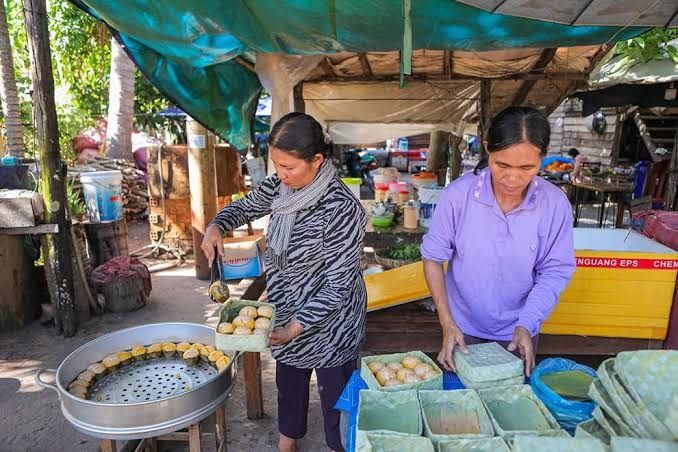
The economic data underscores how dramatically women are already reshaping Cambodia's commercial landscape. Female literacy rates have surpassed 80 per cent according to World Bank figures, while girls' primary school enrolment reached universal levels—100 per cent—by 2021, demonstrating that access barriers are crumbling. Beyond classroom metrics, women own approximately 60 per cent of Cambodia's micro, small, and medium enterprises, making them the dominant force in the entrepreneurial sector driving private-sector expansion. These female-owned businesses span diverse economic activities, from small-scale food production to substantial agricultural export operations, reflecting entrepreneurial dynamism across income levels.
The impact extends into formality sectors traditionally dominated by men. Women successfully operate and manage accounting firms, law practices, private medical facilities and dental clinics, and educational institutions, demonstrating that gender barriers in professional services are weakening. In the garment, textile, and footwear manufacturing complex—Cambodia's largest industrial employer—more than 700,000 women form the backbone of a sector generating approximately US$16 billion annually for the national economy. This single sector alone illustrates women's indispensability to Cambodia's trade competitiveness and foreign exchange earnings.
Yet significant obstacles remain in translating this economic leadership into educational equity at the foundational level. Civil society organisations consistently document that girls continue facing formidable barriers to completing their basic schooling. Social and cultural traditions persist in some communities, restricting girls' educational access. Economic hardship drives families to withdraw girls from school to reduce household costs or rely on their labour. Early marriage continues trapping girls in cycles of dependency, preventing educational completion. Safety concerns—including risks of gender-based violence—deter both girls and parents from prioritising school attendance. These interconnected structural and cultural obstacles mean that despite impressive aggregate progress at the secondary and tertiary levels, foundational educational gaps threaten to perpetuate inequality across generations.
Prime Minister Hun Manet signalled the government's recognition of these challenges through commitments to expand public investment in gender equality and women's empowerment initiatives. He highlighted efforts to strengthen women's decision-making authority, reduce exposure to gender-based violence, and foster healthier intergenerational relationships—framing these not merely as social justice imperatives but as complementary economic investments. By creating safer school environments, removing financial barriers to attendance, and challenging cultural norms that discourage girls' education, Cambodia can expand the pool of educated female talent available to fuel economic dynamism.
Cambodia's ambitions to graduate from Least Developed Country status by 2029 and achieve upper-middle-income classification by 2030 depend critically on female participation in this development journey. Upper-middle-income economies require sophisticated workforces capable of competing in knowledge-intensive sectors and managing complex organisations. Systematically constraining girls' educational opportunities means Cambodia would be pursuing these goals with one hand tied behind its back, unable to fully mobilise its human resources. International development experience demonstrates conclusively that nations achieving rapid income growth while narrowing gender gaps in education outperform those perpetuating such disparities.
For Malaysian observers, Cambodia's strategic emphasis on girls' education and female empowerment offers both parallels and contrasts. Southeast Asian nations share certain cultural contexts and face comparable development challenges, yet Malaysia's own female labour force participation rates and educational achievement metrics are higher, suggesting different policy priorities and historical trajectories. Nevertheless, both nations recognise that women's economic participation is essential for maintaining competitiveness in the region. Cambodia's explicit commitment to removing educational barriers for girls, coupled with evidence that women are already reshaping its economy, represents a policy direction increasingly acknowledged across Southeast Asia as fundamental to sustained prosperity and social stability.

