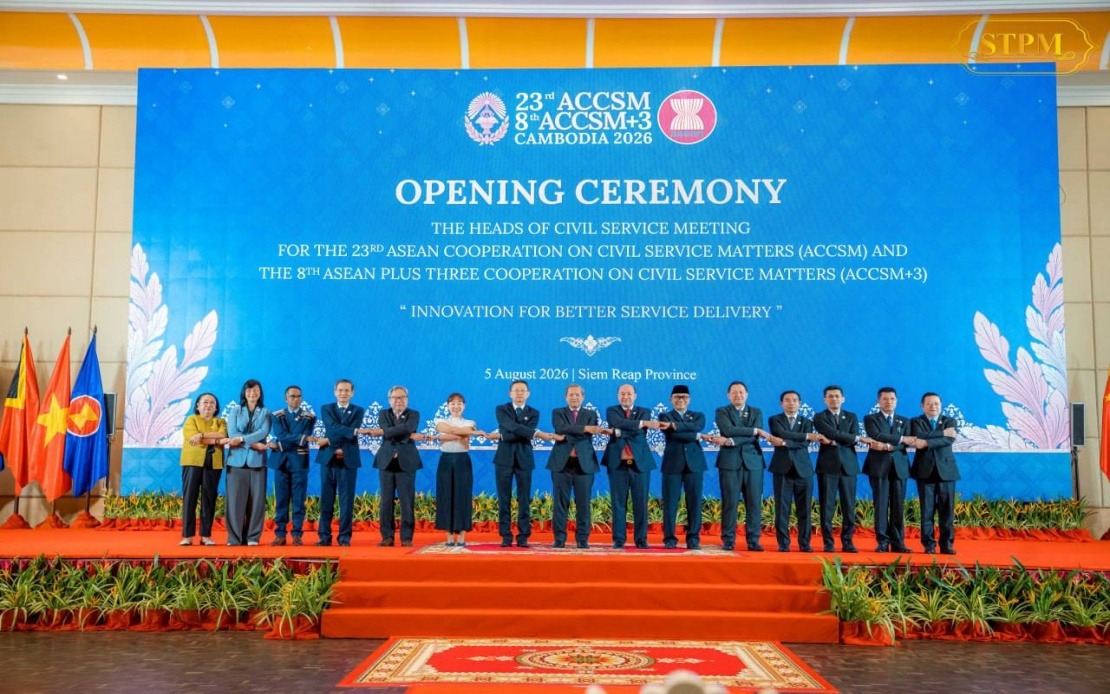
Cambodia's Prime Minister Hun Manet has issued a clarion call for ASEAN member states to seize the potential of artificial intelligence and digital innovation in reshaping their public services, emphasising that technological advancement must remain fundamentally anchored in improving the lived experience of ordinary citizens. Speaking at a major regional conference on civil service cooperation in the northern Cambodian city of Siem Reap, Hun Manet articulated a vision where technology serves broader developmental objectives rather than becoming an end in itself, positioning innovation as a strategic tool for bridging socioeconomic divides within the bloc.
The Cambodian leader's intervention comes at a pivotal moment for Southeast Asia, where governments are increasingly investing in digital transformation and artificial intelligence to modernise their administrative apparatus, streamline public service delivery, and boost operational efficiency across multiple sectors. However, Hun Manet's emphasis on a people-centred approach signals an important counterbalance to purely technocratic visions of modernisation. He argued that genuine innovation in the public sector demands far more than simply acquiring cutting-edge technologies; rather, it requires building robust institutional frameworks and developing human capital capable of deploying these tools effectively and responsibly.
Recognising the profound heterogeneity within ASEAN, where member states operate at markedly different stages of economic and technological development, Hun Manet stressed the imperative of calibrating the pace of AI and digital adoption to ensure sustainability and prevent widening disparities. This concern reflects a real tension within the region: wealthier, more technologically advanced economies like Singapore and Malaysia risk outpacing their less developed neighbours, potentially exacerbating existing inequalities unless deliberate efforts are made to facilitate more equitable technology transfer and capacity building across the bloc. His articulation of narrowing development gaps as a core objective suggests that ASEAN's digital future should prioritise inclusive progress rather than allowing technological advantages to concentrate power and resources among a handful of frontrunner nations.
The remarks were delivered at the 23rd ASEAN Cooperation on Civil Service Matters conference, a triennial gathering that also included the 8th ASEAN Plus Three Cooperation on Civil Service Matters session, bringing together civil service leaders from ASEAN members alongside China, Japan, and South Korea. This expanded forum underscores the region's openness to learning from regional partners while charting its own course in public sector modernisation. The deliberate framing of the conference theme—"Innovation for Better Service Delivery"—reflects a shift in how ASEAN conceptualises technological change, moving beyond technological prowess as a standalone achievement toward service excellence as the ultimate measure of success.
Hun Manet's advocacy for building institutional capacity and human resources before rushing headlong into digital transformation carries particular resonance for Southeast Asian governments struggling with legacy public administration systems, varying levels of digital literacy among civil servants, and limited budgets for sustained technology investment. He implicitly cautioned against the pitfall of implementing sophisticated AI systems without ensuring that public sector workforces possess the skills and understanding necessary to operate and maintain them effectively. This insight reflects lessons learned elsewhere where expensive digital projects have underperformed due to inadequate training, insufficient change management, and resistance from bureaucrats unfamiliar with new workflows.
Beyond the instrumental benefits of improved service delivery, Hun Manet positioned innovation as essential to strengthening ASEAN's collective capacity to confront multifaceted regional challenges that no single nation can resolve unilaterally. Climate-related disasters, uneven economic development, and persistent poverty represent interconnected problems requiring coordinated responses drawing on pooled expertise and resources. By framing innovation as a vehicle for regional resilience, Hun Manet elevated the discussion beyond administrative efficiency toward strategic cooperation that addresses fundamental threats to Southeast Asian stability and prosperity.
The Cambodian PM's call for ACCSM to function as a vital platform for mutual learning, policy harmonisation, and shared capacity-building reflects a pragmatic recognition that member states can achieve more through coordination than through isolated national efforts. This framing acknowledges that many developmental and administrative challenges facing Southeast Asian governments share common features—weak regulatory frameworks, insufficient digital infrastructure, brain drain, and fiscal constraints—that yield to collective problem-solving better than to unilateral action. Knowledge exchanges regarding successful public service innovations, policy frameworks that facilitate responsible AI deployment, and strategies for managing the workforce transition to digital-first administration could meaningfully accelerate progress across the region.
For Malaysia and other ASEAN members, Hun Manet's emphasis on sustainable, inclusive digital transformation offers a useful template for evaluating their own modernisation roadmaps. Rather than pursuing technological sophistication as a prestige project, policymakers might usefully prioritise alignment between innovation investments and concrete improvements in citizen experience—whether through faster permit processing, more responsive complaint mechanisms, or greater transparency in government operations. The principle that innovation should strengthen institutional capacity and human resources rather than replacing or marginalising them carries particular importance in Southeast Asia, where civil service employment represents a significant portion of the educated workforce and where social stability depends partly on government's capacity to provide dignified, meaningful work.
Hun Manet's remarks also implicitly challenge a Silicon Valley narrative that emphasises disruption and creative destruction as virtues in themselves. Instead, his vision for ASEAN's digital future privileges continuity, institutional stability, and the protection of public service values even as technological systems evolve. This conservative-by-design approach may produce slower transformation than some technology evangelists prefer, but it offers greater likelihood of sustainable, widely-accepted change that maintains public trust in government institutions while modernising their operational capabilities.
Looking forward, Hun Manet's call for ASEAN to pursue people-centred, AI-ready public services suggests that successful regional integration in the digital domain will require both technical cooperation and deeper alignment around shared values regarding technology's proper role in governance. Member states must navigate genuine tensions between efficiency and accountability, between personalisation and privacy, and between innovation and stability. The ACCSM forums provide crucial venues for these conversations, potentially enabling ASEAN to develop governance models for artificial intelligence and digital transformation that reflect Southeast Asian contexts and priorities rather than simply importing frameworks designed elsewhere. In this sense, Hun Manet's intervention points toward ASEAN's opportunity to become not merely a consumer of global digital governance standards but an active shaper of approaches suited to its distinctive development challenges and social aspirations.

