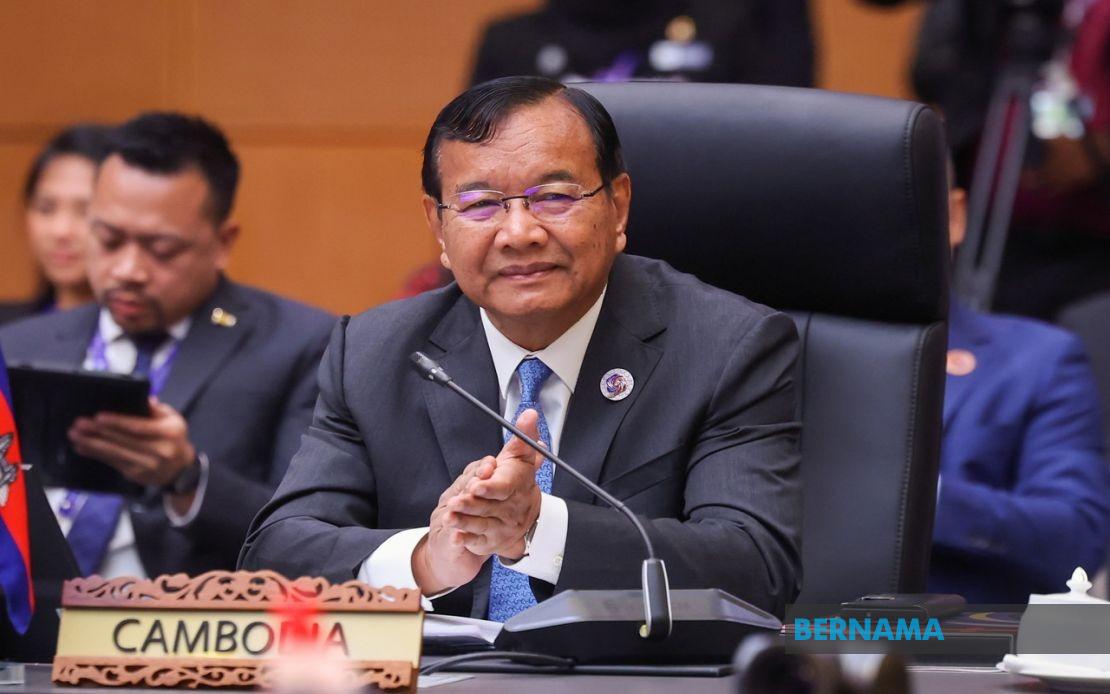
Cambodian Deputy Prime Minister and Minister of Foreign Affairs and International Cooperation Prak Sokhonn has touched down in Malaysia, marking the beginning of a strategically significant two-day visit aimed at reinvigorating the bilateral relationship between the two Southeast Asian neighbours. His arrival at Kuala Lumpur International Airport Terminal 1 on August 3 at 1.48 pm signals renewed momentum in ongoing economic and diplomatic engagement, with scheduled engagements involving the highest levels of Malaysian government.
The visit underscores the importance both nations place on their partnership, with the Cambodian envoy receiving a formal welcome befitting a high-ranking official. Cambodian Ambassador to Malaysia Ouk Chandara and Malaysian Government chief ceremony officer Datuk Rozainor Ramli were present to greet the delegation, reflecting the protocol and respect accorded to the occasion. This ceremonial reception demonstrates Malaysia's commitment to cultivating strong ties with its eastern neighbour at a time when regional stability and economic cooperation remain paramount concerns.
Sokhonn's immediate schedule includes a courtesy call on Prime Minister Datuk Seri Anwar Ibrahim, a customary engagement that carries symbolic weight in diplomatic circles. Such meetings typically serve as opportunity for senior leaders to discuss overarching bilateral matters and reaffirm commitments to existing partnerships. Following this initial courtesy visit, Sokhonn will transition into a series of official engagements designed to deepen collaboration across multiple sectors and policy domains.
The centrepiece of the visit is the 3rd Meeting of the Cambodia-Malaysia Joint Commission for Bilateral Cooperation, scheduled for the following day in Kuala Lumpur. This mechanism represents a structured framework through which both governments can systematically address cooperation initiatives. The commission's agenda encompasses a comprehensive review of progress made in implementing the agreed minutes from the second JCBC, alongside assessment of various bilateral agreements previously concluded between the two nations. Such periodic reviews are essential for ensuring that diplomatic commitments translate into tangible outcomes.
Parallel to the joint commission proceedings, Sokhonn is set to engage in bilateral discussions with Malaysian Foreign Minister Datuk Seri Mohamad Hasan. These talks provide an avenue for addressing contemporary diplomatic issues, exploring new cooperation possibilities, and resolving any outstanding matters requiring high-level attention. The foreign ministry engagement typically generates substantive dialogue on regional matters and strategic considerations affecting both countries' interests in Southeast Asia.
The economic dimension of the Malaysia-Cambodia relationship has demonstrated remarkable resilience and growth. Bilateral trade figures reveal robust expansion, with trade between the two countries reaching RM5 billion (USD1.17 billion) in 2025, representing a substantial 27.4 per cent year-on-year increase. This commercial vitality reflects strong demand for goods and services in both markets and suggests complementary economic structures that continue generating mutual benefits. The upward trajectory signals confidence among business communities in both nations regarding future growth prospects.
Malaysia's investment profile in Cambodia further underscores the depth of economic integration between the neighbours. As of 2024, Malaysian investors had accumulated USD3.20 billion (RM13.07 billion) across 162 registered projects operating throughout Cambodia. This substantial capital commitment positions Malaysia as Cambodia's third-largest foreign investor, behind only China and Vietnam. The breadth of investment across 162 projects indicates diversification across multiple sectors including manufacturing, services, infrastructure, and telecommunications, suggesting a mature and multifaceted economic relationship.
The significance of Malaysia's investor position cannot be overstated from a regional development perspective. As a major source of foreign direct investment flowing into Cambodia, Malaysian enterprises play a critical role in employment generation, technology transfer, and economic diversification within the Kingdom. Many Malaysian companies operating in Cambodia are also integrated into regional supply chains, creating linkages that benefit the broader Southeast Asian economy. This interconnectedness reinforces incentives for both governments to maintain stable, predictable relationships conducive to business expansion.
From Malaysia's vantage point, deepening engagement with Cambodia aligns with broader foreign policy objectives centred on strengthening ASEAN cohesion and regional prosperity. Cambodia remains strategically important as a fellow member of the Association of Southeast Asian Nations, and bilateral cooperation contributes to the organization's collective strength. The periodic high-level visits and structured dialogue mechanisms like the JCBC reflect Malaysia's commitment to maintaining robust partnerships across the region, which ultimately serves Malaysian interests through enhanced regional stability and expanded economic opportunities.
The timing of Sokhonn's visit also reflects the dynamic nature of Cambodia-Malaysia relations within an evolving regional geopolitical context. Both nations face common challenges related to climate change, transnational crime, maritime security, and economic development. Through regularized diplomatic engagement and substantive dialogue, bilateral partners can coordinate responses to shared challenges while identifying collaborative opportunities. The visit demonstrates that despite pressures and distractions elsewhere, both governments prioritize maintenance and advancement of their partnership.
Looking forward, the outcomes of the 3rd JCBC meeting and bilateral discussions between Sokhonn and Malaysian ministers will likely shape the trajectory of Cambodia-Malaysia cooperation over the coming months. Any new initiatives launched or agreements deepened during this visit could unlock additional investment flows, facilitate people-to-people exchanges, and strengthen institutional ties. For Malaysian observers and policymakers, the visit represents an opportunity to assess Cambodia's development trajectory and identify synergies with Malaysia's own strategic objectives.

