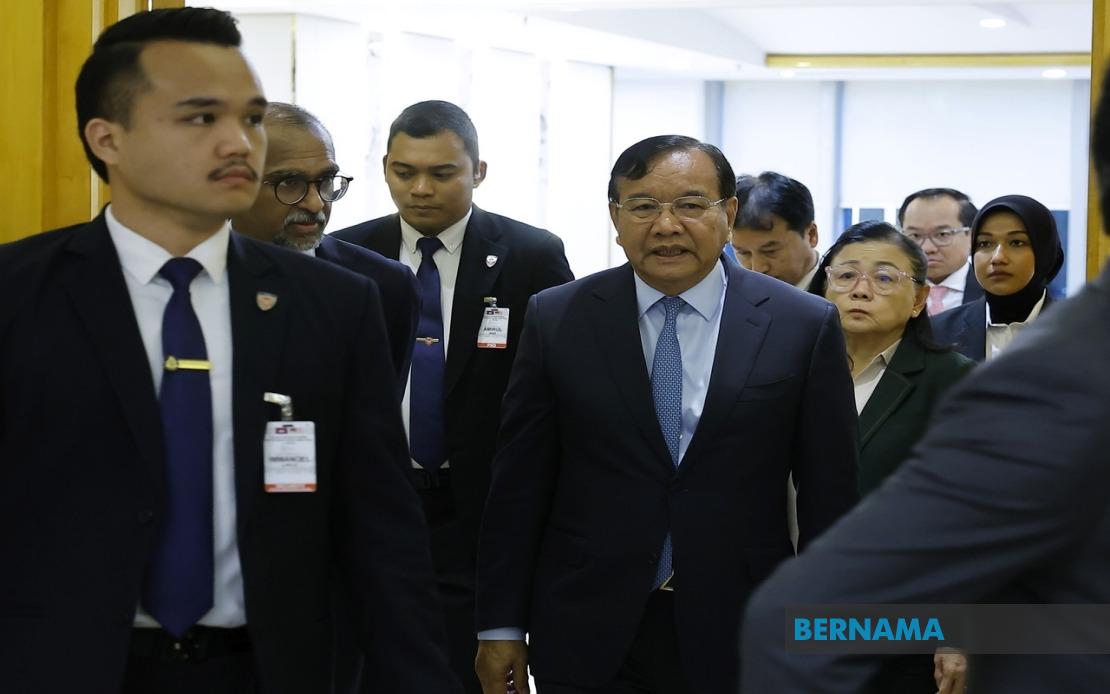
Cambodian Deputy Prime Minister and Minister of Foreign Affairs and International Cooperation Prak Sokhonn departed Malaysia on August 4, concluding a diplomatic visit that underscored both nations' commitment to deepening their regional partnership. His departure from Kuala Lumpur International Airport Terminal 1 marked the end of engagements that included high-level government meetings and the resumption of a critical bilateral framework that had been inactive for 20 years.
The visit, which began on Monday, was timed strategically around preparations for the 70th anniversary of diplomatic relations between Malaysia and Cambodia in 2027. This milestone provides both countries with an opportunity to reflect on their historical ties and chart a forward-looking agenda that addresses contemporary regional challenges and opportunities. By initiating these celebrations in advance, the two governments are signalling continuity and renewed vigour in their relationship at a time when Southeast Asian regionalism faces pressures from geopolitical shifts and economic transformation.
During his time in Kuala Lumpur, Sokhonn held a significant courtesy call with Prime Minister Datuk Seri Anwar Ibrahim at the Prime Minister's Office. The meeting served as a platform for both leaders to reaffirm their commitment to the longstanding bilateral relationship and to identify priority areas for collaborative advancement. Their discussions ranged across several sectors that reflect the region's development priorities: the digital economy, artificial intelligence, the halal industry, food security, and human capital development. These focal areas indicate that Malaysia and Cambodia are aligning their cooperation with broader Southeast Asian economic trends and the imperative to strengthen regional competitiveness in the digital age.
A landmark achievement during Sokhonn's visit was the co-chaired 3rd Malaysia-Cambodia Joint Commission for Bilateral Cooperation meeting, which he conducted alongside Malaysian Foreign Minister Datuk Seri Mohamad Hasan. The resumption of this bilateral mechanism, following a two-decade suspension, represents a significant diplomatic reset. Joint commissions typically serve as comprehensive forums for addressing trade, investment, security, cultural exchange, and other matters of mutual interest, and the reactivation of this structure suggests the two governments are prepared to engage in substantive, structured dialogue on matters beyond ad-hoc diplomatic courtesy.
The economic dimensions of the bilateral relationship have shown remarkable momentum. Trade between Malaysia and Cambodia surged by 27.4 per cent year-on-year in 2025, reaching RM5 billion, equivalent to USD1.17 billion. This robust growth reflects strengthening commercial ties and suggests that businesses in both countries perceive expanding opportunities for mutual benefit. Malaysian exports to Cambodia totalled RM4.13 billion (USD970 million), while imports from Cambodia reached RM880 million (USD200 million). The trade composition, with Malaysian exports significantly outweighing imports, indicates that Malaysia is supplying Cambodia with higher-value manufactured goods and services, positioning itself as a technology and capital source for Cambodian development.
Beyond trade, Malaysian investment in Cambodia has become a defining feature of the economic relationship. As of 2024, Malaysia's cumulative foreign direct investment in Cambodia stood at USD3.20 billion (RM13.07 billion) across 162 registered projects. This investment portfolio has established Malaysia as Cambodia's third-largest foreign investor, a position that reflects confidence in Cambodia's economic prospects and the strategic importance Malaysian companies place on the Cambodian market. These investments span multiple sectors and create employment for Cambodian workers whilst transferring technology and expertise, thereby contributing to Cambodia's broader development objectives.
For Malaysian readers, this bilateral expansion carries several implications. The resumption of the joint commission and the strengthened diplomatic engagement create potential opportunities for Malaysian companies seeking to expand into Cambodia, particularly in technology, food processing, and infrastructure development. The halal industry focus, mentioned during Sokhonn and Anwar's discussions, opens avenues for Malaysian halal producers and certifiers to deepen their presence in Cambodia and use it as a platform for reaching other Southeast Asian markets. Similarly, Malaysia's expertise in digital transformation and artificial intelligence can be leveraged through government-backed initiatives and private sector partnerships.
The timing of this visit also reflects broader Southeast Asian diplomatic dynamics. Cambodia, as a fellow ASEAN member and a nation with significant geopolitical weight in the region, is an important partner for Malaysia in addressing regional challenges ranging from maritime security to economic integration. By revitalising the joint commission and positioning the relationship around forward-looking sectors such as artificial intelligence and digital economy, Malaysia and Cambodia are demonstrating that ASEAN partnerships remain vital even as individual member states navigate complex international relationships with major powers.
The ceremonial aspects of Sokhonn's departure, with Datuk Rozainor Ramli, the Malaysian Government's chief ceremony officer, bidding farewell, underscore the official importance attributed to the visit. Such protocols, whilst seemingly symbolic, reinforce the diplomatic weight of the engagement and signal to business communities and regional observers that the relationship commands high-level attention and commitment from both capitals.
Looking ahead, the 70th anniversary celebrations in 2027 will provide another platform for Malaysia and Cambodia to announce joint initiatives and deepen institutional linkages. The investment figures, trade growth, and renewed diplomatic structures suggest that the relationship is entering a phase of substantive expansion rather than mere maintenance. For Malaysia, strengthening ties with Cambodia enhances its position as a central player in Southeast Asian affairs and diversifies its economic partnerships across the region. For Cambodia, deepening cooperation with Malaysia offers access to capital, technology, and market opportunities that are essential for sustained economic development and regional integration.

