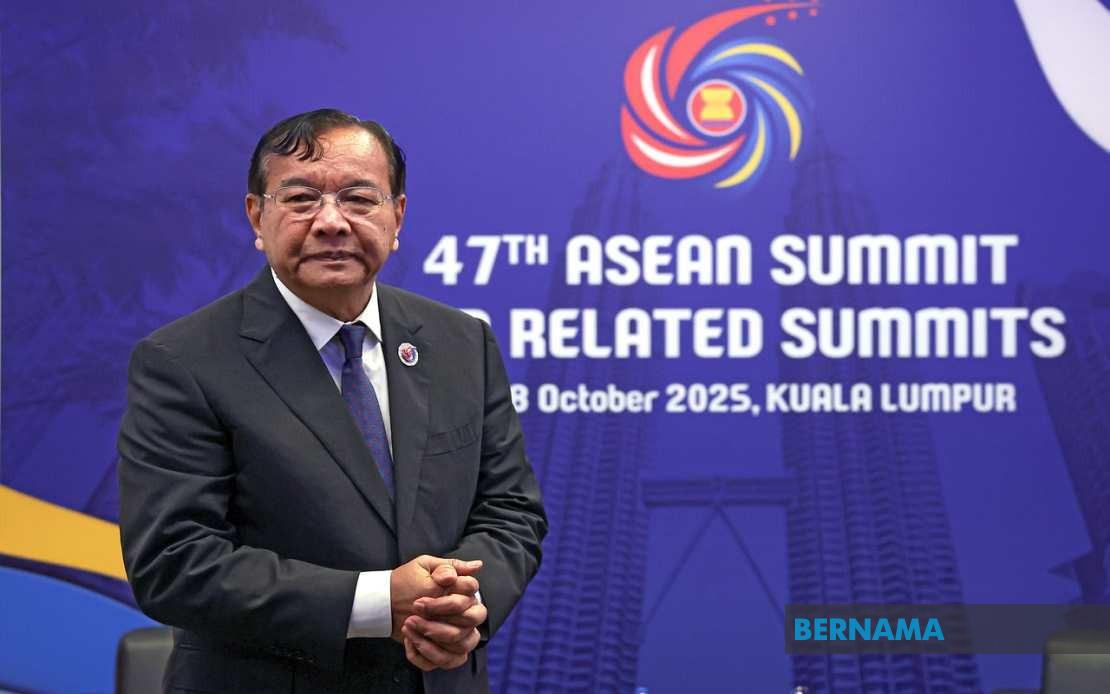
Cambodian Deputy Prime Minister and Minister of Foreign Affairs and International Cooperation Prak Sokhonn has arrived in Malaysia for a two-day official visit that marks a pivotal moment in bilateral relations. The centrepiece of his trip is the resumption of the Malaysia-Cambodia Joint Commission for Bilateral Cooperation (JCBC), with the third meeting scheduled to take place in Kuala Lumpur on Tuesday under the joint chairmanship of Prak Sokhonn and Malaysian Foreign Minister Datuk Seri Mohamad Hasan. The revival of this high-level institutional mechanism carries symbolic weight, signalling both nations' determination to deepen cooperation after two decades of dormancy.
The last JCBC meeting convened in 2006 in Siem Reap, leaving a substantial gap in the formal bilateral dialogue structure between the two Southeast Asian neighbours. The resumption now, ahead of Malaysia and Cambodia's 70th diplomatic anniversary in 2027, underscores intentional timing to rebuild momentum. This restart reflects broader regional dynamics where strengthening multilateral ties and institutional frameworks has become essential for addressing shared challenges and opportunities within the Association of Southeast Asian Nations context.
During his Malaysia visit, Prak Sokhonn will pay a courtesy call on Prime Minister Datuk Seri Anwar Ibrahim on Monday, providing an opportunity for both leaders to reaffirm longstanding bilateral bonds and discuss strategic matters of mutual concern. These high-level engagements typically establish the political foundation for technical discussions and cooperation agreements that follow. The meeting format—beginning with prime ministerial engagement before the foreign ministers' commission—follows established diplomatic protocol that emphasises the importance both governments attach to the relationship.
The JCBC framework itself represents a comprehensive institutional mechanism designed to coordinate cooperation across multiple sectors and dimensions of bilateral relations. Upon conclusion of Tuesday's meeting, both foreign ministers are scheduled to sign the Agreed Minutes of the third JCBC, a formal document that will encapsulate key discussion points and reiterate mutual commitments to strengthening ties. Such formal instruments provide clarity on agreed priorities and create benchmarks against which progress can be measured.
Economic dimensions underpin the contemporary Malaysia-Cambodia relationship with considerable vigour. Recent trade data demonstrates the robustness of commercial ties, with bilateral trade reaching RM5 billion (US$1.17 billion) in 2025—a substantial 27.4 per cent year-on-year increase. Malaysian exports to Cambodia achieved RM4.13 billion (US$970 million), while Cambodian exports to Malaysia totalled RM880 million (US$200 million). This trade imbalance reflects Malaysia's more developed manufacturing and services sectors, but the significant growth rate in both directions indicates expanding economic complementarity.
Malaysian investment presence in Cambodia is particularly noteworthy for understanding the depth of bilateral economic integration. As of 2024, Malaysia's cumulative investment stock reached US$3.20 billion (RM13.07 billion) channelled through 162 registered projects. This investment volume positions Malaysia as Cambodia's third-largest foreign investor, after China and Vietnam, demonstrating Malaysia's substantial stake in Cambodia's economic development. These investments span diverse sectors including infrastructure, manufacturing, services, and real estate, creating employment linkages and technology transfer opportunities.
The timing of this JCBC resumption carries implications beyond bilateral dynamics. Within the ASEAN framework, the revival of dormant institutional mechanisms reflects a broader push to activate regional cooperation architectures. For Malaysian policymakers, strengthening ties with Cambodia supports the country's role as a regional anchor and maintains balance amidst great power competition in Southeast Asia. For Cambodia, deepening engagement with Malaysia diversifies its external partnerships and strengthens ties with a non-claimant state in regional territorial disputes.
Trade and investment growth documented over recent years suggests that the commercial foundation for deeper cooperation exists. However, the 20-year gap in formal high-level commission meetings indicates that institutional structures had atrophied despite ongoing economic interactions. The resumption represents an opportunity to formalise mechanisms for addressing trade irritants, facilitating investment, and coordinating responses to regional challenges including maritime security, transnational crime, and labour mobility issues affecting both nations' citizens.
Malaysia's development trajectory and technological capabilities position it as a potential source of capital, expertise, and market access for Cambodia's growing economy. Conversely, Cambodia's geographic position, labour resources, and development needs create opportunities for Malaysian businesses seeking to expand manufacturing operations and supply chains. The JCBC provides an institutional venue to identify and facilitate such complementarities more systematically than bilateral contact alone permits.
Looking forward, the resumption of regular JCBC meetings at three-year intervals—consistent with the pattern of 2006 to present—would embed bilateral relations within a more predictable and structured framework. This regularisation facilitates long-term planning by both governments and private sector actors. The commission can address emerging issues such as digital economy cooperation, green energy transition, and human capital development—areas where Malaysia possesses expertise Cambodia seeks to acquire.
The broader Southeast Asian context makes this bilateral reinvigoration timely. As regional economies navigate post-pandemic recovery, technological change, and geopolitical competition, nations benefit from strengthened sub-regional networks. Malaysia and Cambodia share significant populations with ethnic and cultural connections, particularly along their land border, creating grassroots dimensions to bilateral relations that formal mechanisms can better support and protect.
The economic metrics and investment figures demonstrate that Malaysia-Cambodia relations possess substance beyond ceremonial engagement. The JCBC revival provides institutional scaffolding to manage and expand these relationships systematically. This two-day visit and the resumption of the bilateral commission thus represent more than diplomatic courtesy; they constitute an effort to align institutional structures with the economic reality and potential of the relationship as the two nations approach their seventh decade of diplomatic ties.

