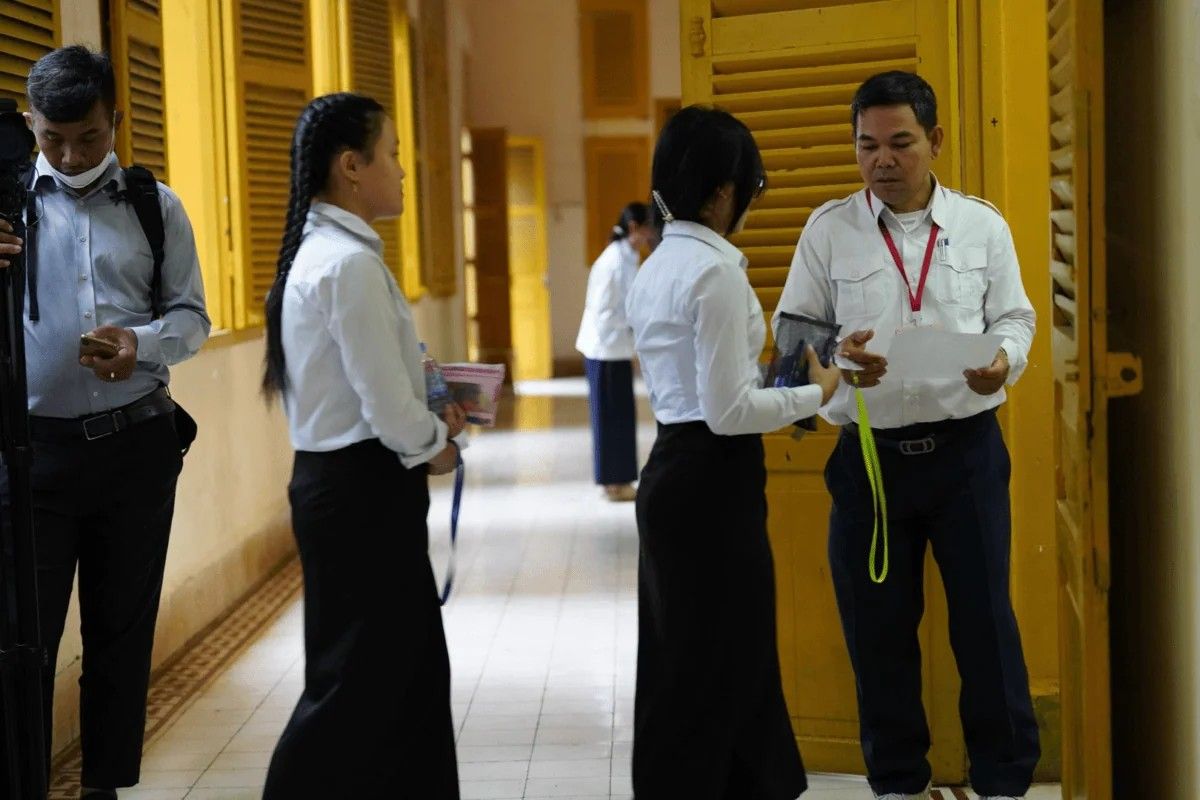
Cambodia commenced its Grade 12 graduation examinations on August 10, marking a significant milestone for the Kingdom's education system even as unresolved border tensions continue to displace students in frontier regions. The examination period represents a moment of cautious normalcy for the education sector, though the underlying geopolitical challenges remain unhealed. More than 150,000 candidates sat for the assessments across the country, comprising over 37,000 students pursuing science-track qualifications and approximately 130,000 enrolled in social science programmes.
Education Minister Hang Chuon Naron presided over the opening ceremony in Phnom Penh, using the occasion to acknowledge both progress and persistent obstacles facing Cambodia's young people. The minister explicitly contrasted this year's examination environment with the preceding year, when Cambodia's education system faced unprecedented disruption following border clashes with Thailand. The 2025 examinations had taken place on August 28—precisely one month after the initial armed confrontations erupted along the Cambodia-Thailand frontier—creating an atmosphere of uncertainty and anxiety among students and educators.
The minister highlighted the resilience demonstrated by Cambodian students during the 2025 examination period, despite extraordinary circumstances that tested their determination. In Oddar Meanchey province, which bore the brunt of the military incursion, some students were forced to continue their studies from tractors as their families evacuated their homes in response to the Thai attacks. Notwithstanding these harrowing conditions, Hang Chuon Naron recounted encountering a student who achieved exceptional examination results—an 'A' grade—and subsequently secured enrolment at a prestigious higher education institution. The anecdote underscored the extraordinary circumstances under which Cambodia's youth pursued educational advancement during the crisis period.
However, the education minister's remarks also underscored the unfinished business of the border dispute. Twenty-five educational institutions across border provinces remain closed and inaccessible to students because Thai military forces continue to occupy these facilities and the surrounding territories. The prolonged closure represents not merely a logistical inconvenience but a fundamental disruption to the educational prospects of thousands of Cambodian children who cannot access their own schoolhouses. Hang Chuon Naron stressed that the Royal Government of Cambodia continues to demand permission for these students to return to their regular classrooms—a basic request that remains unresolved more than a year after the initial military confrontation.
Current arrangements for displaced students remain makeshift and inadequate. Only pupils from Banteay Mean Rith Lower Secondary School in Oddar Meanchey province have been accommodated in temporary educational facilities, where they continue classes in hastily established camps rather than proper school buildings. This patchwork solution covers a fraction of the affected student population, leaving the vast majority of youngsters from the 24 other closed schools without formal classroom access. The situation illustrates how prolonged border tensions create cascading educational inequality, where proximity to conflict zones becomes a determinant of learning opportunity.
The 2025 examinations had been shadowed by additional concerns regarding institutional integrity. Mathematics examination papers were leaked before the scheduled assessment period, raising serious questions about security protocols and the reliability of examination procedures. In response to these vulnerabilities, the education ministry has implemented enhanced oversight mechanisms for this year's assessments. The Anti-Corruption Unit has deployed more than 4,000 observers to monitor examination centres nationwide, a deployment figure matching the previous year's observer count but reflecting heightened commitment to transparency and procedural rectitude.
Hang Chuon Naron explicitly asserted that corruption would be minimised this examination cycle through comprehensive organisation, rigorous enforcement of regulations, and the participation of independent observers representing various stakeholder organisations. The emphasis on multiple layers of oversight reflects official recognition that examination integrity is fundamental to educational credibility and student confidence in qualification standards. For Malaysian and Southeast Asian observers, Cambodia's efforts to strengthen examination security amid challenging circumstances offer insights into how education systems maintain standards during periods of institutional stress.
The resumption of relatively undisturbed examinations this year provides Cambodia's education sector with opportunity to rebuild momentum lost during the previous year's crisis. The larger cohort of students able to sit examinations in normal conditions—free from the immediate proximity of military conflict—may facilitate more reliable assessment of learning outcomes. Nevertheless, the persistent absence of 25 schools from the examination cycle means that Cambodia's educational statistics will continue to reflect the distorting effects of the border dispute, with thousands of young people effectively excluded from the standardised assessment process that typically marks the transition to higher education or employment.
For Cambodia's broader development trajectory, the education crisis on the border underscores how unresolved territorial disputes impose substantial costs on human capital formation and economic competitiveness. Southeast Asian nations navigating border challenges face similar pressures on education systems, making Cambodia's experience instructive for regional policymakers. The displacement of students from their home classrooms, the precarious arrangements in temporary facilities, and the security vulnerabilities in examination administration represent markers of how conflict extends beyond military dimensions to reshape societies' productive capacity.
The examination period also highlights asymmetries in regional power dynamics. Thailand's continued occupation of Cambodian school facilities and refusal to permit students access to their own classrooms constitutes a form of structural pressure on Cambodia's education system—visible in disrupted schooling, displaced students, and the requirement for alternative institutional arrangements. That Cambodian students and educators have continued functioning despite these constraints reflects determination, but should not obscure the fundamental injustice of the situation or the long-term implications for educational equity across border communities.

