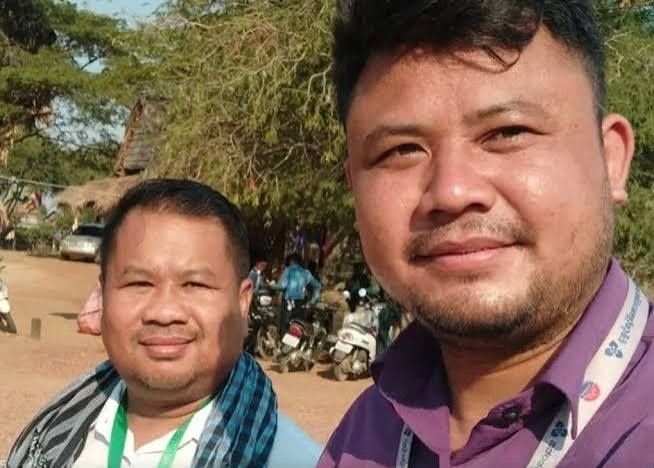
Cambodia's Supreme Court was scheduled to issue a critical ruling on the treason convictions of two journalists, marking the latest high-profile legal case that has intensified scrutiny of the country's judicial system and its commitment to press freedom. Phorn Sopheap of Battambang Post TV Online and Pheap Pheara of TSP 68 TV Online have been appealing their 14-year prison sentences imposed in December by Siem Reap Provincial Court, which found them guilty of supplying a foreign state with information damaging to national defence. The men contend they had proper authorisation to enter the border region where they documented military operations during last year's clashes with Thailand, and both deny the treason allegations with conviction.
The photographs in question became a focal point in diplomatic tensions between the two neighbouring countries. One particular image depicting anti-personnel mines was subsequently circulated extensively by Thai news outlets, seemingly validating Thailand's assertion that Cambodia had deployed newly-laid mines along their shared frontier that wounded several Thai soldiers conducting patrols. Cambodia's government categorically rejected such accusations, maintaining that the country strictly observes international treaties prohibiting landmine usage. Official statements from Cambodian authorities suggested instead that discovered ordnance likely originated from vestiges of the prolonged conflict that concluded in the late 1990s, rather than recent placement.
The border conflict that erupted in July and December 2024 created humanitarian devastation across both nations, displacing hundreds of thousands of civilians and claiming approximately 100 lives among military personnel and ordinary people. Both nations declared a ceasefire in December, which has held without escalation, yet underlying tensions and unresolved territorial disputes continue simmering beneath the surface. Regional analysts note that such incidents underscore the fragility of Cambodia-Thailand relations and the broader security challenges facing mainland Southeast Asia.
The journalists' case arrived at the Supreme Court following a lower appellate court's March decision to uphold their convictions, a development that triggered coordinated international pressure. More than a dozen journalism organisations representing national and international constituencies issued a joint statement urging the government to abandon prosecution, characterising the case as emblematic of broader restrictions on reporting freedoms. The Committee to Protect Journalists, based in New York, explicitly condemned what it termed the government's weaponisation of vague national security statutes to criminalise ordinary journalistic work, specifically highlighting the cases involving Pheap Pheara and Phorn Sopheap.
The timing of the Supreme Court's ruling carried significant symbolic weight, arriving mere days after the same court upheld the incitement conviction of Rong Chhun, a 56-year-old opposition politician whose case further illustrates patterns in the government's legal strategy. Rong Chhun was convicted in 2024 of stirring social unrest after he organised meetings with residents displaced by state-sponsored development projects—a verdict that observers characterised as transparently political rather than legally justified. Human Rights Watch interpreted the Rong Chhun decision as evidence of Cambodia's courts lacking institutional independence from the ruling administration.
These judicial decisions unfolded under the leadership of Prime Minister Hun Manet, who assumed power in August 2023 following the departure of his father, Hun Sen, who had governed for nearly four decades. Although Hun Manet received Western education and initially raised international hopes for democratic reforms, Cambodia's political trajectory has revealed minimal concrete advances toward liberalisation. Civil society organisations and international watchdogs have documented continued restrictions on freedom of expression, association, and assembly that mirror patterns established during Hun Sen's authoritarian tenure.
Government representatives have contested criticisms of judicial bias, insisting that Cambodia's Supreme Court operates with complete independence and that convictions reflect genuine legal violations rather than political persecution. Nevertheless, international human rights monitors maintain substantial scepticism about such assertions, pointing to a consistent pattern where prosecutions target perceived government opponents and journalists covering sensitive issues. The divergence between official claims and documented realities highlights the credibility gap that has come to define Cambodia's human rights landscape.
Cambodia's press freedom standing reflects these systemic concerns. In the 2025 Reporters Without Borders World Press Freedom Index, the country ranked 161st among 180 nations and territories, placing it within the category of states classified as having situations of "very serious" press freedom deterioration. This relatively low ranking underscores how Cambodia has failed to advance meaningfully on media independence metrics despite the change in political leadership and generational transition within the Hun family. The index assessment indicates that Cambodia remains substantially behind its Southeast Asian neighbours regarding institutional protections for journalistic work.
For Malaysian media professionals and readers, the Cambodian situation serves as a cautionary example of how ostensibly rule-based legal systems can be instrumentalised to suppress legitimate reportage and constrain democratic participation. The journalists' prosecution for documenting border events that occurred in their professional capacity demonstrates how authoritarian regimes leverage national security frameworks to circumscribe coverage of government actions and military operations. Such tactics remain relevant across the region, where several governments have similarly employed broad security legislation to restrict journalistic freedom. The Supreme Court's decision on Phorn Sopheap and Pheap Pheara would provide clarity on whether Cambodia's judiciary can credibly claim independence or whether it remains subordinate to executive preferences.

