A Pakistani court has handed down an eight-year prison sentence to Raheel Dhannani, a Canadian passport holder, for attempting to illegally transport foreign currency out of the country in violation of customs regulations. Special Judge Dr Shaban Waheed convicted Dhannani on two separate counts under the Customs Act, imposing five years on one charge and three years on another, with both sentences running concurrently. The case underscores Pakistan's strict enforcement of currency export controls, a mechanism designed to prevent capital flight and protect the nation's foreign exchange reserves during periods of economic strain.
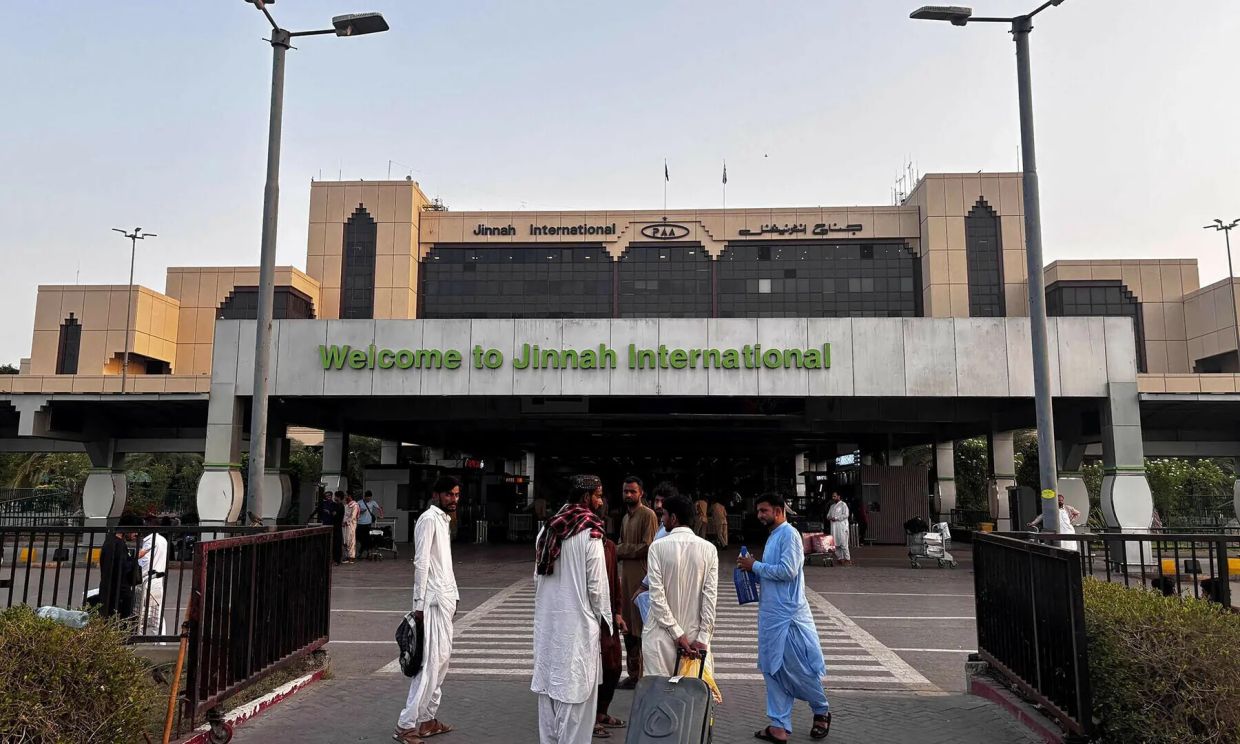
The incident occurred on January 24, 2023, when Dhannani attempted to depart Pakistan alongside family members on a journey from Karachi to Vancouver via Bangkok. Customs officials stationed at the international departure terminal conducted a routine interrogation, specifically asking whether Dhannani possessed any foreign currency. According to state prosecutor Naimatullah Soomro's account presented to the court, Dhannani denied carrying any currency at that moment. Subsequent inspection of his luggage, however, revealed substantial amounts of undeclared money: approximately US$111,400 in United States currency and C$31,425 in Canadian dollars, sums that far exceeded Pakistan's legal threshold for currency export without proper authorization.
Dhannani's legal team mounted a vigorous defence, challenging the procedural integrity of the customs operation and the evidence gathering process. The defence contended that critical procedural safeguards had been absent from the search: no formal declaration form had been issued to Dhannani prior to questioning, no video surveillance footage from the airport's security system was presented as corroborating evidence, and the search itself lacked the presence of an independent witness to ensure transparency. Moreover, the defence argued that no written record had been created documenting either the declaration or Dhannani's alleged refusal to declare, raising questions about the documentation standards applied. The defence further asserted that because Dhannani had been intercepted before completing all departure formalities, he technically remained within a space where a lawful currency declaration could still have been made, meaning his actions constituted mere preparation rather than a completed attempt.
The court rejected these arguments decisively, establishing that the circumstances surrounding Dhannani's conduct demonstrated clear intent rather than procedural ambiguity. Judge Dr Shaban Waheed determined that once Dhannani had commenced the international departure process while carrying foreign currency vastly exceeding the permissible limit set by Pakistan's State Bank, his actions transcended the category of mere preparation and constituted a substantive attempt to violate customs law. The judge noted that Dhannani had been directly questioned about currency and had provided what the court deemed a deliberately false response, a factor that tipped the legal assessment towards criminal intent rather than honest mistake.
The court's reasoning drew particular weight from Dhannani's profile as an experienced international traveller with demonstrated familiarity with customs procedures. This background knowledge made ignorance of currency regulations an implausible defence. The sheer magnitude of the undeclared money—more than seven times the typical permissible export amount in certain categories—combined with his explicit denial when questioned, painted a picture of deliberate evasion rather than inadvertent oversight. The judge observed that when these facts were considered together rather than in isolation, they eliminated any reasonable inference of innocent mistake and instead revealed a calculated decision to contravene Pakistan's customs framework.
Pakistan's currency export restrictions operate within a broader context of macroeconomic vulnerability. The nation has faced recurring balance-of-payments crises and foreign exchange shortages, necessitating stringent controls on capital outflows. Citizens and visitors are permitted to export limited amounts of foreign currency—typically up to US$10,000 without declaration for personal use, or larger amounts with proper State Bank authorization. These regulations aim to preserve Pakistan's limited hard currency reserves and prevent capital flight during economically unstable periods. Violations carry serious penalties precisely because successful smuggling of large currency quantities can undermine official foreign exchange management and exacerbate currency market distortions.
The court's judgment emphasized that Dhannani had possessed complete familiarity with these customs protocols, making his conduct more culpable than that of a casual traveller. The decision to carry such substantial undeclared currency while explicitly denying possession when questioned indicated conscious knowledge of wrongdoing. Pakistani courts have increasingly taken a firm stance on such violations, viewing them not merely as technical infractions but as deliberate attempts to circumvent regulations designed to protect national economic interests.
For Malaysian and broader Southeast Asian readers, this case offers instructive insights into how regional governments treat currency export violations. Most ASEAN nations maintain similar restrictions, with Singapore, Thailand, and Indonesia imposing comparable limits and penalties. The enforcement approach demonstrated in Dhannani's case—combining customs surveillance at departure points with serious criminal sanctions—reflects a shared regional commitment to controlling capital flows. Travellers should recognize that customs declarations regarding currency are taken with utmost seriousness across the region, and false statements attract criminal rather than merely administrative liability.
The conviction also illustrates how courts in the region interpret attempted offences under customs legislation. Pakistani jurisprudence, similar to practices in other South Asian and Southeast Asian jurisdictions, focuses on whether a person has moved beyond preparation into actual attempt territory. By entering the departure process with undeclared currency while denying possession, Dhannani crossed that threshold in the court's assessment. This interpretive approach has implications for travellers and business people throughout Asia who must ensure compliance before initiating departure procedures, as questions posed at checkpoints are considered legally binding interrogations rather than casual inquiries.
The case demonstrates that nationality offers no shield against strict customs enforcement. Despite holding a Canadian passport and possessing international travel experience, Dhannani received the same rigorous legal treatment as any Pakistani citizen might expect. This principle reinforces that foreign travellers cannot assume leniency or different standards apply to them when violating host country regulations. Pakistani customs authorities, like their counterparts throughout Southeast Asia, apply their statutory frameworks uniformly regardless of a traveller's origin or passport status.

