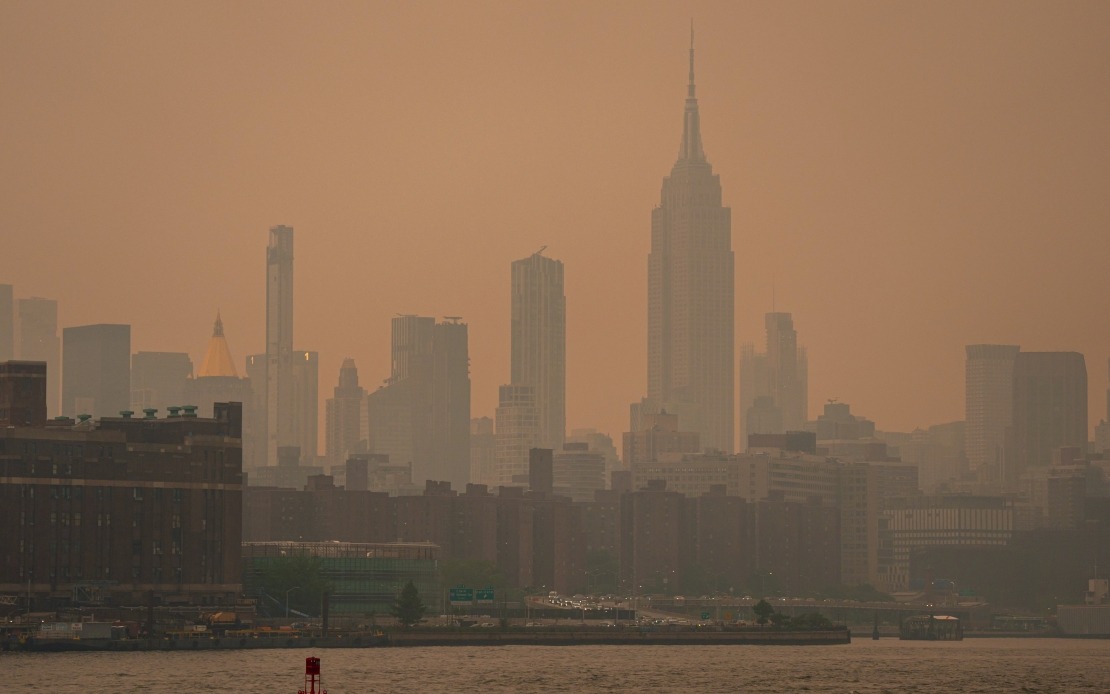
Mexican President Claudia Sheinbaum encountered unexpected travel complications en route to Sunday's highly anticipated World Cup final between Argentina and Spain in New Jersey, as smoke billowing across from wildfires burning in Canada created hazardous air quality conditions over New York. The disruption underscored how environmental crises in one part of North America can ripple across borders and affect even high-level diplomatic schedules, a phenomenon increasingly familiar to leaders navigating climate-related challenges.
Sheinbaum's original itinerary called for a scheduled flight departing Cancún on Saturday morning bound for New York. However, deteriorating air conditions over the city triggered an initial two-hour delay as authorities assessed whether the journey could safely proceed. By afternoon, it became clear that conditions would not improve sufficiently, and Mexican aviation authorities made the decision to cancel the commercial service entirely rather than risk the flight during the hazardous air quality episode.
The Mexican government adapted its plans by arranging alternative transportation through the country's Defence Ministry, which dispatched a dedicated aircraft to transport the president overnight into Sunday. This emergency rerouting ensured Sheinbaum could still arrive in time for the World Cup final, reflecting the logistical flexibility available to heads of state when conventional options become unavailable. The shift from commercial to military transport also highlighted the operational readiness of Mexico's defense infrastructure for crisis situations.
The trip itself carries considerable diplomatic significance, as Sheinbaum received a direct invitation from United States President Donald Trump to attend the final at East Rutherford in New Jersey. Such invitations carry weight in international relations, and accepting required careful consideration given the current state of Mexico-United States ties. The attendance represents a rare moment of cross-border cooperation between the two countries despite considerable friction over trade negotiations and security matters that have characterized their bilateral relationship.
Sheinbaum will not be attending the final alone among national leaders from the tournament's host nations. Canadian Prime Minister Mark Carney will also be present, completing a trio of North American leaders gathering for what has become a historic sporting moment. The three-nation hosting arrangement for the World Cup has required unprecedented coordination among the governments, though day-to-day relations between them remain complicated by various economic and security disputes.
The relationship between Mexico and the United States warrants attention for Southeast Asian observers, as trade patterns and geopolitical alignments in North America influence global economic flows. Mexico's willingness to engage diplomatically with the Trump administration at the World Cup, despite underlying tensions, demonstrates how sporting events can create neutral spaces for international engagement. Previous high-level contact between Sheinbaum and Trump has been minimal—their sole face-to-face meeting occurred during the World Cup draw ceremony held in Washington last December, suggesting this final attendance represents a step toward normalizing dialogue.
The Canadian wildfire situation that precipitated this travel disruption reflects broader environmental challenges affecting North American air quality. In recent years, smoke from wildfires has increasingly impacted air quality across the United States and Mexico, a trend likely to intensify as climate patterns shift. Malaysian readers familiar with regional air pollution crises, particularly the recurrent transboundary haze from Indonesian forest fires, will recognize parallels in how environmental emergencies cross political boundaries and affect diplomatic schedules.
Air quality disruptions of this magnitude raise questions about how vulnerable critical infrastructure and high-level governance functions have become to climate and environmental factors. When a nation's president cannot travel via conventional means due to environmental conditions, it serves as a stark reminder that climate change transcends economic sectors and affects the operational capacity of governments themselves. For Malaysia and other developing nations managing their own environmental challenges, such incidents underscore the importance of investing in climate adaptation and cross-border environmental cooperation.
The World Cup final itself, hosted jointly by the three North American nations, represents an ambitious logistical undertaking and a showcase of continental cooperation despite political friction. The fact that leaders from all three nations could still convene for the event, even as one encountered travel disruptions, demonstrates the resilience of diplomatic protocols and the symbolic importance of major sporting events in bringing national leaders together. This gathering occurs against a backdrop of significant trade negotiations and security discussions that will continue beyond the final whistle.
For Sheinbaum personally, the attendance at the World Cup final serves multiple purposes beyond mere sporting interest. It signals Mexico's continued engagement with regional affairs and its commitment to participating in multilateral moments of significance. Her presence alongside Trump and Carney, despite the air quality crisis that nearly prevented her arrival, sends a message about Mexico's priority in maintaining lines of communication with its neighbors even during periods of diplomatic tension.

