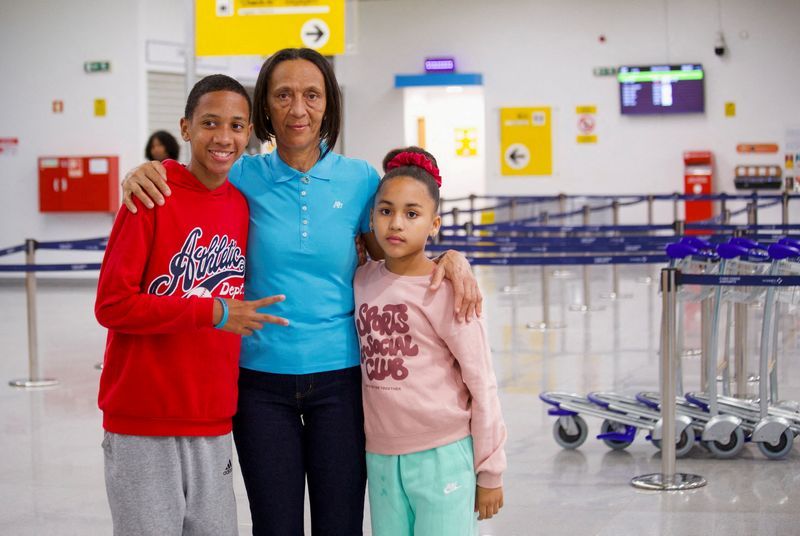
Ana Candida Evora will finally witness her son Vozinha in action at the FIFA World Cup after the United States State Department expedited her visa approval, removing a significant barrier that had prevented the Cape Verde goalkeeper's mother from attending his tournament debut. The emotional backstory behind this diplomatic intervention underscores both the human dimension of global sporting events and the complexities facing fans from smaller nations navigating international travel requirements during major competitions.
Vozinha, now 40 years old, delivered a commanding performance in Cape Verde's opening fixture against Spain, one of Europe's defending champions, in Atlanta. His seven crucial saves proved instrumental in securing an impressive 0-0 draw, an outcome that represented a genuine upset in the tournament's early stages. The goalkeeper's heroic display earned him player-of-the-match honours and instantly established him as a standout performer in the competition, yet this moment of professional triumph carried an undercurrent of personal disappointment.
When Vozinha revealed publicly that his mother had been unable to obtain the necessary travel documentation to witness his standout display, the disclosure resonated widely across social media platforms and international sports coverage. The goalkeeper's emotional acknowledgment of her absence, despite her desire to attend, highlighted how bureaucratic hurdles can intersect with the dreams of families supporting their relatives at the world's most prestigious football tournament. This narrative struck a chord with audiences globally, particularly those familiar with the challenges faced by citizens of smaller nations seeking entry to the United States.
The U.S. State Department's diplomatic team in Praia, the capital of Cape Verde, moved swiftly after Vozinha's heartfelt revelation gained prominence. Officials confirmed they had established direct contact with Evora and worked to resolve her visa situation through expedited processes. A State Department representative confirmed the positive outcome to journalists, stating that the approval had proceeded with full adherence to established protocols and standards, demonstrating that compassionate exceptions could be made within existing frameworks.
The broader context reveals that Cape Verde, along with numerous developing nations, had faced stringent entry requirements imposed by the Trump administration's immigration policies. These measures included mandatory bonds reaching as high as $15,000 that citizens seeking entry to the United States were required to post. Such financial barriers proved prohibitively expensive for ordinary families, particularly those from smaller island nations with more limited economic resources.
Evora had initially concluded that attempting to secure travel to witness her son's performances was financially unfeasible under these conditions. The bond requirement, combined with standard visa application costs, placed attendance beyond reach for most Cape Verdean families despite their enthusiasm for supporting their national team at the World Cup. This dynamic created a situation where economic circumstance threatened to separate family members during what should have been a moment of shared celebration and national pride.
The State Department later acknowledged the hardship created by the bond requirement and permitted World Cup ticket holders to bypass this financial obligation. This adjustment represented recognition that legitimate sporting event attendance should not be unnecessarily obstructed by punitive financial demands, particularly for citizens of nations already facing other travel barriers. Nevertheless, the damage had initially been done for Evora and countless other supporters who had given up hope before this policy modification.
Vozinha's emotional disclosure ultimately catalysed the intervention that removed these obstacles for his mother. Her presence at upcoming matches will now provide him with the personal support that extends beyond professional achievement, creating memories that transcend statistics and match reports. The goalkeeper will face Uruguay in Cape Verde's second group-stage encounter scheduled for Miami on Sunday, with his mother now able to attend and witness the continuation of her son's World Cup journey.
This episode illustrates how individual stories within major sporting competitions can highlight systemic issues affecting broader populations. While Vozinha's prominence and emotional plea received swift diplomatic attention, the situation underscores ongoing challenges faced by ordinary citizens from smaller nations navigating international travel to the United States. The resolution of his mother's visa situation, though welcome, came through exceptional circumstances rather than systemic reform, raising questions about how many other families remain separated by similar barriers. For Malaysian and Southeast Asian perspectives, the case demonstrates how regional sporting communities often face disproportionate hurdles in accessing global events, regardless of their legitimate reasons for travel or genuine enthusiasm for international football.

