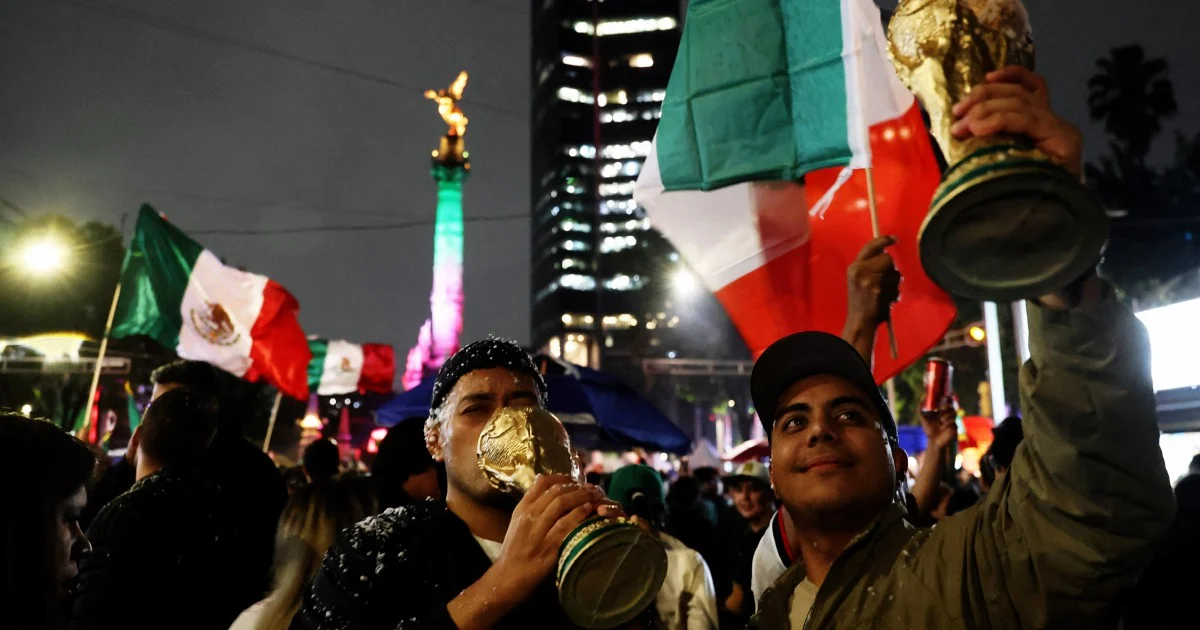
A night of celebration descended into chaos in the resort town of Cabo San Lucas when a vehicle ploughed through a gathering of Mexico national team supporters, resulting in injuries to 17 individuals. The incident occurred following Mexico's World Cup victory, transforming what had been festive scenes into a scene of emergency response and medical intervention. Authorities in Los Cabos confirmed the scale of the incident through an official statement, noting that all those hurt—including the driver—received treatment for their injuries.
Footage circulating across social media platforms and authenticated by international news agencies depicted the moments leading to the collision. A black vehicle sat initially amid revellers dressed in Mexico's distinctive football colours, with supporters surrounding the car. Within seconds, the driver accelerated sharply into the assembled crowd, projecting multiple people upward before the vehicle struck protective bollards positioned along the street. The sequence of events, captured from multiple angles, provided clear evidence of the car's sudden acceleration into the densely packed group.
The aftermath revealed the gravity of the collision. Additional verified video content showed bystanders extracting an individual from the vehicle whilst others administered aid to injured supporters scattered across the ground. The visual record documented blood visible on the pavement and the scale of disruption caused by the incident. Such scenes starkly contrasted with the jubilation that had characterised the evening's celebration mere moments earlier.
Los Cabos city authorities swiftly responded to the emergency, with emergency services attending to all affected individuals. The driver remained at the scene and was taken into custody by law enforcement. While authorities confirmed the driver's arrest, details regarding the circumstances that prompted the violent action—whether intentional or accidental—have not yet been disclosed publicly. Investigators will likely examine vehicle records, witness testimonies, and surveillance footage to establish the chain of events.
Cabo San Lucas, situated at the southern tip of the Baja California Peninsula, regularly welcomes large numbers of international tourists alongside local residents. The resort destination's status as a premier holiday location means public spaces frequently host celebrations and gatherings, particularly surrounding major sporting events. Football matches, especially those involving the Mexican national team, draw substantial crowds to popular venues throughout the municipality.
The incident raises questions about public safety during large gatherings in tourist-heavy locations. Protecting crowds at spontaneous celebrations presents particular challenges for authorities, as such events frequently lack the formal security infrastructure available at designated venues. Bollards and other physical barriers, while present in this instance, may prove insufficient when a vehicle acts unpredictably. The circumstances here suggest the need for renewed examination of crowd management protocols in areas prone to sudden assembling of large groups.
Mexico's football performances continue to generate significant public interest and spontaneous celebrations throughout the country and among diaspora communities worldwide. When national teams achieve victories in international tournaments, supporters instinctively gather in public spaces to share the moment with fellow enthusiasts. These celebrations, whilst generally joyous, occasionally intersect with other social factors that create volatile situations. The Cabo San Lucas incident demonstrates how quickly such gatherings can transform when vehicles become involved.
For Malaysia and the broader Southeast Asian region, this incident carries relevance regarding public event safety. As the region increasingly hosts international sporting fixtures and major tournaments attract growing crowds, similar risks exist in shopping areas, entertainment districts, and public squares where fans naturally congregate. The incident serves as a cautionary reference point for local authorities planning security measures around anticipated large gatherings, particularly in urban centres and tourist zones where pedestrian and vehicular traffic intermingle.
The identity and background of the arrested driver remain undisclosed at present. Authorities have not publicly confirmed whether the collision resulted from mechanical failure, driver incapacity, reckless behaviour, or deliberate action. Such details will likely emerge as investigations progress, potentially informing public understanding of whether this represented a tragic accident or a criminal act. The distinction carries significant implications for both criminal liability and broader public safety assessments.
As of now, the medical conditions of those injured have not been detailed by authorities. The absence of fatality reports represents a positive outcome given the violence of the collision, though the long-term health implications for those struck by the vehicle remain uncertain. Medical professionals treating the injured will determine whether injuries prove minor or require extended recovery periods.
The incident underscores the complex intersection of celebration, public gathering, and vehicle safety. Mexican authorities and tourism officials will likely review protocols governing crowd management in Cabo San Lucas, particularly in areas frequented by holiday visitors. The broader question of how communities can permit joyful public expression whilst maintaining safety during unplanned gatherings will continue to challenge administrators across Mexico and internationally.

