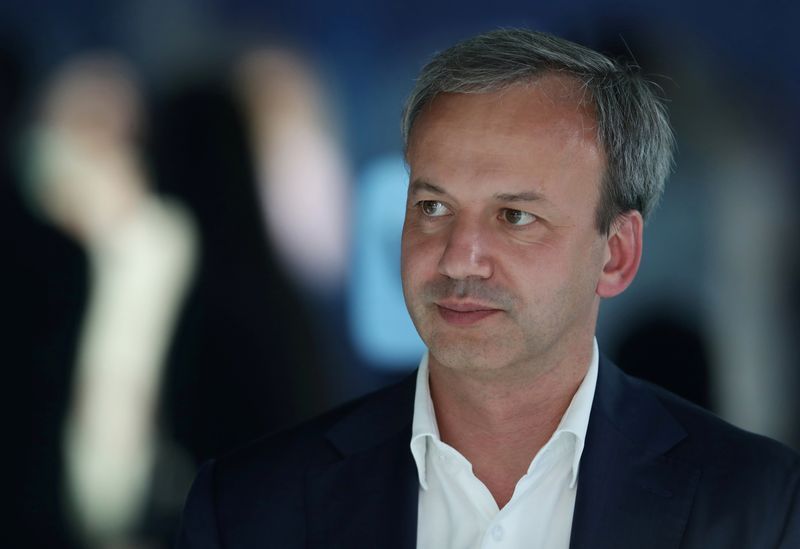
Arkady Dvorkovich, the Russian president of the International Chess Federation (FIDE), announced on Friday that he is stepping back from his operational role following his inclusion on the European Union's latest round of sanctions targeting individuals connected to Russia's aggression in Ukraine. The move represents a significant development in global chess governance, forcing the world's premier chess body to navigate complex geopolitical pressures that extend far beyond the competition arena.
The EU's 21st sanctions package, unveiled in response to Russia's 2022 invasion of Ukraine, targeted 170 entities and 48 individuals with measures ranging from asset freezes to travel and transaction restrictions. Dvorkovich's inclusion on this list triggered an immediate reassessment of his ability to effectively lead FIDE, an organisation that operates internationally and requires stable financial and administrative mechanisms to function.
In his statement released on the FIDE website, Dvorkovich characterised the sanctions as "unlawful and unfair," indicating his intention to challenge the designation through all available legal channels. However, he recognised a pragmatic reality: the regulatory constraints imposed by EU sanctions could fundamentally obstruct the federation's operational stability and its capacity to serve the global chess community effectively.
Dvorkovich's decision to voluntarily suspend his executive powers came swiftly. He explained that pending formal court determinations or amendments to the sanctions order, the restrictions could jeopardise FIDE's normal functioning. This approach allowed him to contest the sanctions vigorously while simultaneously preventing institutional paralysis. The timing of his suspension took immediate effect, ensuring no ambiguity about leadership continuity.
Viswanathan Anand, the renowned Indian grandmaster and former world chess champion, will assume the position of interim FIDE president. Anand's appointment carries significant symbolic weight, as it places leadership of the world chess federation in the hands of a respected figure from the Global South whose tenure can help insulate the organisation from the escalating Russia-West tensions that have complicated international sports governance since 2022.
Dvorkovich had previously signalled his ambition to continue leading FIDE beyond his current term. He had announced plans to seek re-election to the presidency, with voting scheduled for September's Chess Olympiad in Samarkand, Uzbekistan. His suspension from active duties now casts considerable uncertainty over whether he will proceed with that candidacy or step away permanently from the position he has occupied since 2018.
The Russian chess president's career trajectory reflects the broader geopolitical fractures reshaping international institutions. Before his chess leadership role, Dvorkovich served as a deputy prime minister of Russia, giving him prominence in both governmental and sporting circles. His suspension from FIDE operationally mirrors the isolation that Russia's state apparatus has experienced across multiple international forums following the Ukraine invasion.
FIDE itself has navigated turbulent geopolitical waters independently. The federation suspended Russia's membership in June following a Court of Arbitration for Sport determination, a decision that acknowledged the impossibility of maintaining Russian participation under conditions of international sanctions and exclusion protocols affecting the country's sports bodies.
The EU sanctions package simultaneously targeted Mikhail Degtyarev, Russia's sports minister and head of the Russian Olympic Committee (ROC), further demonstrating the interconnected nature of international sports governance and geopolitical consequences. Degtyarev has been instrumental in Russia's efforts to restore its standing within the Olympic movement, a campaign that has achieved partial success when the International Olympic Committee lifted the ROC's suspension last month after Russia removed regional sports bodies from occupied Ukrainian territories from its membership.
For Malaysian and Southeast Asian chess enthusiasts and administrators, the unfolding situation at FIDE underscores how even culturally neutral sporting organisations have become ensnared in broader geopolitical rivalries. FIDE's functions—organising world championships, sanctioning tournaments, establishing playing standards—should theoretically remain insulated from sanctions regimes, yet the practical reality demands that organisations comply with regulatory frameworks in jurisdictions where they operate or maintain assets.
Anand's interim leadership may prove decisive in establishing whether FIDE can chart a genuinely neutral course or whether the federation will increasingly reflect the polarised dynamics between Western institutions and Russia-aligned states. His appointment also signals FIDE's possible preference for leadership grounded in non-aligned nations, potentially reshaping the federation's governance orientation toward greater Asian representation.
The September Chess Olympiad in Samarkand will represent a crucial inflection point. That gathering will determine not only FIDE's permanent leadership but also the organisation's capacity to maintain meaningful engagement with Russian chess while operating within the constraints of international sanctions. Whether Dvorkovich contests the election, whether Russia's chess federation participates, and how FIDE reconciles institutional universalism with geopolitical fragmentation will collectively define the federation's trajectory through an era of deepening global divisions.

