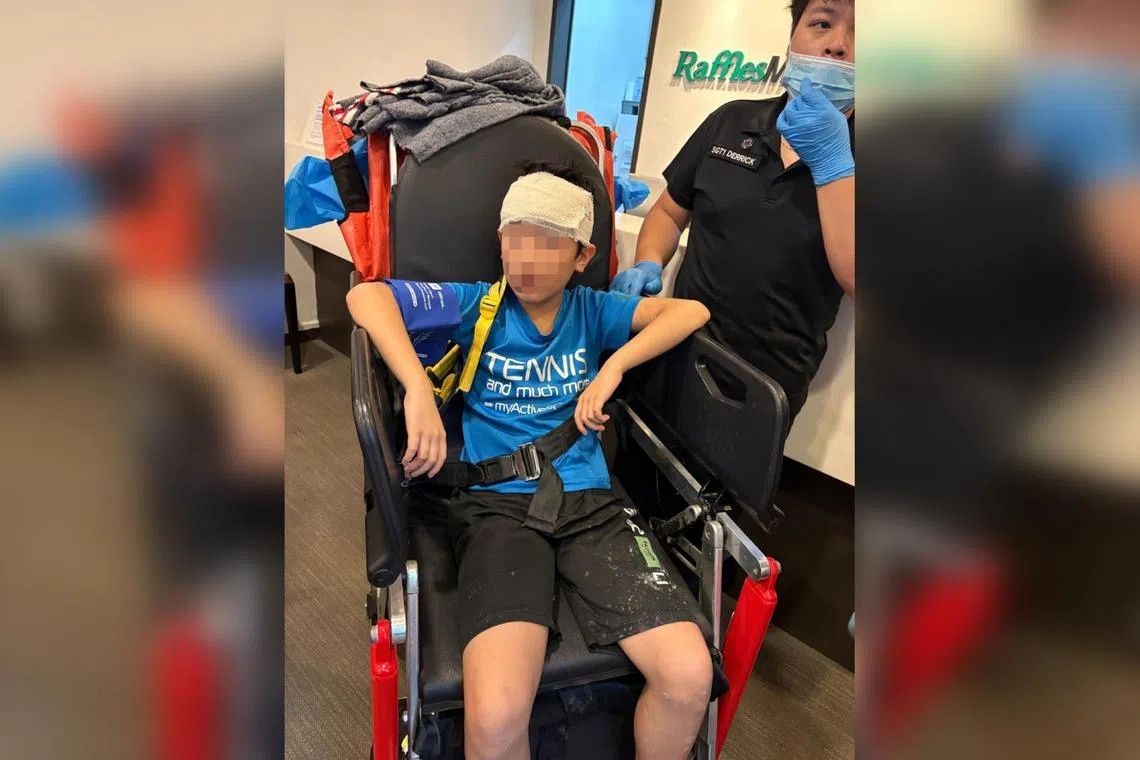
A child was rushed to hospital on Saturday morning after suffering injuries when a signboard suddenly gave way at a Food Junction foodcourt outlet located in Singapore's Rivervale Mall in Sengkang. Emergency services were notified and dispatched to the scene at approximately 10.30am in response to the structural failure at the ground-floor establishment.
The Singapore Civil Defence Force confirmed that it had transported the injured child to KK Women's and Children's Hospital for comprehensive medical evaluation and treatment. While details regarding the severity of injuries remained limited, a representative from Food Junction stated that the young patient had since been discharged and was recovering at home following medical assessment.
Social media footage from the incident, shared via TikTok, depicted the extent of the damage caused by the collapse. The signboard debris was scattered across the entrance to the Food Junction outlet, with portions of the ceiling structure also visibly compromised. Bystanders in the footage were observed maintaining safe distance from the collapsed materials, highlighting the immediate danger posed by the incident.
Food Junction's management acknowledged the occurrence swiftly, emphasising that their team coordinated promptly with both Rivervale Mall authorities and emergency personnel to render assistance. The company's statement underscored their commitment to customer welfare, noting that immediate support was provided to the affected patron following the unexpected incident.
The foodcourt chain subsequently conducted a comprehensive review and investigation to establish what caused the signboard to fail. Following this assessment, Food Junction stated that it had implemented reinforced safety protocols and measures throughout its operations, working in alignment with relevant regulatory authorities. This proactive approach signals an effort to prevent similar incidents from recurring at their establishments.
Despite the significant disruption, Food Junction resumed normal operations at the Rivervale Mall outlet relatively quickly, allowing the business to continue serving customers. The company issued an apology for the unfortunate event, recognising the concern it would have generated among patrons and the broader public.
The incident raises important questions about structural maintenance and safety standards at commercial establishments, particularly in high-traffic areas such as foodcourts. Regular inspection and timely reinforcement of signage infrastructure are critical elements that all operators must prioritise to protect customer safety. In Singapore's densely populated urban environment, where thousands visit shopping malls and dining areas daily, the integrity of such installations directly affects public welfare.
For Malaysian readers, this incident serves as a sobering reminder of safety considerations across Southeast Asian shopping centres and commercial venues. Many regional establishments operate under similar conditions, with multiple food outlets occupying shared spaces. Regular audits of signage, ceiling fixtures, and other structural elements should form part of standard maintenance protocols in our own shopping malls and foodcourts.
The Building and Construction Authority in Singapore has been engaged to provide further assessment of the incident. This regulatory involvement reflects the serious approach taken towards workplace safety and public protection in Singapore's built environment. The authority's involvement would likely encompass detailed examination of installation standards, material quality, and maintenance records related to the failed signboard.
Mall management at Rivervale has also been contacted for comment regarding broader structural and safety conditions at the facility. As property owners and operators, mall management bear significant responsibility for ensuring that all tenant operations meet required safety standards. Their cooperation with emergency services and subsequent implementation of enhanced protocols demonstrates the expected level of response to such incidents.
For businesses operating food establishments and retail outlets across the region, this incident underscores the importance of routine safety inspections and preventive maintenance programmes. Signboards, ceiling installations, and other overhead structures should be subject to regular professional assessment to identify and address potential risks before they result in injury or damage.
The incident at Rivervale Mall, while fortunately not resulting in catastrophic injuries, serves as a critical case study in commercial facility management. It highlights the vulnerability of seemingly routine infrastructure elements and the necessity for continuous vigilance. Both operators and facility managers must recognise that safety is not a one-time investment but an ongoing commitment requiring regular attention and resources.

