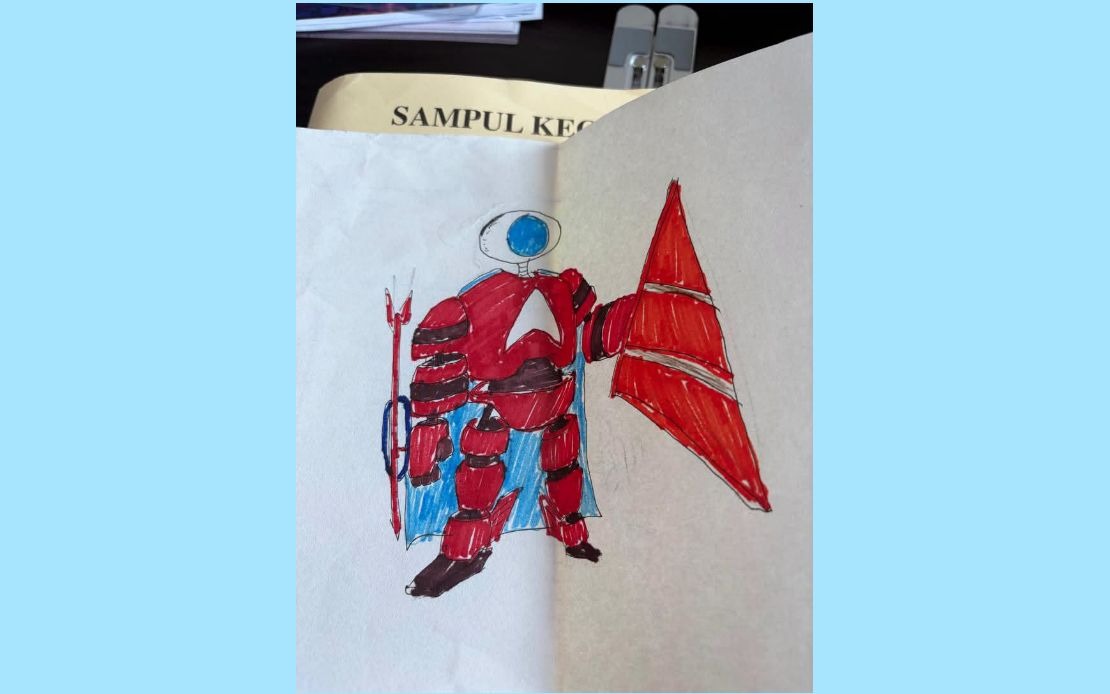
Prime Minister Datuk Seri Anwar Ibrahim has highlighted a touching moment from a recent community engagement, revealing how a simple artwork presented by a child with special needs has taken on profound significance as a personal memento. In a social media post, the Prime Minister reflected on the encounter during a Temu Anwar programme held in Negeri Sembilan, where the young artist handed over the drawing while being held by his father, creating an encounter that clearly left a lasting impression on the country's leader.
The gesture, though modest in its presentation, carries deeper resonance within the context of contemporary Malaysian political engagement. Anwar's decision to publicly acknowledge and appreciate the gift demonstrates a recognition of the value that such personal interactions hold, particularly when they involve citizens from vulnerable or marginalised communities. The artwork itself depicts a robot figure adorned in red and blue armour, clutching what appears to be a staff-like implement, suggesting the child's imaginative interpretation of strength and protection—themes that may resonate on multiple levels with those who interact with government representatives.
Temu Anwar represents a significant departure from traditional top-down governance models, functioning as a structured platform for direct dialogue between the Prime Minister and Malaysian citizens across all demographic segments and socioeconomic backgrounds. These programmes have become integral to the current administration's approach to maintaining open channels of communication with the public, allowing ordinary Malaysians—including those with special needs and their families—direct access to express concerns, share experiences, and present perspectives to the highest levels of government. Such initiatives carry particular importance in a nation as diverse as Malaysia, where ensuring inclusive representation remains a fundamental challenge.
For families of children with special needs, opportunities to participate meaningfully in national dialogues and feel heard by leadership remain limited. The inclusion of this child and his father in the Temu Anwar programme, and subsequently the Prime Minister's public acknowledgment of their contribution, signals a shift toward greater integration of marginalised voices in political processes. This recognition extends beyond mere protocol; it validates the experiences and creative expressions of individuals who often find themselves excluded from mainstream civic participation. The father's role in facilitating his child's engagement also underscores the crucial support networks that enable disabled individuals to participate in public life.
The Prime Minister's reaction—explicitly stating his gratitude and emphasising the meaningful nature of the gift—provides an instructive model for how leadership can acknowledge and honour contributions from all citizens, regardless of social status or capability. Rather than treating the encounter as a cursory photo opportunity, Anwar's subsequent reflection through social media demonstrates genuine appreciation for the personal connection established. This approach to public service emphasises human dignity and emotional intelligence, qualities increasingly recognised as essential in modern governance.
From a policy perspective, such moments can serve as catalysts for broader discussions about disability inclusion and representation in Malaysian society. When leadership visibly values the participation of special needs children and their families, it potentially shifts cultural attitudes and encourages greater accessibility in government programmes, educational institutions, and public spaces. The symbolic weight of Anwar's action extends beyond the individual encounter to communicate a message about the government's stance on inclusivity and accessibility more broadly.
The Temu Anwar initiative itself reflects an attempt to modernise political engagement in Malaysia, moving away from formal press conferences and staged appearances toward more organic, unscripted interactions. These programmes create opportunities for unexpected moments—like the gift from the special needs child—that humanise political figures and remind both leaders and citizens of the fundamental human connections that underpin democratic governance. In a political landscape often dominated by rhetoric and partisan positioning, such genuine exchanges offer alternative narratives centred on empathy and mutual respect.
The documentation of this gift on social media serves multiple functions within contemporary political communication. It simultaneously demonstrates the Prime Minister's accessibility, reinforces the value of Temu Anwar as an inclusive platform, and creates a public record of the government's engagement with diverse communities. For the child and his family, the public acknowledgment likely represents validation and recognition that might not otherwise be available in their daily lives. Such visibility can have profound psychological and social impacts on individuals from marginalised groups.
Looking forward, instances like these have potential to influence how government agencies structure their public engagement programmes. If leadership consistently honours contributions from special needs communities, resource allocation and programme design may gradually shift to accommodate and encourage greater participation. This could manifest in improved accessibility features at public events, better accommodation for caregivers, and more intentional outreach to disability advocacy organisations and support networks.
The drawing now retained by the Prime Minister exists as more than a keepsake; it represents a documented interaction between Malaysia's leadership and a citizen whose voice might otherwise remain unheard in national conversations. As Malaysia continues navigating questions about inclusive governance and social cohesion, moments of authentic connection between leaders and diverse communities—particularly those often marginalised—contribute meaningfully to broader narratives about belonging and representation. The child's gift, preserved by the Prime Minister, becomes symbolic of the potential for political systems to validate and incorporate perspectives from all segments of society.

