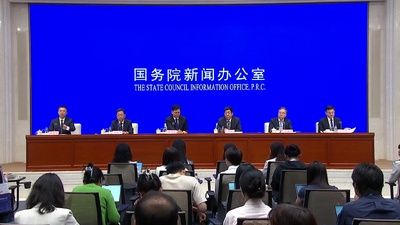
Beijing has moved to definitively counter international allegations of forced labour practices in the Xinjiang Uygur autonomous region, with Chen Ruifeng, Minister of the National Ethnic Affairs Commission, issuing a robust denial on Wednesday. The minister characterised suggestions from Western organisations and media outlets that compulsory migration and labour schemes operate in the region as "extremely absurd and ridiculous," emphasising instead that China's constitutional and legal frameworks explicitly prohibit any form of forced labour.
The timing of Chen's statement reflects Beijing's strategic effort to address mounting international scrutiny. The minister pointed to newly enacted legislation as evidence of the government's commitment to worker protections. The Law on Promoting Ethnic Unity and Progress, passed in mid-March and scheduled to take effect on 1 July, introduces comprehensive provisions governing cross-regional employment. These measures include explicit rights protection mechanisms and legal assistance frameworks designed to safeguard workers from all ethnic backgrounds who seek employment opportunities beyond their home regions.
According to Chen's remarks, individuals from Xinjiang who pursue work elsewhere do so entirely of their own volition, driven by personal ambitions to enhance family welfare and develop professional skills. The minister characterised labour transfers from the region as fundamentally oriented toward practical economic benefits for Xinjiang's residents, with the explicit goal of expanding employment opportunities and boosting household incomes across ethnic communities.
The employment picture painted by Chinese officials suggests substantial economic progress. Over the past half-decade, Xinjiang's urban labour market has generated more than 2.39 million new positions through a combination of policy initiatives and development projects. The scale of rural migration tells another part of the story: agricultural workers have undertaken approximately 16.1 million work trips beyond their home regions during the same period, according to official statistics cited by Chen.
These employment trends have translated into measurable income growth across the region's urban and rural populations. Urban dwellers have experienced average annual increases in per capita disposable income of 5.3 per cent, while their rural counterparts have seen even faster growth at 8.1 per cent annually over five years. Such figures, if accurate, would suggest that economic conditions have improved materially for Xinjiang's residents during this timeframe.
China's response strategy emphasises the construction of institutional safeguards. Officials have highlighted the development of what they describe as a comprehensive employment policy system coupled with robust labour rights protection mechanisms. These frameworks, according to Chen, are designed to ensure that capable individuals across all ethnic groups can access employment, while simultaneously maximising protections for voluntary engagement in dignified work. The minister's emphasis on voluntary participation and worker dignity suggests Beijing is aware that such assurances matter to international audiences monitoring the situation.
The denial comes amid long-running international controversy over labour practices in Xinjiang. Various Western governments, human rights organisations, and investigative journalists have documented cases and presented evidence suggesting that state-directed labour schemes in the region have involved elements of coercion, though Beijing consistently rejects such characterisations. The allegations have prompted sanctions from multiple countries and have become a point of significant geopolitical contention.
From a Southeast Asian perspective, the Xinjiang labour debate carries particular relevance. Several regional nations, including Malaysia, maintain substantial economic and political relationships with China and have sought to balance international pressure with pragmatic engagement. The release of employment statistics and legal protections by Chinese officials appears designed partly to reassure trading partners and regional stakeholders that labour standards are being maintained. The timing of new legislation and official statements may also be calculated to influence perceptions ahead of international discussions on labour practices and human rights.
The disconnect between international allegations and Beijing's official position underscores the deep disagreement between China and Western governments over characterisations of Xinjiang's governance and employment practices. China frames the employment programmes as development initiatives benefiting impoverished populations, while critics argue that state involvement in labour placement inherently compromises voluntariness. The introduction of formal legal protections represents Beijing's attempt to address concerns about institutional safeguards, though whether such measures address the underlying allegations remains contested.
The minister's emphasis on ethnic unity and cross-ethnic employment reflects Beijing's broader narrative about Xinjiang's development. Official Chinese accounts present labour transfers as mechanisms for reducing poverty and fostering social cohesion among the region's diverse populations, rather than as mechanisms of control or assimilation. Whether such initiatives genuinely serve the interests of Xinjiang's residents, and whether new legal frameworks will prove effective in practice, remain points of substantive disagreement between Beijing and its international critics.

