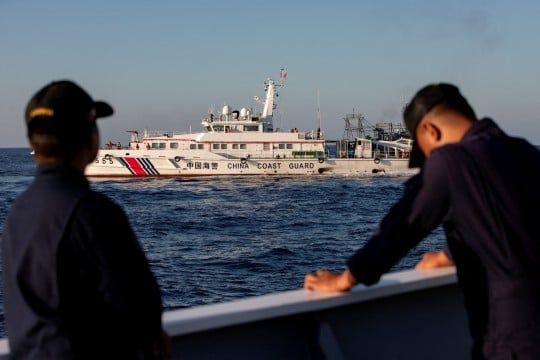
China has publicly acknowledged Malaysia's diplomatic contributions to the ongoing negotiations over a Code of Conduct governing activities in the South China Sea, with Beijing's envoy signalling that the process has now arrived at a decisive juncture. During a media briefing in Kuala Lumpur on Tuesday, China's Ambassador to Malaysia Ouyang Yujing underscored Malaysia's role as co-chair of the mechanism responsible for implementing the Declaration on the Conduct of Parties in the South China Sea, describing it as exemplary in advancing these delicate multilateral negotiations. The timing of the ambassador's remarks came in response to Prime Minister Datuk Seri Anwar Ibrahim's recent statement indicating Malaysia's commitment to accelerating progress on the Code of Conduct framework.
The significance of Malaysia's position in these talks cannot be overstated for regional observers seeking to understand ASEAN's evolving stance on disputed maritime territories. As a founding ASEAN member with its own territorial interests in the region, Malaysia occupies a unique diplomatic middle ground, capable of bridging perspectives between major powers while advocating for regional consensus. Ouyang's public commendation reflects Beijing's appreciation for Kuala Lumpur maintaining what it characterises as constructive engagement rather than adopting confrontational stances that might derail the negotiation process. This recognition also signals China's investment in maintaining good relations with Malaysia as a key stakeholder in any final agreement.
Beyond ceremonial praise, the ambassador outlined the substance of bilateral maritime engagement, revealing that China and Malaysia have sustained intensive dialogue channels specifically focused on South China Sea management issues over the past year. These exchanges have facilitated exploration of practical cooperation mechanisms that extend beyond the Code of Conduct negotiations themselves. According to Ouyang, both nations have worked together through bilateral dialogue frameworks to identify areas where mutual understanding can be deepened and disagreements narrowed. This approach suggests that China views Malaysia not merely as a negotiating partner in a multilateral setting but as a bilateral counterpart with whom trust-building measures can yield tangible results.
The ambassador emphasised that negotiations have entered what all participating parties consider a critical phase, with multiple ASEAN leaders having publicly expressed hope that a finalised Code of Conduct can be achieved within the current calendar year. This timeline pressure injects urgency into the negotiations and reflects a broader regional sentiment that the prolonged uncertainty surrounding South China Sea governance must be resolved through binding institutional arrangements. The completion of such an agreement would represent a significant diplomatic achievement for ASEAN, demonstrating the bloc's ability to manage disputes with major powers through multilateral frameworks. For Malaysia specifically, delivering results on this initiative would validate its co-chair role and strengthen its standing as a responsible maritime governance advocate.
China's ambassador reiterated Beijing's stated commitment to advancing the Code of Conduct through collaborative rather than unilateral approaches, pledging that China would continue working with all parties to identify common ground while managing inevitable differences on sensitive issues. The language of seeking consensus while "eliminating interference" appears aimed at countering perceptions that external powers might be undermining negotiations. This framing is particularly relevant given ongoing strategic competition in the region and concerns about how major extra-regional powers position themselves regarding South China Sea disputes. By emphasising partnership with Malaysia and other ASEAN nations, China attempts to present itself as invested in regional stability mechanisms rather than in preserving ambiguity that might favour its interests.
Ouyang's comments also served to highlight the strength of China-Malaysia bilateral relations more broadly, which he characterised as currently operating at their most robust level. He attributed this positive trajectory to President Xi Jinping's state visit to Malaysia in the previous year, marking a symbolic elevation of ties that subsequently translated into increased high-level exchanges. The ambassador noted that Premier Li Qiang had visited Malaysia twice during the past year, while Prime Minister Datuk Seri Anwar Ibrahim had undertaken his fourth trip to China since assuming office. These figures underscore an intensity of leadership engagement that surpasses typical diplomatic rhythms and suggests mutual commitment to deepening strategic partnership beyond specific policy disputes.
The frequency of these high-level interactions carries implications for how Malaysia navigates regional geopolitics more generally. Robust bilateral relations with China provide Malaysia with direct channels to influence Beijing's positions on matters of mutual concern, while simultaneously requiring careful calibration to maintain ASEAN unity and relationships with other major powers. The expansion of cooperation across multiple sectors, as referenced by Ouyang, likely encompasses trade, investment, infrastructure development, and security cooperation—areas where China has become an increasingly important partner for Malaysian economic interests. This multifaceted engagement creates interdependencies that shape how Malaysia approaches collective ASEAN decision-making on contentious regional issues.
For Malaysian policymakers and regional observers, the ambassador's remarks underscore the delicate balance required in managing great power relations while maintaining credibility within ASEAN frameworks. Malaysia's role as co-chair of the Code of Conduct implementation mechanism places it in a position where it can potentially shape the direction of negotiations and ensure that outcomes reflect ASEAN interests alongside those of major powers. The public recognition from China suggests Beijing views Malaysia as a reliable counterpart capable of advancing negotiations without abandoning regional consensus requirements. However, this privileged positioning also creates expectations that Malaysia will deliver tangible progress, making it vulnerable to criticism should negotiations stall or if final outcomes are perceived as unbalanced.
The broader context of South China Sea Code of Conduct negotiations reflects a decades-long effort to establish binding rules governing state conduct in disputed waters where multiple nations claim overlapping territories and maritime rights. Previous frameworks, including the Declaration on the Conduct of Parties signed in 2002, established general principles but lacked enforcement mechanisms and specific protocols for managing incidents. A finalised Code of Conduct would presumably address these gaps by creating clearer procedures for handling maritime disagreements, establishing communication channels for crisis management, and potentially restricting certain military activities that increase tensions. Malaysia's contribution to advancing such outcomes carries importance not only for its own interests but for the stability of sea lanes through which global commerce worth trillions of dollars passes annually.
The geopolitical implications of the Code of Conduct negotiations extend beyond the immediate region, given the strategic interests that extra-regional powers maintain in South China Sea stability. China's emphasis on working with ASEAN nations like Malaysia to advance negotiations suggests awareness that unilateral approaches or perceived coercion would undermine the legitimacy and durability of any eventual agreement. By contrast, an accord reached through genuine multilateral negotiation with broad regional ownership stands a better chance of commanding compliance and adaptation over time. Malaysia's diplomatic efforts therefore represent an investment in long-term regional peace architecture rather than merely temporary conflict management.