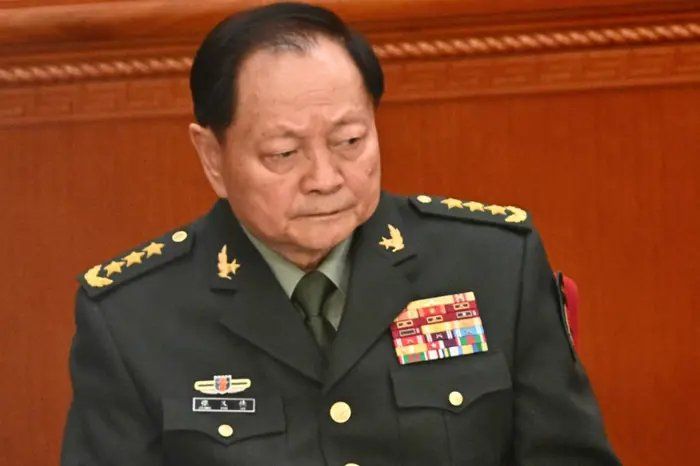
Beijing's military establishment has undergone another significant reshuffle with the removal of General Zhang Youxia from the Central Military Commission, China's paramount defence body. The action, announced by state news agency Xinhua on Friday during a parliamentary standing committee meeting, represents the formal conclusion of a corruption investigation that began in January when the defence ministry disclosed that Zhang and fellow high-ranking official Liu Zhenli were suspected of breaching discipline and legal standards.
Zhang's departure carries particular weight within China's defence hierarchy. As the more senior of two vice chairmen serving on the Commission, he held the distinction of being the country's highest-ranked military officer. His position placed him at the pinnacle of the People's Liberation Army's institutional framework, overseeing military operations and strategic planning at the most elevated levels. The removal therefore signals a major transition in Beijing's top-tier military command structure.
The investigation into Zhang and Liu emerged as part of the broader anti-corruption campaign that has characterised Xi Jinping's tenure as China's leader. Since assuming power, Xi has employed aggressive graft-fighting measures as both a governance tool and a means of consolidating authority. These investigations have periodically ensnared high-profile figures across the military, government, and party apparatus, serving as demonstrations of the leadership's commitment to rooting out illegal conduct. Zhang and Liu's cases fit squarely within this pattern, with authorities deploying the standard terminology of "serious violations of discipline and the law" — a euphemism commonly employed in Chinese state media when describing corruption allegations.
What made Zhang's downfall particularly striking to observers was his apparent proximity to Xi and his standing as a senior military figure with significant seniority and influence. Military analysts have noted that Zhang had cultivated a reputation as a trusted lieutenant within the defence establishment. His sudden investigation and removal therefore created ripples of uncertainty within military circles regarding leadership stability and the security of even the most senior positions. The seven-month interval between the initial investigation announcement and Friday's formal removal decision underscores the deliberate pace of such high-level disciplinary processes within China's political system.
Liu Zhenli, who served as chief of staff of the CMC's joint staff department, also faced removal from his post. The joint staff department is responsible for overseeing combat planning and operational readiness, making Liu's position equally consequential to military functioning. His simultaneous removal alongside Zhang suggests the investigation may have uncovered interconnected violations spanning multiple departments and hierarchical levels within the military command structure.
The timing and method of announcement through a parliamentary standing committee meeting reflects the formal procedures governing changes to the highest military positions in China. Such decisions, while ultimately determined through party and military channels, are formally ratified through state institutions, lending them constitutional legitimacy. The Xinhua report provided minimal additional detail about the nature of the violations or the circumstances surrounding the investigation, a characteristic restraint typical of Chinese state media coverage of senior-level disciplinary cases.
For regional observers, including those in Southeast Asia, these developments carry implications for understanding China's military modernisation trajectory. Leadership transitions and anti-corruption actions within the PLA can affect the strategic direction of military planning, defence spending priorities, and international military engagement policies. Uncertainty about the stability of high command during periods of transition may also influence perceptions of China's reliability as a defence partner or potential adversary in regional disputes.
The removal of Zhang and Liu represents the latest chapter in Xi's ongoing effort to reshape the military apparatus according to his vision. Over his tenure, he has systematically rotated military leaders, introduced organisational reforms, and pursued high-profile investigations targeting officers accused of financial misdeeds. These measures, framed as essential to maintaining discipline and effectiveness, have simultaneously functioned as mechanisms for eliminating potential rivals and consolidating control over the defence establishment. Zhang's case demonstrates that even the most elevated positions offer no guarantee of immunity from investigation and removal.
The broader pattern of military leadership changes in China reflects an institutional maturation process, with the CMC increasingly formalising its procedures and documentation around personnel decisions. However, the opacity surrounding the substantive allegations against Zhang and Liu remains notable. Neither Zhang nor Liu have publicly responded to the allegations, and detailed information about the investigation findings has not been disclosed. This secrecy is consistent with standard Chinese practice but leaves questions about accountability and transparency unanswered.
Moving forward, the removal of these senior military figures creates vacancies that will require filling through promotion or lateral appointment. The selection process for their successors will likely reveal important information about Xi's current priorities for military leadership and the qualities he values in those occupying the highest defence positions. The names and backgrounds of replacement officials could signal whether Beijing intends to maintain continuity in military policy or pursue new strategic directions. Regional partners and competitors alike will scrutinise these appointments for clues about China's evolving military doctrine and international stance.

