China's diplomatic establishment has formally acknowledged Prime Minister Datuk Seri Anwar Ibrahim's recent remarks on Taiwan, with Beijing's foreign ministry issuing a statement of appreciation for his steadfast adherence to the one-China principle. The commendation comes after Anwar articulated Malaysia's long-standing position in a recent interview, underscoring the consistency of Kuala Lumpur's approach to one of Asia's most sensitive geopolitical issues. This public recognition by Beijing reflects the significance Beijing places on regional leaders' explicit endorsement of its core diplomatic position, particularly as tensions around the Taiwan question continue to shape international relations across the Indo-Pacific.
The Chinese Ministry of Foreign Affairs spokesperson conveyed the government's satisfaction through social media, posting that "nothing will stop China from being reunified," while asserting that international support for the one-China principle cannot be undermined. This statement carries weight beyond mere ceremonial diplomacy, signalling Beijing's determination to consolidate consensus among neighbouring nations on this fundamental issue. For Malaysia, the public endorsement from China's diplomatic machinery represents recognition of the government's unwavering position, even as global geopolitical divisions sharpen around the question of Taiwan's political status.
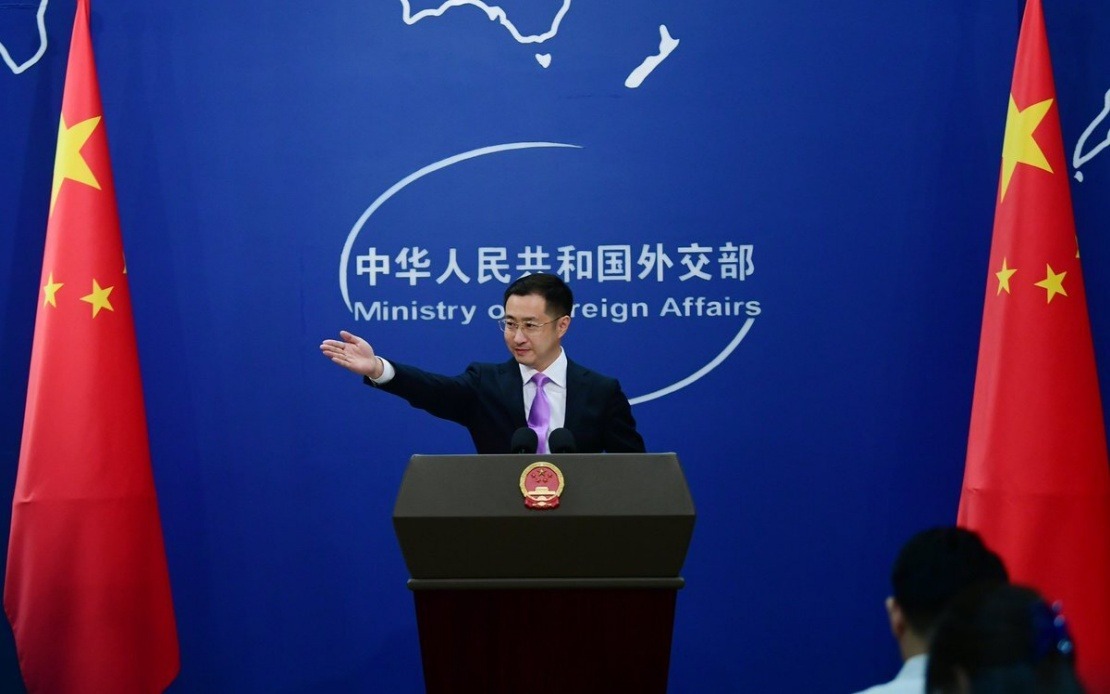
During a regular press briefing in Beijing on Wednesday, Chinese foreign ministry spokesperson Lin Jian elaborated on the broader significance of Malaysia's stance. Lin framed adherence to the one-China principle not merely as a diplomatic formality but as an expression of fundamental justice and popular sentiment. The spokesperson's characterisation of the principle as standing "on the side of what is right" attempts to elevate Beijing's position from narrow national interest to universal moral principle, a rhetorical strategy designed to broaden its appeal among nations seeking to maintain balanced relations with both Beijing and Western powers.
The substance of Lin Jian's remarks emphasised Beijing's historical narrative regarding Taiwan. By describing China's reunification as "an unstoppable historical trend," the Chinese foreign ministry projects confidence while simultaneously suggesting to other nations that alignment with this trend represents pragmatic statecraft rather than mere deference to Beijing's preferences. This framing becomes particularly relevant for Southeast Asian nations like Malaysia, which navigate complex relationships across the Indo-Pacific and must balance engagement with multiple major powers.
Anwar Ibrahim's statements to Al Jazeera, which prompted Beijing's response, represented a clear and unambiguous articulation of Malaysia's position. The Prime Minister stated that Taiwan constitutes part of China, emphasising that this perspective is internationally accepted. By anchoring his remarks in claimed consensus, Anwar aligned Malaysia with the overwhelming majority of United Nations members that maintain diplomatic relations with Beijing rather than Taipei. This positioning reflects Malaysia's pragmatic approach to regional diplomacy, prioritising economic and political relationships with the world's second-largest economy while maintaining stable ties across the region.
Malaysia's consistent advocacy for the one-China principle reflects both historical diplomatic practice and contemporary strategic considerations. Since establishing diplomatic relations with the People's Republic of China in 1974, Malaysia has maintained this position despite Taiwan's continued economic dynamism and democratic development. The country's approach demonstrates how Southeast Asian nations manage relationships with a rising China while preserving their own autonomy and engaging with other global powers. For Malaysian policymakers, reiteration of this principle serves multiple functions: it maintains the foundation of bilateral relations with Beijing, signals respect for a core Chinese interest, and avoids unnecessary friction on an issue where Malaysia maintains consistent long-standing policy.
Beijing's public appreciation of Anwar's remarks indicates the strategic importance China places on securing clear statements of support from regional leaders on the Taiwan question. As international scrutiny of Beijing's intentions toward Taiwan intensifies, particularly following military posturing and diplomatic tensions, explicit endorsements from neighbouring states assume heightened significance. Malaysia's reaffirmation carries particular weight given the country's prominent position in Southeast Asia, its economic importance, and its role in regional forums where questions of international law and sovereignty frequently arise.
The timing of China's formal response to Anwar's Al Jazeera interview suggests careful diplomatic attention to international media coverage of Malaysian policy. By rapidly issuing official commentary, Beijing ensured that Anwar's remarks received formal acknowledgment and were integrated into China's broader diplomatic narrative on the Taiwan question. This approach reflects how contemporary diplomacy increasingly occurs across multiple channels simultaneously, with statements to international media outlets receiving formal governmental responses that amplify their significance.
For Malaysia specifically, China's public appreciation reinforces the government's alignment with Beijing while creating potential complications with Western nations and Taiwan advocates concerned about cross-strait developments. The Malaysian government's balancing act in regional diplomacy requires maintaining the one-China position while preserving relationships with democratic nations and international partners who view the Taiwan question differently. Anwar's recent comments, validated through China's formal response, demonstrate the government's commitment to this established policy framework despite evolving global circumstances.
The broader geopolitical context underlying this diplomatic exchange involves intensifying competition for influence across Southeast Asia. China's explicit appreciation of Malaysia's position serves to anchor bilateral relations and potentially encourages other regional states to offer similar public statements. Conversely, it may increase pressure from other quarters seeking to influence Malaysian policy on this sensitive issue. These diplomatic exchanges, while appearing routine, reflect the underlying tensions shaping regional diplomacy as major powers compete for alignment and influence across the Indo-Pacific.
Moving forward, Malaysia's continued adherence to the one-China principle, now formally acknowledged by Beijing, will likely remain a consistent feature of the nation's foreign policy. The government's clarity on this fundamental position provides stability in bilateral relations with China while allowing flexibility on other aspects of the relationship. For Malaysian analysts and policymakers, understanding how regional positions on Taiwan influence broader diplomatic relationships becomes increasingly important as cross-strait tensions potentially escalate and global attention to this question intensifies.

