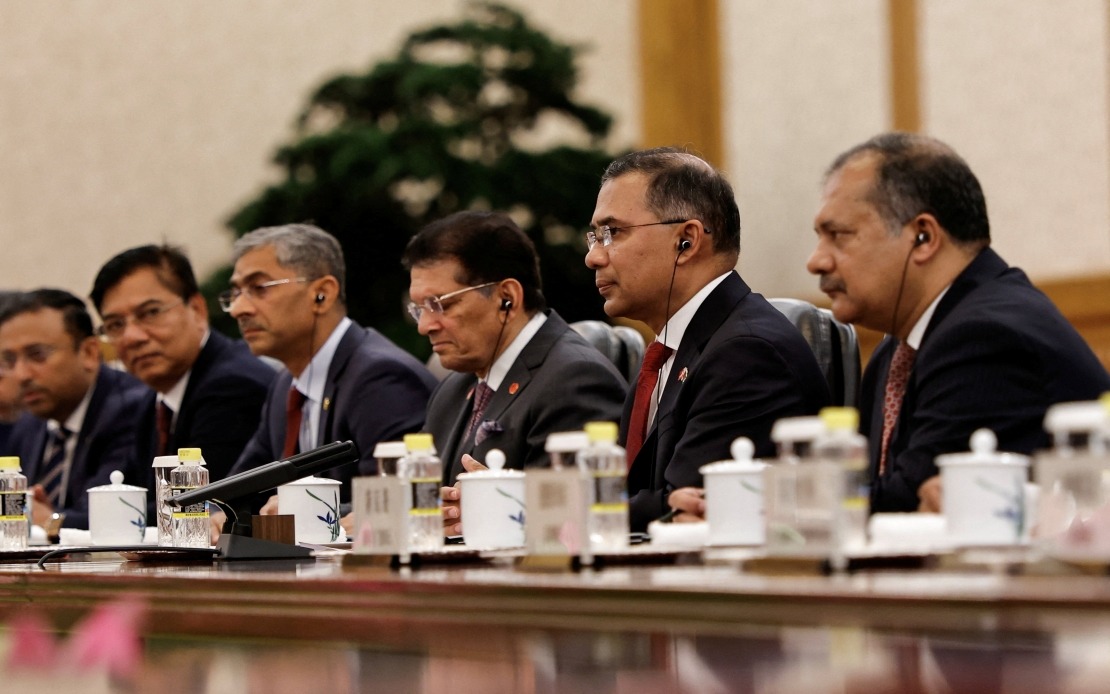
Bangladesh is positioning itself as an increasingly attractive destination for Chinese capital, with a slate of major investment commitments announced during Prime Minister Tarique Rahman's recent visit to China. Twelve Chinese companies have collectively proposed US$9.2 billion in new ventures spanning energy generation, port development, manufacturing, and logistics infrastructure, marking a significant deepening of bilateral economic ties between the two nations.
The investment wave reflects broader strategic alignment between Dhaka and Beijing, particularly in sectors critical to Bangladesh's development agenda. The Bangladesh government has explicitly prioritised attracting Chinese capital into energy security, modernised port facilities, logistics networks, manufacturing capacity, and educational infrastructure—all areas where the country faces capacity constraints. Officials expect these projects to translate into tens of thousands of direct and indirect employment opportunities, addressing persistent challenges in job creation across both urban and rural employment markets.
A formal joint communiqué issued following Prime Minister Tarique's June 22-26 China visit committed both nations to expanding cooperation across trade, e-commerce, industrial development, and supply chain integration. The language underscores China's interest in strengthening Bangladesh's export capacity and supporting multilateral trading frameworks—positioning Bangladesh as a production and distribution hub within China's broader regional economic architecture.
Among the highest-profile projects is the Sichuan Road and Bridge Group's US$4.5 billion commitment to upgrade and modernise the critical Dhaka-Chattogram highway corridor through a public-private partnership model. This arterial route represents a critical economic lifeline connecting Bangladesh's capital to its primary seaport, and the investment signals recognition of bottlenecks limiting internal trade and manufacturing competitiveness. The highway project exemplifies how Chinese investors are targeting foundational infrastructure gaps that constrain broader economic development.
Port modernisation and logistics infrastructure feature prominently in the investment portfolio. The China Civil Engineering Construction Corporation has pledged US$650 million to develop the Mongla Port Economic Zone, encompassing warehousing, transshipment, and logistics facilities. This investment directly supports Bangladesh's aspiration to position its ports—particularly Mongla and the Payra complex—as regional trading hubs. SF Express has separately committed US$180 million specifically for cold-chain logistics and warehouse facilities near Mongla, reflecting growing recognition of Bangladesh's potential as a distribution centre for perishable goods across South Asia.
Energy sector investments underscore Bangladesh's pressing need to expand and diversify power generation capacity. Shanghai SUS Environment Company plans to invest US$890 million in waste-to-energy plants, addressing simultaneously the country's waste management challenges and electricity supply constraints. Huaxin Textile Industry has proposed US$190 million for a 200 megawatt captive solar power facility in the Payra economic zone, alongside ancillary manufacturing operations in recycled textiles and lithium batteries. China Future Energy Group Holding Limited is investing US$250 million in gas field exploration and development, targeting domestically available hydrocarbon resources.
Environmental remediation and circular economy projects represent another significant investment stream. Zhongxin Environmental Protection Group's US$1.65 billion proposal to develop an electronic waste processing and recycling facility in the Payra Port Industrial Zone addresses the growing challenge of e-waste management across South Asia while creating high-value industrial capacity. These projects suggest Chinese investors are responding to Bangladesh's emerging regulatory frameworks around environmental protection and waste management standards.
The creation of dedicated Chinese industrial parks, particularly in Chattogram, reflects a long-established pattern of Chinese outbound investment strategy. Such enclaves provide regulatory clarity, custom clearance efficiency, and clustering benefits that attract both Chinese and third-country manufacturers seeking to serve South and Southeast Asian markets. A similar model has proven successful across the Association of Southeast Asian Nations, and Bangladesh's adoption of this approach indicates learning from regional precedents.
Manufacturing investment extends beyond energy-related sectors. Shenzhen Kaifa Technology's US$250 million project to produce electric smart metres demonstrates Chinese interest in Bangladesh's emerging digital infrastructure and energy metering technology sectors. These investments often involve technology transfer and skills development, creating downstream benefits beyond direct capital investment figures.
Bangladesh Commerce Minister Khandakar Abdul Muktadir has explicitly linked these Chinese investments to a broader trade rebalancing objective. Bangladesh currently runs a significant trade deficit with China, importing substantial volumes of machinery, electronics, and raw materials while exporting mainly garment products and raw materials. The minister's framing suggests the government views Chinese manufacturing investments as a mechanism to diversify export capacity and reduce reliance on traditional garment sector revenues, creating higher-value-added manufacturing capabilities.
For Southeast Asian observers, these developments carry implications beyond Bangladesh's borders. If these projects materialise as committed, they would substantially enhance Bangladesh's position within regional supply chains and logistics networks. The emphasis on port modernisation and industrial park development creates potential spillover effects for neighbouring countries seeking to access Bay of Bengal trade routes and manufacturing capacity. Malaysia, as a regional manufacturing and logistics hub, should monitor how these investments reshape competitive positioning in sectors ranging from electronics manufacturing to cold-chain logistics.
The scale and sectoral diversity of these commitments also reflect China's strategic interest in maintaining influence and commercial presence across South Asia, particularly amid broader geopolitical dynamics. Bangladesh's new government, which took office following significant political transitions, appears to be leveraging these investments as both economic engines and signals of renewed diplomatic alignment with Beijing.
Successful implementation remains contingent on numerous factors including regulatory consistency, project financing arrangements, and Bangladesh's capacity to manage large construction and operational projects. The announcement phase often precedes actual capital deployment by extended periods. Nevertheless, the breadth and specificity of these sectoral commitments suggest serious Chinese investor interest in Bangladesh's medium-term development trajectory.

