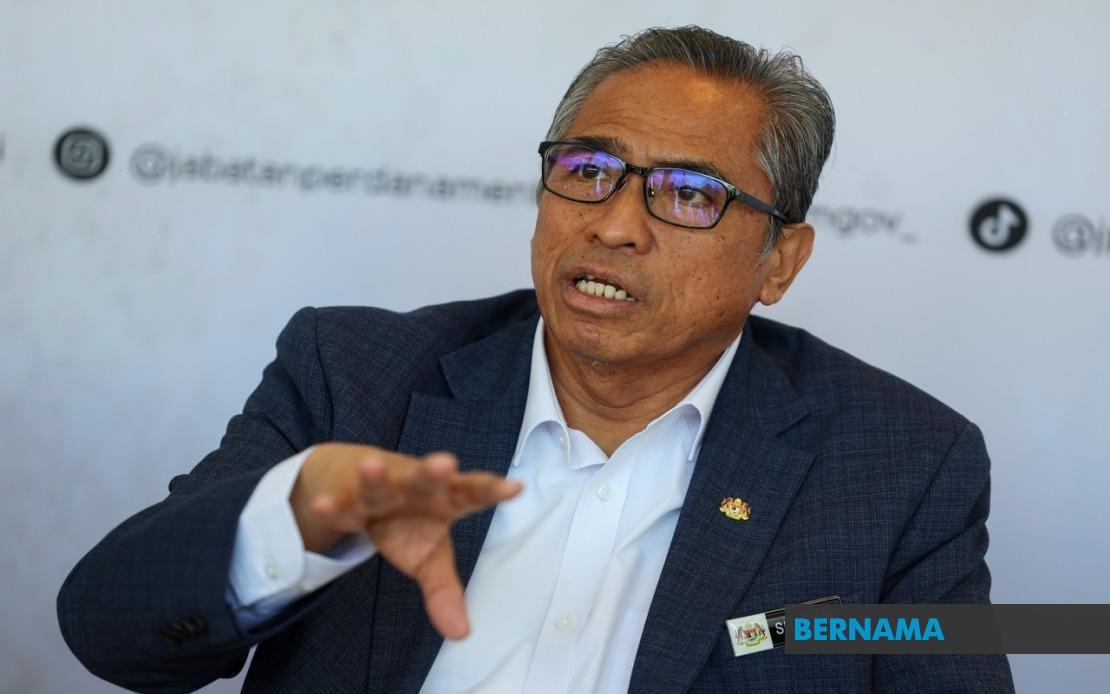
The machinery of government must become a reliable instrument for advancing Malaysia's standing on the world stage, according to the country's Chief Secretary to the Government. Tan Sri Shamsul Azri Abu Bakar stressed this imperative in recent remarks, noting that the public service bears responsibility for converting high-level diplomatic initiatives into practical, domestic prosperity. His comments underscore a critical shift in Malaysia's governance approach—moving beyond symbolic international engagement toward operationalising the agreements and partnerships secured through top-level diplomacy.
The backdrop for these remarks centres on Prime Minister Datuk Seri Anwar Ibrahim's recent working visits to Russia and Turkemenistan, which officials have characterised as strategically significant moves in repositioning Malaysia within evolving global geopolitical and economic structures. These missions, conducted under the framework of MADANI Diplomacy, are presented as more than foreign policy gestures; they represent an attempt to diversify Malaysia's economic partnerships and secure access to emerging markets at a time of shifting international trade dynamics. Shamsul Azri framed these visits as having successfully positioned the nation advantageously, particularly in opening doors to new commercial opportunities and reinforcing existing trade relationships.
However, the Chief Secretary's intervention suggests an awareness that diplomatic success alone is insufficient. The real test, he indicated, lies in the ability of Malaysia's government apparatus to deliver on the promises and potential created through international engagement. This reflects a broader concern within Southeast Asian policymaking circles: that emerging economies must couple diplomatic agility with institutional capacity to capitalise on geopolitical opportunities. For Malaysia specifically, this means ensuring that ministries governing commerce, investment, and trade possess not merely the formal authority but the operational readiness and strategic acumen to convert bilateral agreements into measurable economic outcomes.
Shamsul Azri emphasised that government officials must adopt what he termed a global mindset—a conceptual framework that extends beyond routine administration to encompass understanding of macroeconomic shifts, supply chain realities, and competitive positioning in what he described as a new world economic order. This framing acknowledges that Malaysia operates within a multipolar trading environment where traditional competitive advantages erode rapidly, making continuous adaptation essential. The emphasis on building capacity and establishing strategic cooperation networks beyond conventional boundaries suggests recognition that Malaysia must look beyond its traditional regional partnerships and explore engagement models suited to a more fragmented, competition-intensive global economy.
A central plank of the Chief Secretary's message concerned the Ease of Doing Business initiatives, which he identified as requiring enhanced focus and resources. This emphasis reflects a practical understanding that international investors evaluate destinations not merely on diplomatic warmth or resource availability, but on the actual friction they encounter in establishing and operating enterprises. For Malaysian readers concerned with competitiveness, this signals that government intends to prioritise the unglamorous but essential work of regulatory streamlining and institutional efficiency. The civil service, in this framing, becomes an investment facilitator—a role that demands different skills and incentive structures than traditional bureaucratic functions.
The Chief Secretary also invoked the Public Service Reform Agenda (ARPA), specifically its internationalisation enabler, as providing the framework for this reorientation. This invocation suggests that Malaysia's bureaucratic modernisation is intended to serve a strategic purpose beyond general efficiency improvements. Rather, the civil service is being conceptually repositioned as an instrument for national economic advancement in a competitive international context. This represents a significant philosophical shift from earlier eras when civil service reform was primarily framed around administrative tidiness or fiscal prudence. Now, public sector performance is explicitly linked to national economic standing and global competitiveness.
For civil servants, the implications are substantial. The Chief Secretary called specifically on heads of departments and senior officials to embody and propagate MADANI Diplomacy values and a whole-of-government approach in their daily work. This language suggests that institutional silos—the compartmentalisation that often characterises large bureaucracies—are now viewed as impediments to national objectives. Cross-ministerial coordination, strategic alignment, and shared commitment to converting diplomatic gains into economic benefits become implicit job requirements. The message carries an undertone of expectation that officials will demonstrate not merely competence in their narrow domains but commitment to broader national strategic objectives.
The Chief Secretary's emphasis on job creation deserves particular attention for Malaysian audiences. He highlighted the importance of generating high-income employment opportunities for Malaysian citizens as a tangible outcome of international investment and partnerships. This reflects political awareness that international engagement is ultimately justified to ordinary citizens through improved domestic livelihoods. The focus on commodity supply security similarly acknowledges vulnerabilities in Malaysia's economic structure—dependencies on imported inputs that can constrain manufacturing competitiveness. By positioning the civil service as responsible for translating agreements into jobs and supply security, Shamsul Azri was essentially articulating a social contract: diplomatic success gains legitimacy only when converted into opportunity and security for Malaysian workers and households.
The emphasis on Malaysia's competitive positioning as an investment destination carries implications for regional dynamics. Southeast Asia contains multiple economies—Vietnam, Indonesia, Thailand—competing for foreign direct investment in similar sectors. Malaysia's relative attractiveness depends increasingly on factors like ease of doing business, workforce quality, and institutional predictability rather than on natural resources or geographic location. The Chief Secretary's insistence that the civil service become strategically astute actors in this competition, rather than passive administrators, reflects understanding that Malaysia cannot rely on natural advantages but must actively cultivate institutional advantages that make it preferable to investors than competing alternatives.
The whole framework presented by Shamsul Azri—where diplomacy creates opportunities that an efficient, globally-minded civil service converts into prosperity—represents an ambitious vision of what government can accomplish. It assumes a level of institutional coordination and commitment that eludes many emerging economies. The test of this approach will lie not in the rhetoric but in implementation: whether ministries genuinely subordinate departmental interests to national strategic objectives, whether officials acquire the technical expertise required to evaluate complex international agreements, and whether government achieves the Ease of Doing Business improvements necessary to attract and retain significant foreign investment. For Malaysia's economic trajectory over the coming years, the performance of its civil service in executing this vision may prove as significant as any diplomatic initiative conducted at the highest levels.

