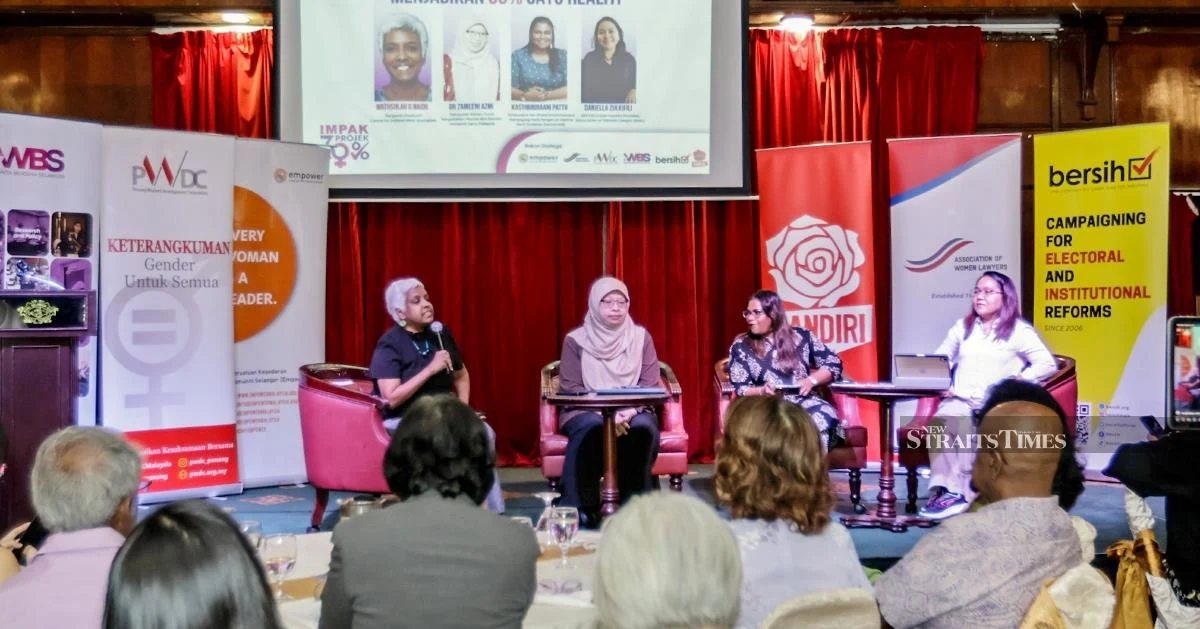
Malaysia's civil society sector has escalated its campaign for greater female political representation by formally presenting a draft law and memorandum to the government proposing that all political parties be required to nominate a minimum of 30 per cent women candidates in the sixteenth general election. The submission marks a coordinated push from numerous non-governmental organisations united behind a common agenda to reshape the electoral landscape and challenge the male-dominated composition of Malaysian parliament.
The timing of this proposal arrives amid ongoing debates within Malaysia's political ecosystem about the composition of the country's representative bodies. Currently, Malaysia lags significantly behind regional and global benchmarks for women's participation in legislative institutions. The 30 per cent threshold proposed by the coalition aligns with international standards and recommendations from gender equality advocates, though it represents a marked departure from present parliamentary demographics where women constitute a considerably smaller proportion of elected members.
The memorandum and draft legislation submitted by the coalition represent the culmination of sustained advocacy efforts by civil society actors who have increasingly focused on structural barriers preventing women from achieving meaningful political representation. Rather than relying solely on voluntary commitments from political parties, the proposed legal framework would establish a binding requirement applicable uniformly across Malaysia's diverse political landscape, from established major parties to newly formed political entities.
Implementing such a quota system would necessitate significant adjustments to how political parties conduct their candidate selection processes. Many organisations within the coalition have argued that without enforceable mechanisms, voluntary targets have consistently failed to deliver meaningful progress toward gender parity. The draft law seeks to remove discretionary decision-making from party leadership structures where traditional preferences have historically advantaged male candidates.
The submission carries particular significance given Malaysia's position within Southeast Asia, where several neighbouring nations have made greater strides in advancing women's political participation. Some regional counterparts have implemented or debated similar quota mechanisms, creating both a comparative benchmark and a template for potential policy design. Malaysian civil society groups have drawn on these regional experiences to substantiate their arguments about the feasibility and effectiveness of mandated quota systems.
Political parties across the Malaysian spectrum have historically expressed varying degrees of receptiveness to gender quota proposals. While some have adopted internal targets and celebrated incremental improvements in women candidate selection, critics contend that these voluntary measures have produced insufficient results over successive electoral cycles. The submission of formal draft legislation now places the onus on government and political actors to engage substantively with a concrete policy proposal rather than responding to abstract advocacy.
The 30 per cent benchmark specifically reflects international consensus regarding meaningful representation thresholds. Research on gender quotas in legislatures across diverse political systems suggests that representation below this level tends to result in women being marginalised within parliamentary caucuses and committee structures, limiting their influence on policy outcomes. The coalition's choice of this particular figure thus represents not an arbitrary target but a floor derived from evidence about effective institutional participation.
For Malaysian voters and constituents, a mandate requiring greater female candidate nomination would reshape electoral choice and potentially influence party campaign messaging. Candidates would emerge from demographic and professional backgrounds that more comprehensively reflect Malaysian society's composition. Additionally, increased female representation has been associated in international studies with heightened legislative attention to health, education, and social protection portfolios, areas where women often experience distinctive policy concerns.
The submission also intersects with broader discussions about Malaysia's democratic development and institutional reform. Proponents argue that advancing women's political participation strengthens representative democracy by incorporating perspectives and experiences currently underrepresented in legislative deliberations. They contend that the exclusion of women from proportionate political representation constitutes a democratic deficit that formal reform can address.
Government receptiveness to the draft legislation remains uncertain, as the proposal requires navigation through multiple institutional layers including parliamentary committees, cabinet consideration, and eventually legislative processes. Political parties themselves will likely emerge as crucial stakeholders in negotiations, their responses shaped by calculations about electoral consequences and internal party dynamics. Some parties may perceive quota requirements as threatening existing power structures, while others might embrace them as modernisation initiatives enhancing party brand appeal to contemporary voters.
The coalition's decision to submit formal draft legislation rather than confining advocacy to public campaigns signals determination to move women's representation from the realm of aspiration into concrete legal obligation. Should the proposal advance through government consideration, Malaysia would join an expanding international cohort of democracies that have institutionalised gender representation requirements, positioning the country as engaged with contemporary standards for inclusive democratic governance while addressing a persistent gap in parliamentary composition.

