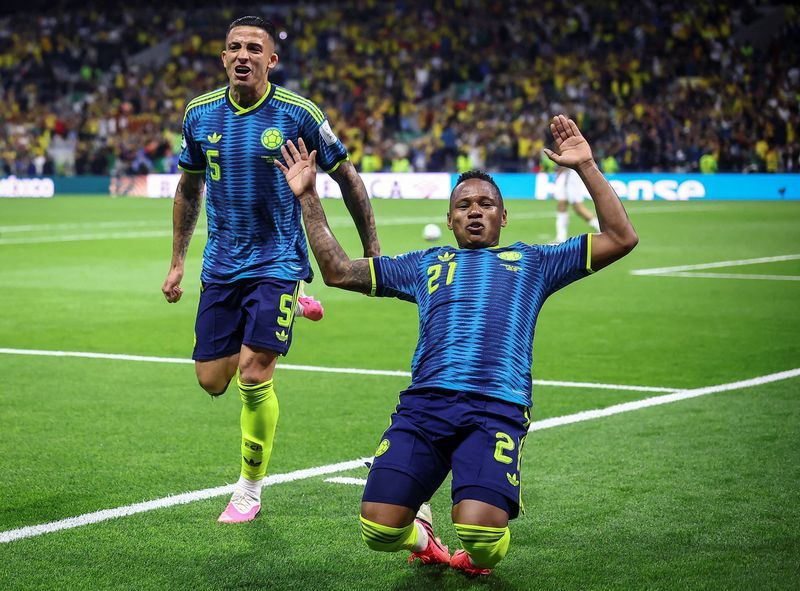
Colombia will attempt to strengthen their grip on Group K when they take on DR Congo on Tuesday, looking to extend an unbeaten record that began with a commanding 3-1 triumph over Uzbekistan. Manager Nestor Lorenzo's team enters the encounter in a position of relative comfort, yet their coach has sounded a note of warning about the tactical challenges posed by an opponent who has already demonstrated an ability to frustrate tournament heavyweights. The contest represents a crucial juncture for both sides, with qualification implications already within reach for the South Americans, whilst the Congolese will sense an opportunity to build on the momentum generated by their stunning debut.
Colombia's opening performance against Uzbekistan, while producing a convincing scoreline, concealed considerable deficiencies that Lorenzo has identified as requiring urgent rectification. The South American side dominated possession through much of the encounter but struggled to convert their territorial advantage into consistent attacking threat, particularly as the match wore on and their opponents grew in confidence. The defensive fragility exposed during stretches of the second half has become the focal point of pre-match preparation, with Lorenzo acutely aware that DR Congo's direct, transitional approach will relentlessly target the spaces that Uzbekistan successfully exploited. These vulnerabilities must be addressed if Colombia are to avoid a repeat of the nervous passages that undermined the aesthetic quality of their maiden victory.
Luis Diaz, Bayern Munich's dynamic forward, emerged as the standout performer in Colombia's opening fixture, combining goal-scoring prowess with creative contribution to justify his central role in Lorenzo's attacking architecture. The 27-year-old's pace and directness proved difficult for Uzbekistan to contain, and he earned player-of-the-match recognition for his comprehensive display. However, Lorenzo will be hoping for significantly greater involvement from captain James Rodríguez, whose influence remained peripheral during the Uzbekistan encounter. The experienced playmaker's creativity and football intelligence typically anchor Colombia's build-up play, and his fuller integration into proceedings against DR Congo could provide the greater control and incisiveness that the team occasionally lacked against their Asian opponents.
A victory on Tuesday would mathematically secure Colombia's progression to the Round of 32, whilst simultaneously offering the realistic possibility of topping the group if Portugal stumble against Uzbekistan. This dual incentive places the Colombian camp in an advantageous position, though Lorenzo's evident wariness of DR Congo suggests awareness that complacency represents a genuine threat. The Congolese have arrived at this tournament flush with confidence following their remarkable opening performance, which saw them emerge from their meeting with Portugal with a deserved draw. That result—their first World Cup match in over five decades, having last participated as Zaire in 1974—has fundamentally altered the psychological dynamics within the group.
DR Congo's 1-1 stalemate against Portugal constituted a seismic upset in context, achieved through a combination of defensive discipline and a clinical counter-attacking approach that neutralized one of the tournament's traditional powerhouses. Yoane Wissa's opening goal represented particular significance for the Central African nation, marking their return to World Cup goal-scoring after an absence stretching back five decades. Coach Sébastien Desabre's tactical framework prioritized compactness and structural integrity, inviting pressure whilst remaining prepared to exploit the spaces left by Portugal's aggressive attacking commitments. This defensive solidity, coupled with the psychological boost of drawing with a tournament favourite, has furnished DR Congo with considerable self-belief as they prepare to contest a second consecutive match.
Lorenzo's assessment of the tactical challenge ahead demonstrates clear-eyed recognition of DR Congo's particular threat profile. Rather than dismissing the Congolese as overmatched opponents capitalizing on a fortunate draw, the Argentine coach emphasized that their emphasis on long-ball distribution and rapid transitions presents a fundamentally different examination compared to Uzbekistan's more possession-oriented approach. The distinction matters considerably, as it requires Colombia's defensive shape to remain compact and disciplined, preventing the turnovers that have proven costly during transitions. Lorenzo's candid admission that Colombia's possession dominance against Uzbekistan occasionally disrupted their attacking rhythm, resulting in overly backward movement and insufficient clinical execution in the final third, provides explicit indication of the refinements required.
The Colombian support base is expected to constitute a material advantage during the encounter, with thousands of supporters having transformed Mexico City's Estadio Azteca into an effective home environment during the opening fixture. With Guadalajara serving as Colombia's tournament base, the concentration of expatriate and diaspora supporters in the region suggests another substantial contingent will make the journey to augment the team's backing. This environmental factor carries psychological weight, particularly for a squad targeting not merely victory but the complete performance that has so far eluded them. DR Congo, conversely, arrives without the prospect of meaningful home support, though their evident cohesion and collective commitment suggest this absence may prove immaterial to their competitive capacity.
The significance of this fixture extends beyond the immediate Group K context, resonating across Southeast Asian football communities with particular intensity. The broader narrative of DR Congo's return to the world stage after prolonged absence, combined with their early competitive success, speaks to the manner in which World Cup competition occasionally provides unexpected outlets for emerging footballing nations. Malaysia and neighboring Southeast Asian territories have historically observed such stories with considerable interest, viewing them as emblematic of football's democratic potential to elevate unfancied participants. Colombian football, by contrast, occupies an established position within global hierarchies, making their progress largely expected rather than surprising. The interplay between these contrasting trajectories will determine whether DR Congo can sustain their impressive opening, or whether Colombia's superior experience and technical depth prove decisive.
The match outcome carries material implications for Group K's final configuration, with the possibility of Portugal's failure to overcome Uzbekistan creating scenarios where a Colombian victory secures first place and DR Congo's result against Uzbekistan potentially determining second-place qualification. These branching permutations ensure that Tuesday's encounter remains analytically significant beyond its immediate stakes. For Colombian supporters throughout the region, the opportunity to consolidate qualification whilst delivering the polished performance that has thus far remained elusive represents an attractive proposition. For DR Congo, the chance to demonstrate that their Portugal draw reflected genuine quality rather than tactical fortune constitutes an equally compelling narrative thread.

