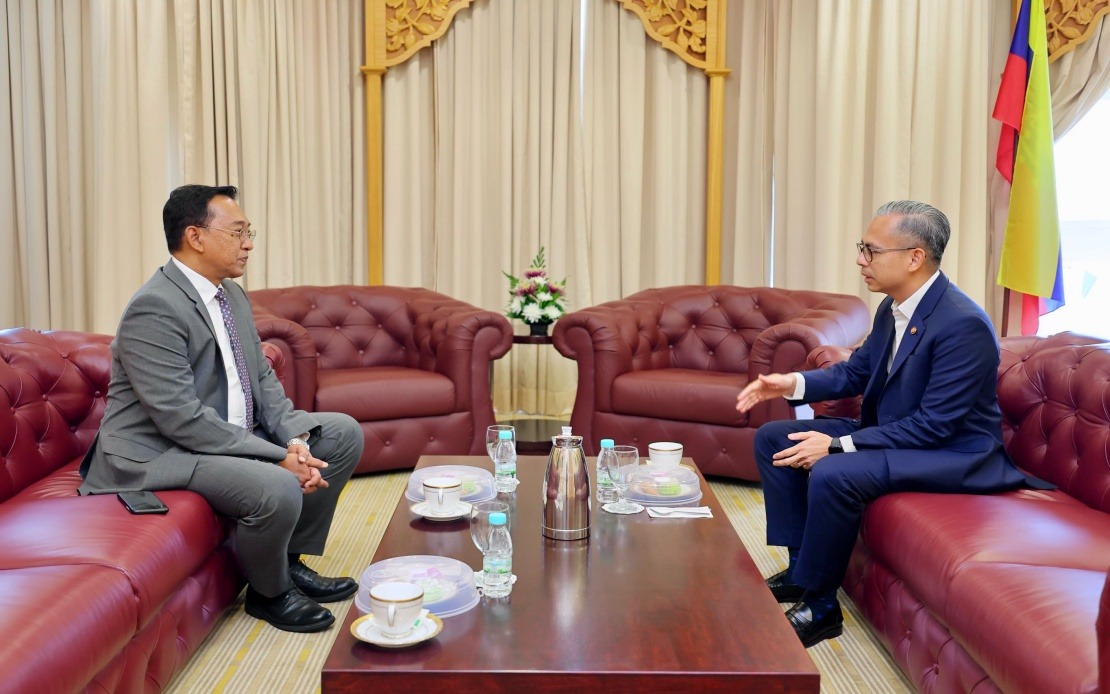
Communications Minister Datuk Fahmi Fadzil has received a courtesy call from Anwar Udzir, Malaysia's newly appointed Ambassador to Lebanon, in a meeting that underscores the ministry's engagement with the diplomatic service on matters of national importance. The encounter, which took place in Kuala Lumpur, reflects the routine but substantive practice of welcoming senior diplomatic representatives as they begin their postings, with both officials using the occasion to reaffirm commitment to closer coordination between the foreign service and domestic government agencies.
Anwar Udzir received his formal letter of appointment from His Majesty Sultan Ibrahim, King of Malaysia, on May 18, 2026, marking the official commencement of his tenure as Malaysia's representative in Beirut. The timing of the courtesy call demonstrates the ministry's priority in establishing working relationships with ambassadors tasked with advancing Malaysian interests across various sectors at the international arena. For Fahmi, the meeting presented an opportunity to outline expectations and foster the kind of institutional collaboration necessary for effective diplomatic engagement.
The minister highlighted the strategic importance of the interaction by noting it would serve to strengthen working ties between his office and the ambassador's mission in Lebanon. Beyond the ceremonial aspects of such meetings, there was an explicit commitment to exchange perspectives on current developments that touch upon Malaysia's interests abroad. This suggests that communications and public diplomacy considerations form part of the broader diplomatic calculus in Lebanese operations, a significant acknowledgement given the growing role of digital communications and narrative-building in international relations.
Fahmi's remarks in his social media post extended warm wishes for Anwar's success in representing Malaysia in Lebanon, reflecting the minister's recognition of the demanding nature of ambassadorial work. The posting itself serves a public relations function, signalling to both domestic and international audiences that Malaysia maintains active, professional diplomatic representation across key regions. Lebanon, despite its well-documented internal challenges and geopolitical complexities, remains an important post for Malaysian diplomatic interests in the Middle East and Arab world.
The minister's recollection of his prior acquaintance with Anwar provides insight into how Malaysia's diplomatic and administrative networks operate across different functional domains. The two had previously collaborated when Anwar and his team helped organise the Asia-Pacific Telecommunity Ministerial Meeting held in Tokyo, Japan, the previous year. This background working relationship suggests that Anwar brings relevant experience in coordinating high-level international meetings, a skill that could prove valuable in diplomatic representation where multilateral engagement and consensus-building are frequently required.
The Asia-Pacific Telecommunity connection is particularly noteworthy, as it demonstrates how Malaysian officials active in regional telecommunications governance transition into broader diplomatic roles. Such movement between specialised international forums and general diplomatic postings reflects how expertise in particular sectors can inform and enhance overall diplomatic performance. It also hints at the interconnected nature of Malaysian foreign policy, where telecommunications and digital connectivity increasingly intersect with traditional diplomatic concerns.
The courtesy call ritual itself holds significance within diplomatic protocol and institutional practice. These initial meetings between high-ranking government officials and newly appointed ambassadors serve multiple functions beyond their surface courtesy. They establish personal rapport, communicate governmental priorities, and create channels for ongoing communication on matters of mutual concern. For a communications minister in particular, maintaining such connections with diplomatic personnel posted internationally offers valuable insights into how Malaysia's message and interests are being conveyed and protected abroad.
Lebanon occupies a delicate position in Middle Eastern geopolitics and regional stability. Malaysia's diplomatic presence there, through the ambassador's office, must navigate complex local political dynamics while protecting Malaysian citizens and interests. The country has hosted significant Lebanese diaspora communities and maintains economic relationships that require careful diplomatic attention. The appointment of an experienced diplomat like Anwar Udzir suggests Malaysia takes its representation seriously, particularly given the challenging operating environment that many international missions face in Beirut.
The broader context of this meeting reflects Malaysia's continued investment in maintaining comprehensive diplomatic representation across diverse regions. At a time when some nations have reduced or consolidated their overseas missions, Malaysia's appointment of new ambassadors to posts like Lebanon signals ongoing commitment to multilateral engagement and regional presence. This approach aligns with Malaysia's positioning as a significant voice in Asian affairs, Arab-Muslim relations, and broader non-aligned movement considerations that remain relevant to contemporary international politics.
For the ministry of communications specifically, engagement with the diplomatic service extends naturally into areas of international broadcasting, digital narratives, and soft power projection. Ambassadors serve as important frontline representatives in promoting Malaysian culture, values, and positions on global issues. By meeting directly with the communications minister, Anwar Udzir gains clearer understanding of how messaging priorities align across government, potentially enhancing the effectiveness of Malaysia's overall diplomatic communication strategy in Lebanon and across the region.
The meeting also reflects practical considerations around consular matters, business facilitation, and protection of Malaysian nationals abroad. Communications infrastructure and digital connectivity play increasingly important roles in these functions, from enabling remote consular services to supporting Malaysian businesses operating in Lebanese markets. These technical and administrative dimensions often require coordination between the foreign service and the communications ministry, making the kind of relationship-building evident in this courtesy call a practical necessity alongside its diplomatic significance.

