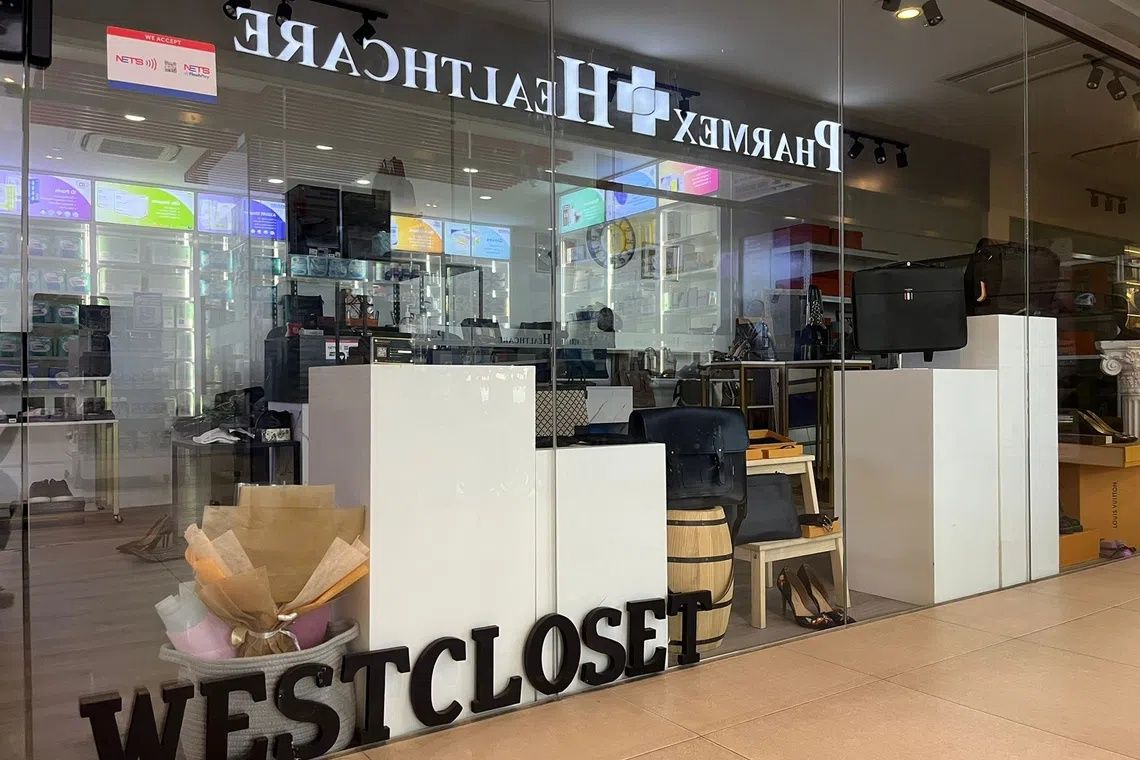
A 36-year-old Indonesian woman has been sent to jail for eight months after defrauding five customers through her consignment store business in Singapore's financial district. Ringga Dwi Rizky Irianto operated West Closet at the OUE Downtown Gallery shopping mall on Shenton Way, running what appeared to be a legitimate luxury goods resale operation that advertised across Carousell and Instagram. The court found that she misappropriated nearly S$140,000 that belonged to customers who had placed high-end designer handbags with her for sale, then failed to return the proceeds when items sold.
The business model itself was straightforward on paper. Customers would deposit their bags at West Closet for a 60-day consignment period, or face a S$60 penalty fee if they exceeded this window. The store would then market and sell these items on behalf of the owners, taking a commission ranging from S$200 to S$900 depending on the transaction value. Customers received written guarantees that payment would be credited to their bank accounts within seven days of a successful sale. This seemingly transparent arrangement attracted customers seeking a convenient way to liquidate designer pieces without the hassle of individual sales.
The first documented case of fraud involved a victim who consigned two Hermes bags and one Chanel handbag in July 2022, with an agreed valuation of S$51,000. Ringga successfully sold all three items and collected the full amount, but rather than transferring the funds to the rightful owner's bank account as contractually promised, she diverted the money to settle another customer's transaction. This pattern of misappropriation continued with a second victim who placed an Hermes bag for sale and was owed S$33,500 when it sold. A third victim similarly lost S$23,500 from a Hermes handbag sale. These three counts alone totalled S$108,000 in criminal breach of trust, to which Ringga pleaded guilty.
Two additional charges relating to the remaining victims and amounts were taken into consideration during sentencing, bringing the total loss to nearly S$140,000. The sophistication of the scheme lay not in technical complexity but in the systematic violation of trust. By operating through established social media platforms and digital marketplaces, Ringga had cultivated an appearance of legitimacy that made customers comfortable handing over valuable assets. The written guarantees and professional storefront provided false confidence in the transaction's security.
During investigations and sentencing proceedings, Deputy Public Prosecutor Darren Sim outlined how the accused had operated this fraud across multiple victims using consistent methods. The deception only unraveled when customers began following up on promised payments and discovered funds had never been transferred. Ringga's arrest came in September 2022, though formal charges were not laid until 2024, highlighting potential delays in the judicial process for cross-border fraud cases involving foreign nationals.
The sentencing on Thursday, August 13, reflected the severity of the breach of trust. Beyond the eight-month custodial sentence, the court ordered Ringga to pay S$91,950 in compensation directly to victims through the investigation officer handling the case. She had already made S$41,000 in restitution, but the remaining amount must be settled. An additional 24-day jail sentence will be imposed should she fail to meet the compensation obligation, creating financial pressure to pay what she cannot immediately afford. Her bail was set at S$15,000, with an expected jail commencement date in October.
Under Singapore's Penal Code, criminal breach of trust carries a maximum penalty of seven years imprisonment, with potential fines or both. Ringga's eight-month sentence reflects a middle ground, suggesting the court considered factors such as her cooperation, the gradual nature of the fraud, and the partial restitution already made. Nevertheless, the case demonstrates how digital platforms and consumer trust can be weaponized in financial crimes, particularly in luxury goods markets where high transaction values create significant victim losses.
For Malaysian consumers and business operators, this case carries cautionary lessons about consignment arrangements. The incident highlights risks inherent in placing valuable items with third parties, even those with seemingly professional operations. While Singapore's regulatory framework eventually caught and prosecuted the offender, prevention through due diligence remains preferable to recovery through litigation. Potential customers should verify business registration, insurance coverage, and references before entrusting expensive assets. Operators considering legitimate consignment services should implement transparent accounting, independent audits, and escrow arrangements to protect both themselves and customers.
The broader implications extend to regional cross-border commerce. As Southeast Asian consumers increasingly use platforms like Carousell and Instagram to buy, sell, and consign goods, the vulnerability to fraud increases proportionally. Ringga's Indonesian nationality and Singapore-based operations illustrate how consignment fraud easily transcends national boundaries. Regulatory authorities across the region may need to enhance coordination on foreign operators and establish clearer standards for consignment businesses, particularly those handling luxury goods valued above certain thresholds.
The case also reflects evolving patterns in white-collar crime within Southeast Asia. Rather than sophisticated cybercrime or large-scale financial manipulation, this fraud relied on basic dishonesty and customer trust violations. Yet the cumulative losses—nearly S$140,000 from five victims—demonstrate how small-scale repeated fraud can achieve substantial financial damage. Each individual victim might have hesitated to pursue legal action for amounts ranging from tens of thousands to S$51,000, but aggregate prosecution became warranted once patterns emerged.

