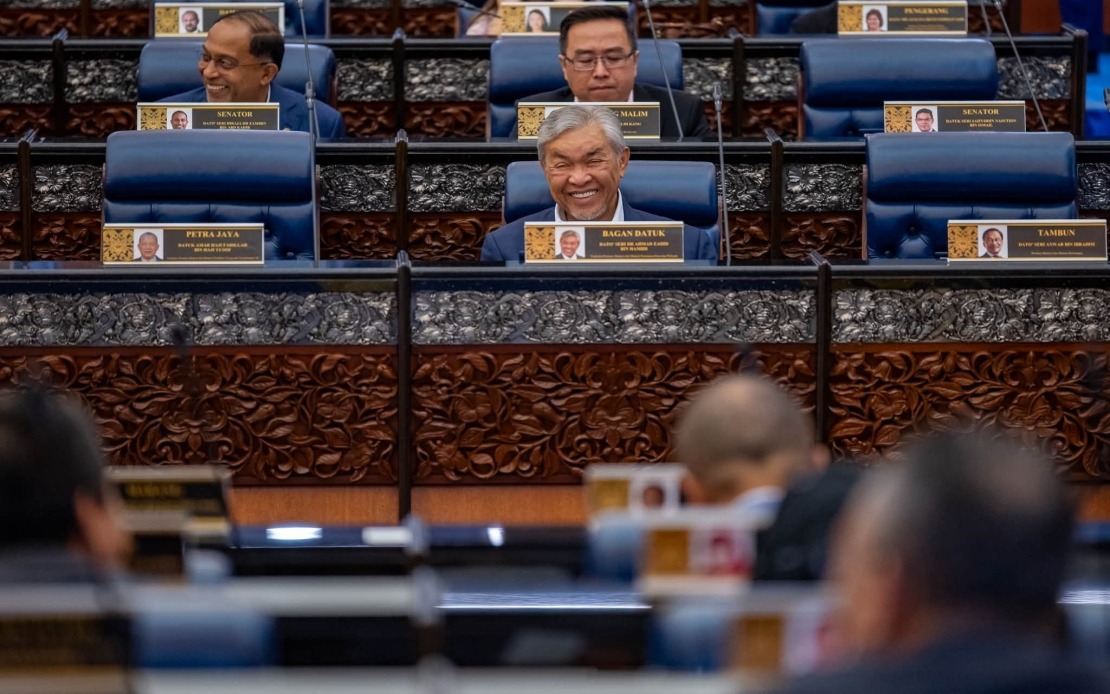
Deputy Prime Minister Datuk Seri Dr Ahmad Zahid Hamidi has underscored the importance of pairing constructive feedback about Lembaga Tabung Haji (TH) with tangible remedial measures, emphasising that the major Islamic institution cannot afford to remain embroiled in extended dispute. Speaking in his capacity as Rural and Regional Development Minister, Ahmad Zahid stressed during a Facebook statement on August 11 that TH's standing as a trusted body managing pilgrim savings depended upon translating criticism into substantive reform.
The Deputy Prime Minister's remarks came as Parliament convened for a special sitting dedicated to examining the Royal Commission of Inquiry (RCI) report into TH's operations, a landmark moment in the institution's governance history. Ahmad Zahid noted that the parliamentary forum provided legislators with a dedicated opportunity to probe, explain, and methodically work through all matters pertaining to TH's administration, operations, and the specific concerns raised in the RCI findings. This structured debate format, he suggested, represented a responsible mechanism for addressing systemic issues without allowing allegations to proliferate unchecked or permitting unsubstantiated claims to shape public perception.
In his statement, Ahmad Zahid expressed hope that following the parliamentary session, stakeholders would refrain from levelling broad accusations or circulating narratives unsupported by verifiable evidence. The measured tone reflected a broader governmental interest in moving TH beyond a cycle of allegations and controversy toward a phase of transparent implementation and institutional renewal. The Deputy Prime Minister's call for sincerity and wisdom among all parties involved signalled an expectation that criticism would be weaponised neither for political gain nor for purposes disconnected from genuinely improving the Islamic pilgrim fund's governance.
The RCI report, released publicly on July 29 following government approval, documented significant operational weaknesses spanning the 2014-2020 period when TH faced mounting financial difficulties and management challenges. The commission's investigation uncovered deficiencies across multiple areas of institutional functioning and put forward 25 specific recommendations intended to rectify identified problems and strengthen TH's future operations. By the time the report entered public domain, TH management had already begun implementing corrective measures, with three-quarters of the recommended reforms either completed or underway by July 30.
The public release of the RCI report represented a substantial shift toward transparency regarding TH's governance troubles, a development that carried political and social weight across Malaysia. For Malaysian Muslims who depend upon TH for facilitating the hajj pilgrimage and for managing their savings through religious-based investment schemes, the acknowledgement of institutional weaknesses alongside concrete improvement efforts carried particular significance. The fact that the government had chosen to make the full RCI findings accessible for parliamentary scrutiny and public examination suggested a commitment to accountability that contrasted with earlier periods when TH's difficulties remained partially obscured.
The parliamentary sitting functioned as a critical juncture for examining whether TH's leadership possessed both the capacity and the determination to implement systemic reform. Legislators could interrogate TH officials directly about their remedial efforts, their timeline for completing outstanding recommendations, and their strategic vision for restoring confidence among the institution's five million members and depositors. This accountability mechanism carried particular importance given the financial losses TH had sustained and the public anxiety regarding the security of Muslim savings entrusted to the institution's management.
Ahmad Zahid's emphasis on linking criticism to responsible action reflected an underlying tension in Malaysia's institutional reform environment. Criticising governance failures and highlighting institutional weaknesses, while necessary for democratic health and good governance, can sometimes metastasise into prolonged cycles of blame and recrimination that distract from the harder work of implementation. The Deputy Prime Minister appeared to be signalling that Malaysian stakeholders possessed both the moral obligation and the capacity to move beyond critique toward construction, to diagnose problems rigorously but then to apply solutions methodically.
The TH situation held particular resonance for Southeast Asian readers concerned with Islamic finance governance and the management of collective religious institutions in Muslim-majority democracies. TH's experience illustrated both the vulnerabilities that can emerge when financial oversight lapses and the potential for transparent institutional reform when governance failures are acknowledged rather than concealed. For other Muslim-majority nations managing pilgrim funds or religious-based financial institutions, the Malaysian case study offered sobering lessons about the consequences of inadequate risk management and the difficulties of recovering institutional credibility once lost.
The context of Ahmad Zahid's remarks deserves consideration alongside Malaysia's broader political dynamics. As a senior government figure, his call for responsible follow-through on TH criticism implicitly acknowledged that previous governance standards had fallen short and that restoration of public trust required more than apologetic rhetoric. The emphasis on moving from critique to concrete action suggested that Malaysian policymakers recognised the institution's systemic importance to millions of Muslim depositors and pilgrims, making half-measures or symbolic reforms inadequate responses to documented failures.
Moving forward, the true measure of TH's rehabilitation would rest not upon parliamentary speeches or the recommendations contained in the RCI report, but rather upon demonstrable improvements in operational transparency, financial controls, investment governance, and member communication. Ahmad Zahid's framing of constructive criticism as incomplete without responsible action essentially challenged TH's management team to translate parliamentary discussion into institutional transformation, to convert the documented weaknesses outlined in the RCI findings into addressed deficiencies, and to rebuild stakeholder confidence through sustained implementation of reform commitments.

