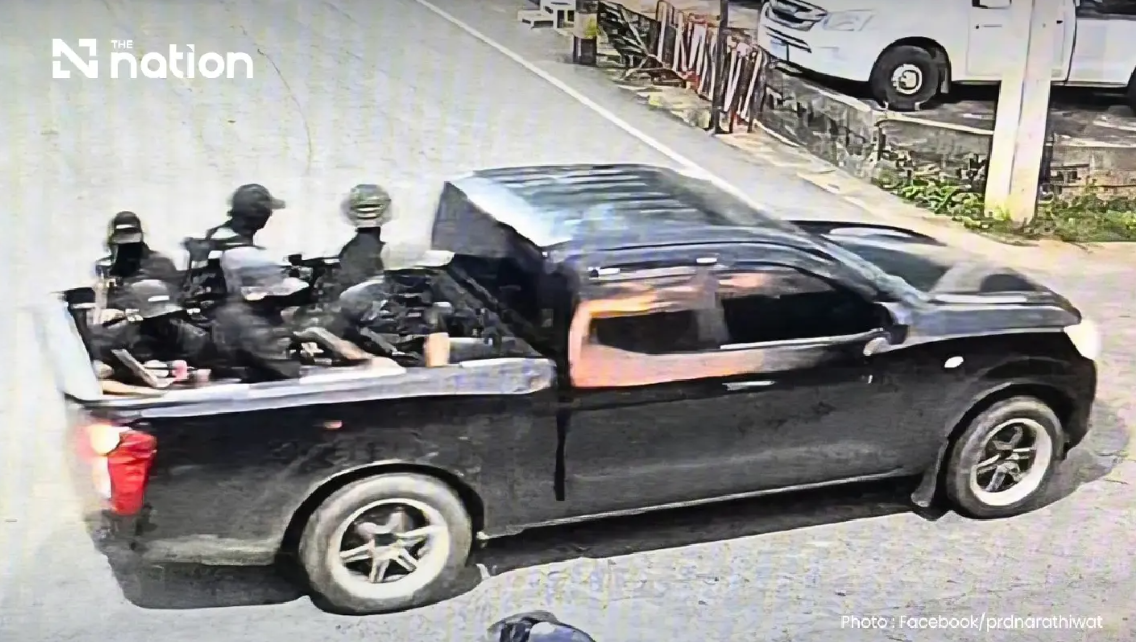
A meticulously coordinated attack on the Bukeh Sami checkpoint in Narathiwat province has claimed the lives of five paramilitary rangers and wounded six civilians, with security footage now revealing the operational complexity of the assault. The ninety-second raid, which occurred around 6.45pm on Wednesday, July 22, at the checkpoint located in Village 7 of Tanyong Mat subdistrict in Ra-ngae district, has prompted intensive investigations by Thai authorities seeking to understand the attackers' planning and execution.
Initial investigations suggested only six perpetrators were involved in the violence, but detailed examination of CCTV footage from multiple camera positions around and across from the checkpoint subsequently identified nine distinct attackers working in two coordinated teams. This revision highlights both the precision of the assault and the methodical nature of its preparation, suggesting the perpetrators had conducted reconnaissance and possessed detailed knowledge of the checkpoint layout and personnel schedules. The distinction between the preliminary count and final tally underscores how rapidly such incidents unfold and how difficult it becomes to establish accurate details amid the chaos of an active assault.
The primary assault force comprised seven individuals who arrived in a black Nissan pickup truck registered in Songkhla, with a driver and six gunmen positioned in the vehicle's bed. The attackers dressed in black clothing that bore resemblance to paramilitary uniforms and wore broad-brimmed hats designed to obscure their facial features. This secondary support team arrived on a red-and-white Honda Wave motorcycle, with the rider dressed in civilian clothing wearing a white shirt and helmet, while the passenger wore an unusual disguise consisting of a black women's hijab and carried an AK-type rifle. The motorcycle functioned as rear cover during the group's approach to the checkpoint from Tanyong Mat market, suggesting a degree of tactical coordination and awareness of potential escape routes.
Three rangers stationed at the roadside checkpoint initially encountered the pickup as it approached and slowed to engage. Once the vehicle came within effective firing distance, the gunmen in the truck bed unleashed sustained fire using M16 and AK-type rifles. The three rangers fell within seconds, and the pickup subsequently halted to allow additional team members to disembark and continue the assault toward the checkpoint bunker where two additional rangers had taken defensive positions. The relentless barrage of gunfire concentrated on the bunker structure and surrounding areas demonstrated an intent to suppress any organized resistance and secure the position rapidly.
Following the suppression of armed resistance at the checkpoint, the attacking force systematically searched the post and removed weapons, equipment, and ammunition before withdrawing. As the group retreated toward the vehicles, one attacker deployed a pipe bomb toward an elevated structure positioned near a bridge adjacent to the checkpoint, suggesting an intent to create additional destruction or cover their withdrawal. The pickup and motorcycle then fled toward Dusongyo subdistrict in Ra-ngae district, with security forces subsequently establishing checkpoints and roadblocks along suspected escape corridors. The vehicle believed responsible for transporting the primary assault team was later discovered abandoned and deliberately set ablaze, an apparent effort to eliminate forensic evidence and frustrate investigative efforts.
All five paramilitary rangers assigned to the checkpoint perished in the assault, identified as Sergeant Major First Class Theerayut Somakerd and ranger volunteers Sakiriya Jena, Wimon Dabthong, Nattasit Kaewsena, and Salahuding Pi. The rangers, who fell under the command of the 4509th Ranger Company operating within the 45th Ranger Regiment Task Force, represented experienced security personnel stationed to protect a strategically significant position in Thailand's volatile southern region. Six civilians also sustained injuries during the incident, including a ten-year-old child, with all receiving treatment at regional medical facilities. Initial casualty reports proved inconsistent, with early figures suggesting between two and five wounded civilians before the accurate total of six was established.
Narathiwat Governor Boonchuay Homyamyen coordinated the overnight response alongside senior military and police commanders, including Provincial Police Region 9 Commissioner Pol Lt Gen Piyawat Chalermsri, Narathiwat Police Chief Pol Maj Gen Prayong Khot Sakha, and 45th Ranger Regiment Task Force Commander Col Witthaya Sariya. Forensic teams, bomb-disposal specialists, and tactical police personnel worked throughout the night collecting evidence and documenting the scene of the assault. The investigation recovered more than one hundred spent cartridge casings scattered across the checkpoint vicinity, with ammunition consistent with M16 rifles, AK-type weapons, and an eleven-millimeter pistol. Additional spent rounds appeared to have been ejected when attackers attempted to clear weapon malfunctions during the sustained firefight.
The physical destruction inflicted upon the checkpoint infrastructure reflected the intensity and duration of the gunfire exchange. The bunker structure bore numerous bullet impacts across its exterior surfaces, while forensic evidence associated with the pipe bomb detonation was recovered near the raised platform beside the bridge. Investigators determined that the raiding force had absconded with four folding-stock AK-type rifles, one eleven-millimeter pistol, four ammunition magazines, and four bulletproof vests from the checkpoint. However, authorities acknowledged that early reports contained discrepancies regarding the precise inventory of items stolen, necessitating continued examination to establish a complete accounting of all missing equipment and materiel.
The incident exemplifies the persistent security challenges confronting Thailand's southern border provinces, where sporadic but coordinated attacks continue to target military and paramilitary installations. The sophistication demonstrated in the planning and execution of this assault—including reconnaissance, vehicle preparation, secondary support systems, and deliberate evidence destruction—suggests organizational capacity beyond spontaneous criminal activity. For Malaysia and other Southeast Asian nations, the Narathiwat attack reinforces the need for heightened vigilance regarding cross-border security threats and the potential for insurgent activity to spill beyond Thailand's territory. The regional implications extend to concerns about weapons trafficking, insurgent financing, and coordination among militant networks operating in the volatile Malay-Muslim majority areas of southern Thailand.

