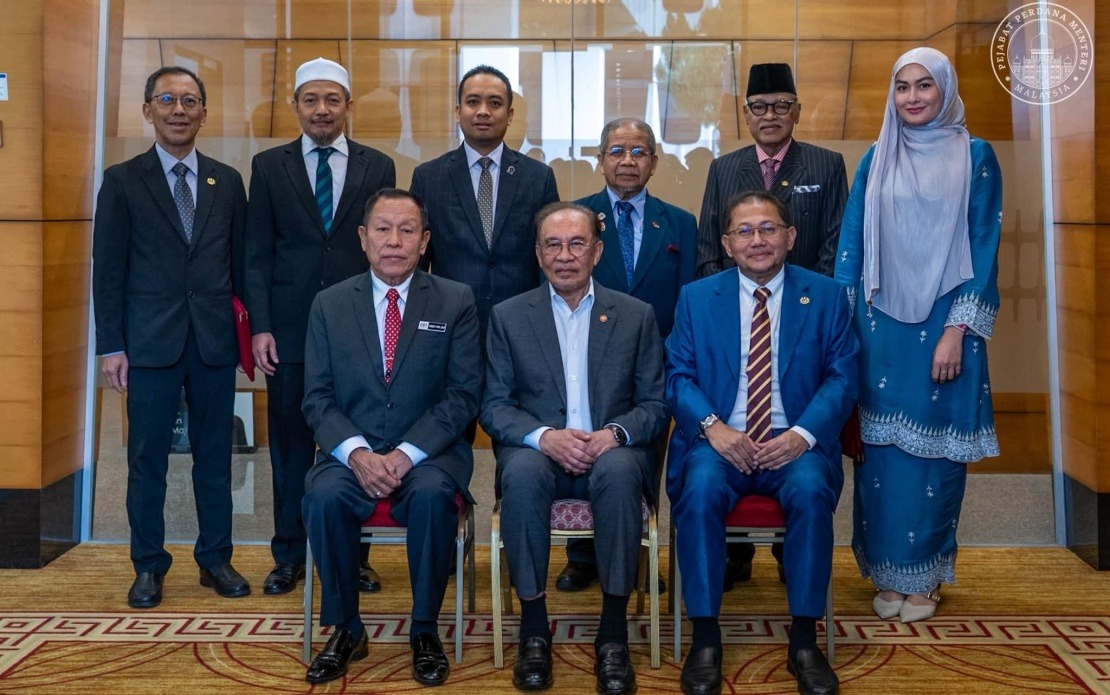
Prime Minister Datuk Seri Anwar Ibrahim has underscored the critical importance of collective action in Malaysia's fight against corruption, rejecting any notion that enforcement agencies alone can shoulder this responsibility. Speaking at Parliament, the Prime Minister emphasised that meaningful progress in rooting out graft requires sustained cooperation spanning multiple pillars of the nation—from the Malaysian Anti-Corruption Commission and advisory bodies through to lawmakers, business community leaders, and ordinary citizens. His remarks came as he formally presented appointment instruments to newly constituted members of two key oversight bodies established under the Anti-Corruption Commission legislation.
The constitutional mechanism for combating corruption in Malaysia rests partly on institutional checks and balances designed to ensure that no single power centre becomes too dominant in anti-corruption affairs. The Special Committee on Corruption, formally known as JKMR, operates under Section 14 of the Malaysian Anti-Corruption Commission Act 2009 and derives its membership from both chambers of Parliament—representatives of both the Government and Opposition benches sit together on this body. This deliberate composition reflects a foundational principle that anti-corruption work transcends partisan divides and demands genuine bipartisan commitment. The Anti-Corruption Advisory Board, or LPPR, constituted under Section 13 of the same legislation, takes a different approach by recruiting members based on personal integrity and professional distinction rather than political affiliation, drawing from retired civil servants, business leaders, and specialists across various fields.
During his parliamentary address, Anwar Ibrahim stressed that the newly appointed committee members, while coming from disparate professional and social backgrounds, share a unified mission to strengthen Malaysia's defences against corrupt practices. The diversity of their origins—spanning different career trajectories, generational cohorts, and geographic regions—is itself a strength, he suggested, as it brings multiple perspectives and lived experiences to bear on complex anti-corruption challenges. The Prime Minister urged these appointees to demonstrate renewed commitment to their responsibilities, framing the role not as a ceremonial position but as an active contribution to institutional reform and ethical governance.
The establishment of these overlapping advisory and oversight structures reflects international best practice in anti-corruption architecture. By creating multiple entry points for scrutiny and review, Malaysia's legislative framework attempts to mitigate the risks of regulatory capture or institutional fatigue that can plague single-agency approaches. The JKMR's inclusion of both government and opposition parliamentarians creates a forum where anti-corruption strategies can be debated and stress-tested by representatives with different political perspectives and constituencies. The LPPR's independent membership, meanwhile, provides external validation and critical assessment that might not emerge from within government structures themselves.
However, the effectiveness of these institutions depends fundamentally on the broader ecosystem in which they operate. The Prime Minister's insistence on collective effort reflects a recognition that laws and enforcement mechanisms alone cannot transform a culture of accountability. The private sector must embrace ethical business practices and resist the temptation to use illicit payments as a cost of doing business. Civil society organisations need to maintain public vigilance, document suspected violations, and sustain pressure for investigations. Parliament itself must avoid exempting political allies from scrutiny and must adequately resource anti-corruption bodies. The public sector workforce, from frontline officials to senior administrators, must internalise norms of integrity and understand that their credibility depends on consistent adherence to ethical standards.
The appointment of new committee members carries particular significance in Malaysia's current political context. After years of high-profile corruption cases involving former political leaders and senior officials, public confidence in institutions requires tangible demonstration that anti-corruption mechanisms remain active and independent. The Royal appointment process, requiring the consent of the Yang di-Pertuan Agong, adds constitutional legitimacy to these bodies and signals that anti-corruption work enjoys support beyond any single party or government administration. This procedural formality, while sometimes dismissed as ceremonial, serves an important function in assuring the public that oversight mechanisms are not merely the creature of whoever currently holds executive power.
For Malaysia's business community, the emphasis on collective responsibility carries direct implications. The private sector's historical entanglement in high-profile corruption scandals has made international investors cautious, affecting the nation's competitive positioning in attracting foreign direct investment. A demonstrable commitment to strengthening anti-corruption governance—evident through active participation in advisory mechanisms and genuine implementation of ethical compliance frameworks—can help restore confidence among international partners and consumers. Malaysian companies operating regionally and globally increasingly face stringent anti-corruption due diligence requirements from foreign partners, making domestic anti-corruption efforts not merely a matter of domestic governance but of commercial necessity.
The civil society angle remains underexplored in many anti-corruption strategies. Citizens and community organisations serve as the eyes and ears of formal enforcement machinery, providing intelligence on suspected violations at grassroots level. Yet whistleblower protections, public awareness campaigns, and mechanisms for ordinary Malaysians to safely report suspected corruption remain underdeveloped in many sectors. Anwar Ibrahim's call for societal participation implicitly acknowledges that corruption often thrives in darkness and silence—breaking this pattern requires encouraging individuals at all levels to speak out and report suspected violations without fear of retaliation.
The parliamentary backdrop to these announcements carries its own significance. Parliament's role in anti-corruption extends beyond the JKMR's formal existence; lawmakers themselves set the tone through their own ethical conduct, the standards they establish for ministerial accountability, and the resources they allocate to enforcement. When senior parliamentarians face questions about their own integrity, it undermines public confidence in any anti-corruption agenda, regardless of how well-resourced enforcement agencies become. The presence of opposition members in anti-corruption oversight structures theoretically creates space for partisan political actors to police each other, though this can also create risks that such bodies become forums for partisan point-scoring rather than genuine investigation.
Looking forward, the effectiveness of these renewed appointments will be measured not in ceremonial gestures but in tangible outcomes. Does the JKMR use its parliamentary platform to initiate serious inquiries into suspected violations? Does the LPPR provide candid advice that sometimes contradicts government preferences? Do the enforcement agencies actually implement the recommendations emerging from these advisory bodies? The current political moment offers Malaysia an opportunity to demonstrate that it takes anti-corruption seriously not as periodic campaign rhetoric but as sustained institutional commitment. The Prime Minister's emphasis on collective responsibility represents the right diagnosis of the problem, yet the harder work lies in translating this rhetorical commitment into sustained operational reality across Malaysia's fragmented institutional landscape.

