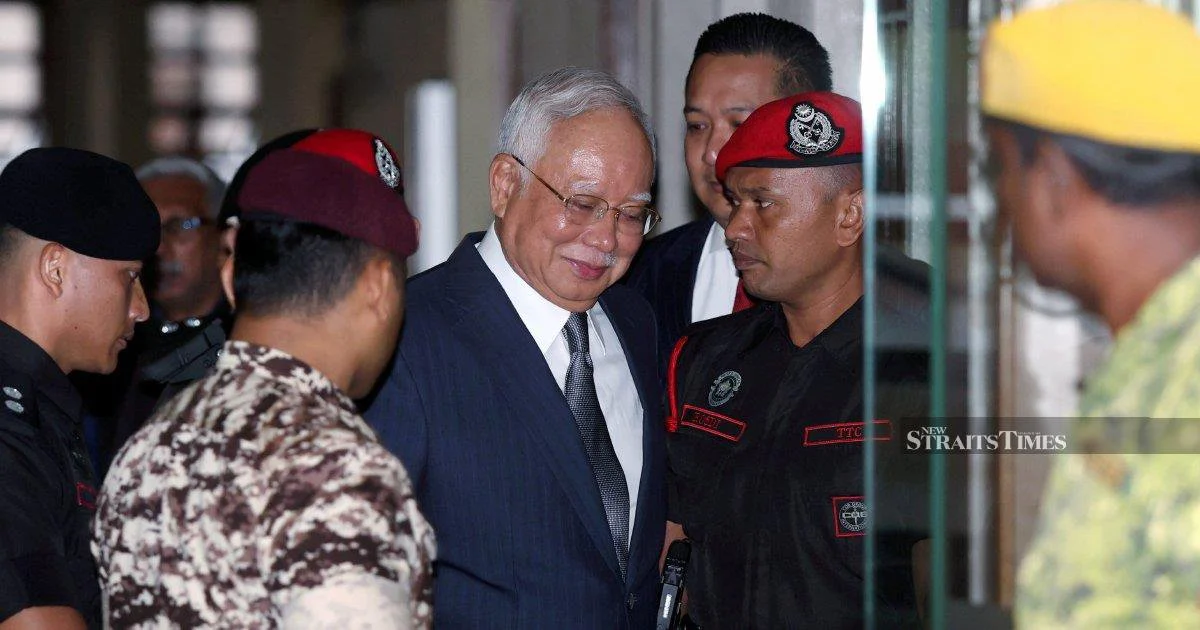
A presiding judge has concluded that former Prime Minister Datuk Seri Najib Razak and fugitive financier Low Taek Jho functioned as collaborative partners in orchestrating the massive diversion of funds from 1Malaysia Development Bhd, one of the most significant financial scandals in Malaysian history. The judicial determination, reached after extensive examination of evidence presented throughout protracted court proceedings, establishes that the two men did not act independently but rather coordinated their actions deliberately to transfer substantial sums belonging to the strategic development fund into unauthorised accounts.
The collaborative nature of their scheme represents a critical finding in understanding how one of Asia's largest theft cases unfolded. Rather than depicting Jho Low as a rogue operator exploiting existing weaknesses, the judgment indicates that Najib, in his capacity as Prime Minister and Finance Minister, actively facilitated and participated in the diversion strategy. This distinction carries profound implications for assessing individual culpability and the institutional failures that allowed such large-scale embezzlement to occur unchecked within Malaysia's sovereign wealth apparatus.
The 1MDB scandal has reverberated across Malaysian politics and international financial systems since investigations began, touching numerous high-ranking officials, involving multiple countries in asset recovery efforts, and prompting sweeping reforms to governance structures. The fund, which was established with considerable fanfare as a vehicle for advancing national economic development, instead became a conduit through which billions were siphoned into private accounts, luxury purchases, and investments across multiple jurisdictions spanning from the Middle East to Hollywood.
Jho Low, the primary architect of the illicit scheme, has remained a fugitive for several years, evading multiple extradition attempts and maintaining a lifestyle sustained by stolen wealth despite intensifying international law enforcement pressure. His absence from Malaysian courts has complicated legal proceedings, requiring judges to rely heavily on documentary evidence, financial records, and testimony from co-conspirators and witnesses to reconstruct the mechanics of the operation. Nevertheless, the available documentation has proven sufficient to establish the pattern of deliberate coordination between Low and Najib.
Najib's role extended beyond passive permission or negligent oversight of the fund's operations. According to the judicial assessment, his position as Finance Minister provided direct authority over 1MDB, and evidence demonstrates he exercised this authority in ways that systematically removed normal financial safeguards and accountability mechanisms. The judgment suggests that Najib actively collaborated in creating conditions that would allow massive withdrawals while preventing detection by regulatory bodies and auditors who might otherwise have flagged unusual transactions.
The implications for Malaysian governance extend well beyond the immediate individuals involved in the scheme. The case has exposed systemic vulnerabilities in institutional checks and balances, sovereign wealth fund oversight, and financial reporting requirements that permitted such extensive fraud. Subsequent governments have implemented regulatory reforms, established new investigative bodies, and strengthened transparency requirements for large financial institutions, though questions persist regarding whether these measures sufficiently prevent similar schemes in the future.
Regionally, the 1MDB scandal has influenced how other Southeast Asian nations structure their sovereign wealth funds and exercise oversight of senior financial officials. Malaysia's experience has become a cautionary reference point in discussions about governance standards and the dangers of concentrating financial authority without robust institutional controls. International cooperation in pursuing asset recovery has also set precedents for cross-border investigations and enforcement actions that affect how regional governments collaborate on financial crimes.
The judgment's articulation of coordinated wrongdoing, rather than isolated malfeasance, underscores how large-scale financial crimes in developing markets often require complicity at the highest levels of government. Without Najib's authority and participation, the architectural framework that allowed Jho Low to operate would have collapsed under normal regulatory scrutiny. The convergence of political authority, financial access, and criminal intent created conditions uniquely enabling for theft on this scale.
For Malaysian citizens and businesses, the 1MDB affair has served as a sobering reminder that state institutions can be weaponised for private enrichment despite formal governance structures. The case contributed significantly to political upheaval in Malaysia, influencing electoral outcomes and popular demands for accountability from political leadership. Public confidence in financial institutions and governmental oversight mechanisms has required considerable rebuilding in the scandal's aftermath.
The ongoing legal proceedings against Najib across multiple charges, informed by findings such as the judge's determination of coordinated criminal activity with Jho Low, represent an attempt to achieve accountability within Malaysia's legal system. However, the continued fugitive status of Low, combined with the complexity of tracing and recovering stolen assets dispersed across numerous countries and financial systems, means the full restitution and justice dimensions of the case remain incomplete. International law enforcement agencies continue pursuing leads regarding Low's whereabouts and the location of remaining assets potentially recoverable for Malaysian interests.