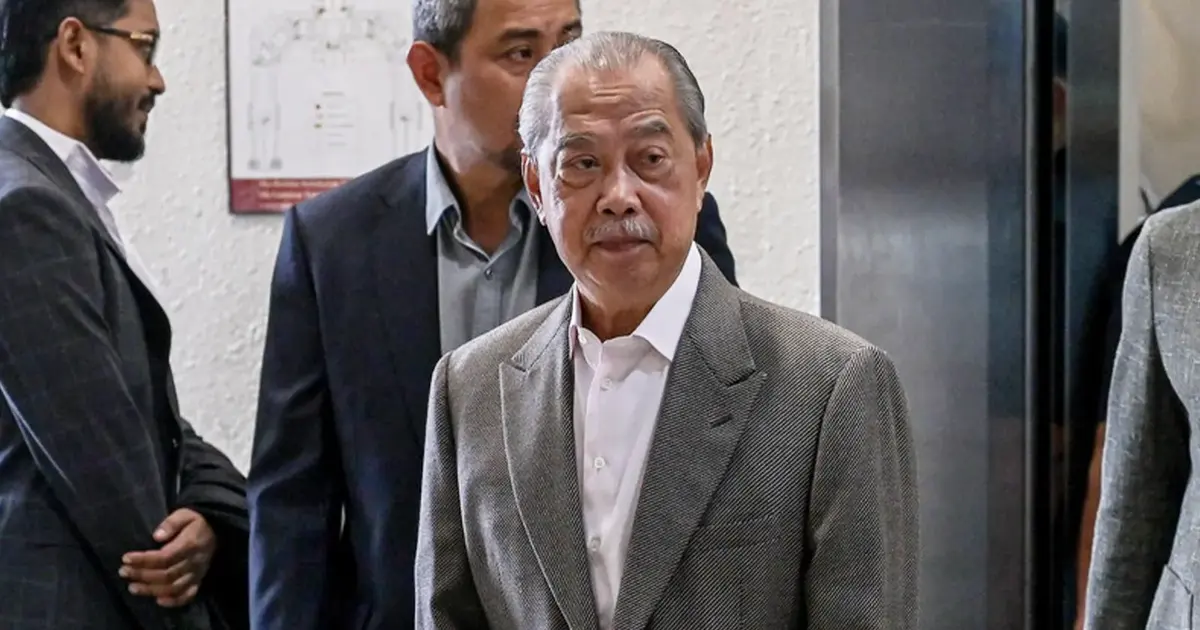
A court hearing concerning a major police headquarters development project has heard testimony suggesting that Malaysia's highest political office played no role in the work's progression. Lokman Nasir, who formerly served as Selangor's director of public works, provided evidence distancing both the Prime Minister's Office and former prime minister Muhyiddin Yassin from decisions surrounding the initiative.
The witness's account proves significant given the scale of infrastructure projects typically undertaken by Malaysian authorities and the customary scrutiny such developments attract. When major government construction programmes advance, questions about political influence and decision-making processes frequently emerge, particularly when officials serve during sensitive periods of administrative transition or political change.
Lokman Nasir's testimony centred on his categorical denial of any interference from the highest echelons of government during his tenure overseeing public works in Selangor. He stated unequivocally that he neither encountered Muhyiddin Yassin directly regarding the police headquarters project nor received telephone communications from him concerning the matter. This distinction holds considerable weight in Malaysian legal proceedings, where establishing chains of communication and direct intervention can determine outcomes in governance-related cases.
The police headquarters development represents a substantial undertaking within Malaysia's infrastructure landscape. Such projects typically involve multiple government agencies, procurement processes, and oversight mechanisms. The involvement of someone in Lokman Nasir's position—managing public works across an entire state—would ordinarily place them at the intersection of political and administrative considerations, making their testimony particularly relevant to understanding how decisions actually transpired.
The proceedings reflect broader patterns in Malaysian politics where construction contracts and development projects occasionally become focal points for investigating alleged interference or improper conduct. As observers of Malaysian governance know, the relationship between political leadership and civil service execution remains an area where transparency and proper procedure prove essential to public confidence. Courts examining such matters must determine whether standard administrative channels guided project decisions or whether extraordinary political pressure shaped outcomes.
Muhyiddin Yassin's tenure as prime minister, which lasted from March 2020 to August 2021, represented a complex period in Malaysian political history. His administration managed various inherited projects while navigating significant political challenges. The police headquarters initiative would have been among numerous government undertakings proceeding during this interval, each potentially subject to scrutiny regarding its execution and the officials responsible for its progression.
Lokman Nasir's position as Selangor's public works director placed him in a role where coordination between federal and state authorities would be essential, particularly for major infrastructure projects. His testimony suggesting an absence of direct interference from the Prime Minister's Office indicates that operational decisions may have followed conventional bureaucratic pathways rather than being subject to extraordinary political oversight. This distinction becomes particularly important when examining governance standards and whether proper procedures were maintained.
The court proceedings are part of a broader examination into how various government projects and decisions proceeded during specific periods of Malaysian administration. Such investigations serve an important function in democratic governance by establishing accountability and ensuring that public resources are deployed according to established protocols rather than political whim. Malaysia's judiciary plays a crucial role in examining such matters thoroughly and ensuring that officials at all levels maintain appropriate standards of conduct.
For Malaysian readers and observers of Southeast Asian governance, these proceedings illustrate the ongoing importance of institutional checks and the role courts play in examining allegations of political interference in administrative matters. The distinction between legitimate political direction and improper intervention remains central to maintaining confidence in how government functions. As the testimony from former officials becomes part of the public record, it contributes to a clearer understanding of how major development projects actually proceed within Malaysia's governmental structures.
The case also underscores the significance of establishing clear evidence regarding communications and directives. In an era where government decisions are frequently scrutinised, the ability to demonstrate—or refute—direct contact between political and administrative figures becomes crucial documentation. Lokman Nasir's testimony represents one piece of evidence that courts and observers will weigh in understanding whether proper procedures governed the police headquarters project's development.
As Malaysia continues to strengthen its governance frameworks and institutional independence, proceedings of this nature contribute meaningfully to that evolution. They demonstrate that courts are prepared to examine allegations seriously, that officials can be expected to account for their actions, and that transparent procedures—rather than backdoor political influence—should characterise how government resources are allocated and major projects are executed. For the region's democracies, such developments signal commitment to accountability principles essential for long-term institutional health.

