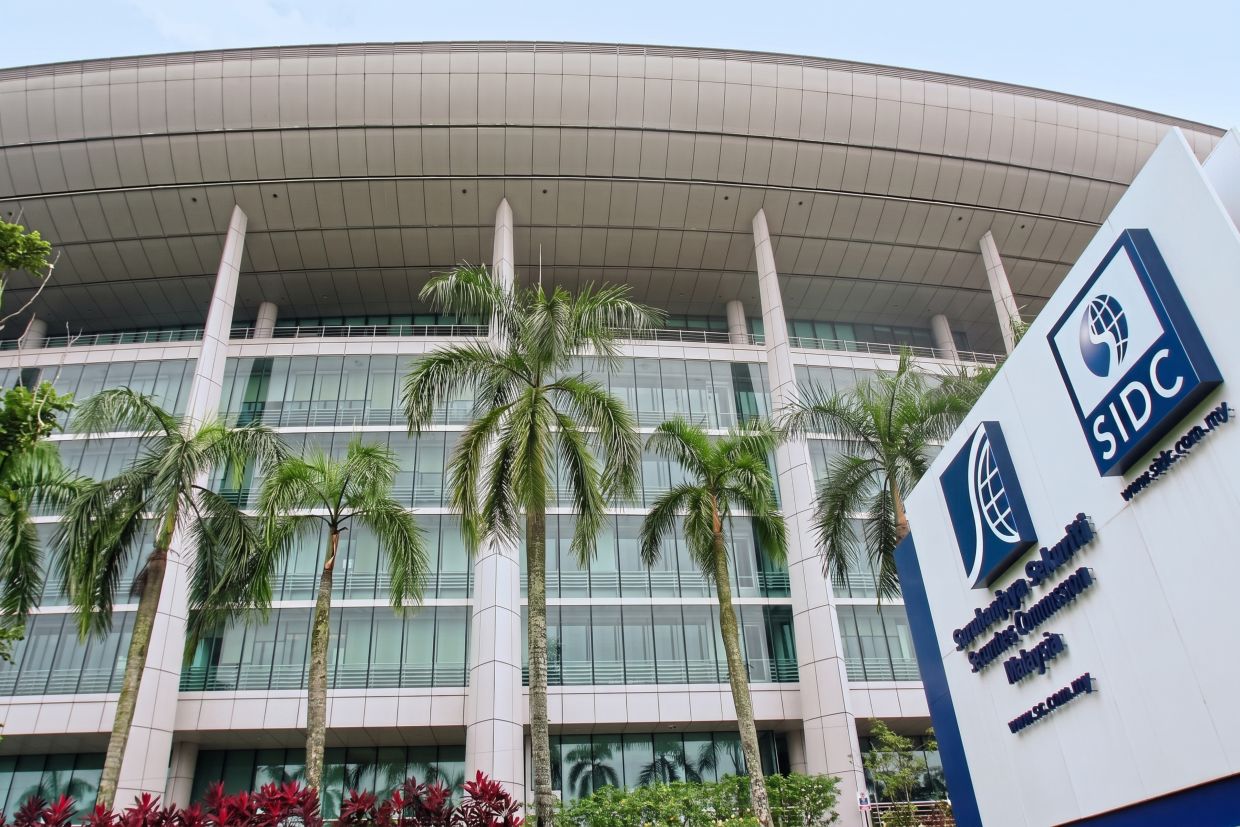
The Court of Appeal has delivered a decisive verdict by unanimously upholding the High Court's 2022 judgment that found former WCT Bhd deputy managing director Goh Chin Liong and Ara Holdings Sdn Bhd director Leong Ah Chai guilty of insider trading violations. The Securities Commission Malaysia announced the decision, marking a significant reaffirmation of the nation's commitment to prosecuting capital market misconduct at the appellate level.
The unanimous dismissal of appeals lodged by both defendants underscores the court's conviction that the original judgment was sound and required no appellate intervention. In its ruling, the Court of Appeal rejected arguments that any appealable errors existed in the High Court's reasoning, a finding that carries considerable weight in Malaysian jurisprudence. The appellate court imposed costs of RM100,000 on each defendant, adding financial consequences to their market conduct violations.
Beyond upholding the core liability findings, the Court of Appeal reaffirmed the High Court's ordered financial remedies in their entirety. Both Goh and Leong have been ordered to pay RM2.5 million each as disgorgement of profits they avoided through their unlawful trading activities. Additionally, each faces a civil penalty of RM300,000, and both must cover the Securities Commission's legal costs amounting to RM75,000. The cumulative financial exposure underscores the severity with which Malaysian courts treat insider trading breaches.
The factual basis for the convictions stems from events dating back nearly two decades. Goh, leveraging his position at WCT Bhd, communicated confidential information to Leong regarding the unexpected cancellation of a substantial construction contract. This contract had originally been awarded to a joint-venture arrangement between WCT and Arabtec Construction LLC for the development of a racecourse facility in Dubai, United Arab Emirates. The cancellation constituted material non-public information that would reasonably influence investment decisions in WCT shares.
Leong's trading activity immediately following receipt of this sensitive information demonstrated the practical application of his insider advantage. Between January 2 and 5, 2009, Leong executed the disposal of 1.64 million WCT shares held within Ara Holdings' trading account. The timing and volume of this transaction, coupled with the prior communication of non-public material information from Goh, formed the evidentiary foundation that both courts found sufficient to establish liability under sections 188(2) and 188(3) of the Capital Markets and Services Act 2007.
The Securities Commission initiated civil proceedings against both defendants in 2015, approximately six years after the illicit trading occurred. This extended timeline reflects the investigative and prosecutorial complexities inherent in identifying and proving insider trading cases, where evidence often exists across multiple institutional records and requires careful reconstruction of information flows and trading patterns. The decision to pursue civil rather than criminal remedies allowed the Commission to pursue financial recovery and market conduct enforcement simultaneously.
A prior procedural development strengthened the Commission's enforcement position. In May 2026, the High Court reinstated garnishee orders against both defendants, enabling the Securities Commission to proceed with judgment debt recovery mechanisms. This decision was particularly significant as it ensured that the financial penalties imposed could actually be extracted from the defendants' assets, transforming a judgment into tangible enforcement outcomes. The appellate court's recent decision removes any remaining legal obstacles to executing these recovery orders.
The Securities Commission has signaled its intention to leverage this Court of Appeal victory to pursue immediate enforcement actions against both defendants for the RM5.83 million judgment sum. The Commission's enforcement division will likely pursue asset tracing and recovery procedures available under Malaysian civil procedure rules, seeking to satisfy the judgment through garnishment of bank accounts, seized assets, or charging orders against real property. The Commission has characterized this case as emblematic of its broader commitment to deterring insider trading through rigorous prosecution and recovery efforts.
The institutional significance of this judgment extends beyond the immediate defendants. The Securities Commission explicitly identified insider trading as a foundational threat to capital market integrity, framing the offense as particularly corrosive to investor confidence and market fairness. In an increasingly sophisticated financial landscape where information asymmetries present constant temptation for market participants with privileged access, the Commission's messaging emphasizes that enforcement resources will be directed toward identifying and prosecuting such breaches regardless of the time elapsed since the violation.
For Malaysian investors and international participants in Bursa Malaysia, this appellate confirmation provides reassurance regarding the reliability of insider trading enforcement. The unanimous Court of Appeal decision eliminates uncertainty about whether original convictions might be overturned on technical grounds, reducing the risk premium that market participants must otherwise price into their assessments of regulatory effectiveness. Comparative analysis of enforcement actions across ASEAN markets reveals Malaysia's approach to civil insider trading remedies remains among the more aggressive in the region.
The case illustrates the enduring relevance of information barriers and restricted trading periods as governance mechanisms within publicly listed companies. WCT Bhd's corporate structures presumably contained protocols prohibiting the communication of material non-public information to external parties, yet Goh's breach of these internal controls exposed the company itself to reputational damage alongside the defendants' individual liability. For Malaysian listed companies, this judgment reinforces the necessity of robust compliance frameworks and executive training regarding information security protocols.
Looking forward, the Securities Commission has emphasized its intention to sustain enforcement momentum across insider trading, market manipulation, and securities fraud portfolios. The Court of Appeal's decisive affirmation provides legal and institutional momentum for pursuing additional enforcement cases where evidence of insider trading exists. Market observers anticipate increased scrutiny of trading patterns surrounding material corporate announcements, particularly within sectors prone to information-sensitive developments such as construction, real estate, and infrastructure development.
The financial penalties assessed in this case—totaling more than RM5.83 million for two individuals—reflect judicial recognition that insider trading misconduct imposes real economic costs extending beyond the wrongdoers themselves. Ordinary investors who sold WCT shares during the January 2009 period without knowledge of the cancelled contract suffered opportunity costs and reduced returns relative to what they might have achieved with full information parity. By imposing substantial disgorgement and penalties, the courts effectively redistributed gains away from those who exploited information asymmetries, advancing the compensatory objectives embedded in insider trading enforcement regimes.

