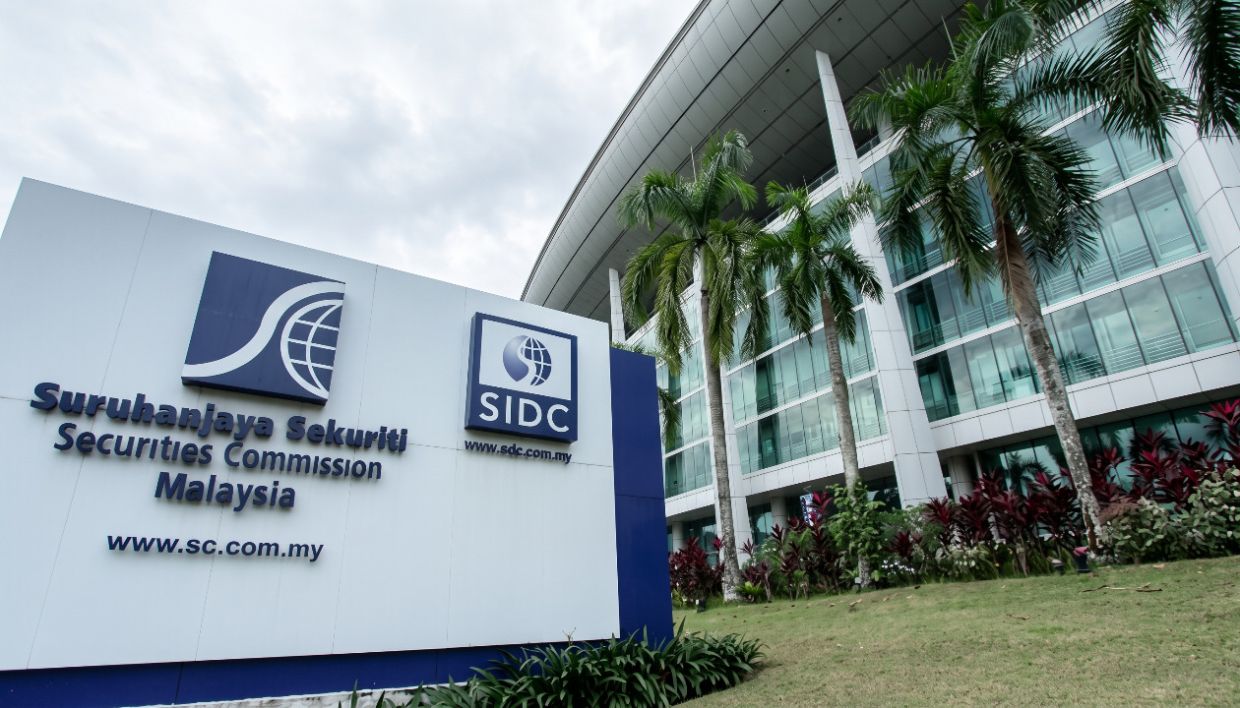
The Court of Appeal in Kuala Lumpur has dealt a significant blow to embattled businessman Wong Shee Kai—commonly known as Ricky Wong—by upholding a sweeping asset freeze affecting him, his associate Teh Sew Wan, and their corporate vehicle Wong SK Holdings Sdn Bhd. The appellate panel's decision on Monday to dismiss all challenges against the RM169.2mil injunction represents a decisive legal victory for Malaysia's Securities Commission and reinforces the regulator's enforcement authority in complex financial fraud investigations. The three-judge bench comprising Justices Datuk Ravinthran N. Paramaguru, Datuk Dr Choo Kah Sing and Datuk Leonard David Shim also rejected attempts to overturn an earlier ex parte injunction issued by the High Court in May 2020, grounding their decision in the strength of the commission's underlying case.
The frozen assets cover a vast portfolio of properties and financial holdings accumulated across multiple entities, reflecting the alleged scope of misconduct at the heart of this protracted dispute. The High Court had previously granted an inter partes injunction in April 2022 that formally crystallised the freeze, preventing any transfers, disposals or encumbrances of the designated assets pending resolution of the Securities Commission's civil claim. This injunction operates as a legal restraint that extends beyond the named parties themselves—it explicitly prohibits third parties from knowingly facilitating any transactions involving these frozen holdings, effectively immobilising the entire portfolio from the point of view of willing counterparties who understand the legal consequences of interference.
The underlying litigation centres on alleged contraventions of Section 179 of the Capital Markets and Services Act 2007, which addresses unlawful conduct in securities markets. The Securities Commission filed its civil action in 2020 and has pursued it methodically through the courts since then, establishing sufficient legal grounds to justify the extraordinary remedy of asset freezing—an action courts grant only when there is serious risk of dissipation or where the balance of convenience strongly favours preserving the subject matter of the dispute. The appellate judgment validates this prosecutorial strategy and suggests that the bench found compelling evidence supporting the regulator's concerns about potential asset concealment or flight.
Wong's legal team, led by prominent counsel Tan Sri Muhammad Shafee Abdullah of Messrs Shafee & Co, mounted a vigorous defence through the appeal process, but the appellate judges were unmoved by their arguments. Similarly, Teh's representatives at Messrs Cecil Abraham & Partners, headed by Tan Sri Cecil W. M. Abraham, were unable to persuade the court that the freeze was unjustified or disproportionate. The appellants have been ordered to pay RM200,000 in costs to the Securities Commission, a financial burden that compounds the practical impact of the asset freeze itself and may influence any future litigation strategy.
The Securities Commission's legal representation—headed internally by Mohd Hafiz Mohd Yusoff and Loo Kit Ming Keith, with external counsel Datuk Lim Chee Wee and Kwan Will Sen from Messrs Lim Chee Wee Partnership—appears to have presented a persuasive case that satisfied the appellate judges' demanding standard for upholding such restrictive orders. For the regulatory body, this outcome validates its enforcement efforts and signals to other market participants that the commission possesses effective tools to prevent the dissipation of assets in complex fraud investigations.
Crucially, Wong remains a fugitive from Malaysian authorities. Beyond the civil asset freeze, he is wanted in connection with criminal charges under the Anti-Money Laundering, Anti-Terrorism Financing and Proceeds of Unlawful Activities Act 2001 and additional charges under the CMSA. His absence from the jurisdiction underscores a pattern of non-engagement with the legal process and likely reinforced the Court of Appeal's determination to maintain protective measures. The combination of ongoing criminal exposure and unresolved civil claims creates significant legal jeopardy that may deter voluntary return to Malaysia or cooperation with authorities.
The civil trial itself continues to advance through the High Court system, with proceedings scheduled to resume on September 1, 2026. This timeline suggests a multi-year arc for complete resolution, during which the asset freeze will remain in force barring further judicial intervention. The extended duration of litigation in complex securities cases reflects the technical complexity of financial fraud investigations and the evidentiary burdens that regulators must discharge when challenging sophisticated market misconduct schemes.
For the Malaysian corporate and investment community, this judgment reinforces several important principles. First, it demonstrates that regulatory authorities possess meaningful enforcement capacity to constrain the movement of assets in active investigations. Second, it illustrates that appellate courts will defer substantially to lower court judgments granting asset freezes when the underlying case contains sufficient complexity and gravity. Third, it sends a cautionary signal about the costs and burdens associated with defensive litigation in securities enforcement matters, where even successful appeals to intermediate courts may prove insufficient to reverse adverse rulings.
The Securities Commission has appealed to the public for assistance in locating Wong, indicating that law enforcement agencies have not definitively established his current location. This public call represents standard practice in cross-border financial crime investigations, where subjects may seek refuge in jurisdictions lacking robust extradition treaties with Malaysia or offering operational anonymity through financial opacity. The regulator's willingness to solicit public cooperation suggests recognition that traditional intelligence channels may have reached their limits.
The appellate decision also carries implications for Southeast Asian regulatory cooperation and asset recovery frameworks. As Malaysia strengthens its reputation for effective financial crime enforcement through cases like this, it may enhance international cooperation opportunities and encourage greater information-sharing among regional financial intelligence units. The visibility of such enforcement actions contributes to a broader deterrent effect against would-be market fraudsters operating across the region.
Looking forward, the extended trial period provides time for both parties to gather additional evidence and for judicial scrutiny of the underlying facts to proceed methodically. The Court of Appeal's endorsement of the asset freeze mechanism suggests that even if Wong were to appear in court or engage with the process through counsel, the threshold for lifting the freeze would be exceptionally high—requiring either settlement of the underlying claims or a dramatic shift in the evidentiary picture that the trial has not yet fully revealed.

