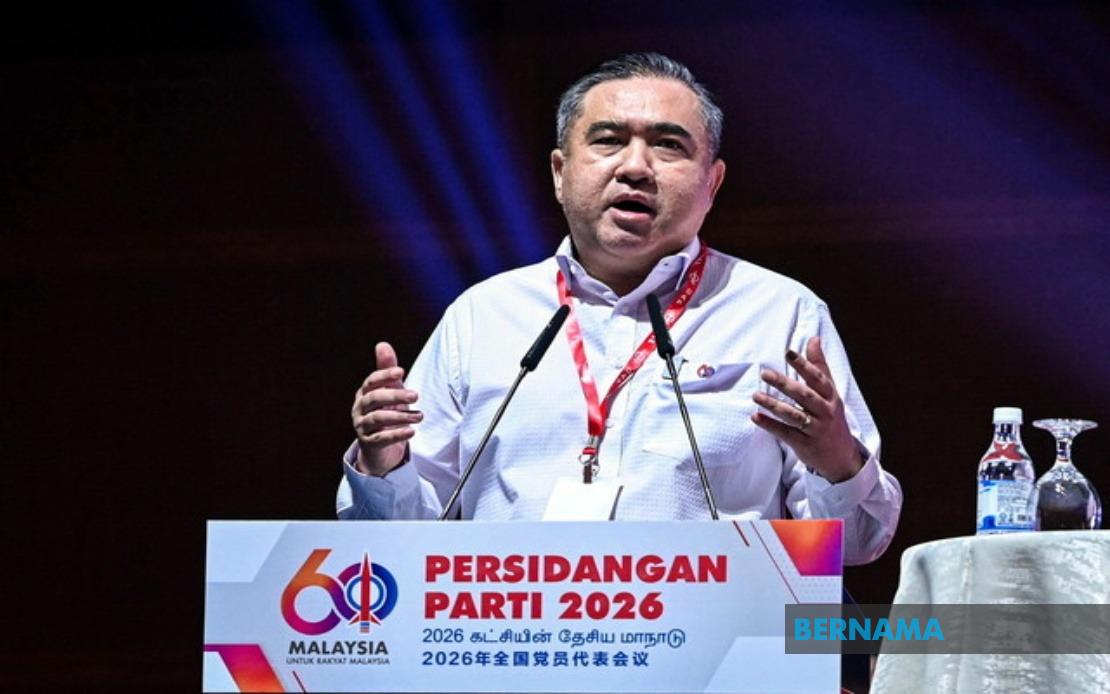
The Democratic Action Party has thrown its backing behind the government's plan to dismantle the Universities and University Colleges Act 1971, marking a significant alignment on an issue the opposition-turned-coalition partner has pursued for decades. Secretary-general Anthony Loke made the declaration at the party's 2026 National Conference in Putrajaya, underscoring DAP's commitment to advancing reform beyond simply maintaining ministerial portfolios within the ruling coalition.
Prime Minister Datuk Seri Anwar Ibrahim formally announced the repeal initiative at the PKR 2026 National Congress, framing it as a response to sustained pressure from student leaders and broader democratic considerations. The decision represents a culmination of multiple memoranda and representations submitted by campus activists advocating for systemic changes to a statute that has constrained student political expression and assembly since the early 1970s. Anwar indicated the Cabinet will deliberate on the proposal in the coming week, suggesting an accelerated timeline for one of Malaysia's most contentious legislative frameworks.
The AUKU has undergone seven revisions since its enactment in 1971, though each amendment has typically represented incremental loosening rather than fundamental restructuring. A pivotal 2012 modification permitted students to engage in political party activities outside campus boundaries, acknowledging the artificial nature of restrictions that prevented youth from participating in democratic processes. More recently, 2024 amendments further diluted the Act's authoritarian dimensions by transferring student disciplinary proceedings from vice-chancellors to dedicated Student Disciplinary Committees, and by granting student bodies explicit financial autonomy subject to existing regulations.
Loke's articulation of DAP's position carries particular weight because it signals the party recognises meaningful reform requires coalition consensus, even where the party holds specific portfolios. His reference to DAP's decades-long campaign against AUKU underscores the legislation's symbolic importance within progressive circles, where it represents state-imposed restrictions on youth civil liberties and democratic participation. The party framed support as consistent with its broader mission to contribute substantively to national transformation rather than serving merely as a junior partner in government.
However, Loke's remarks extend beyond the immediate AUKU question. He called on Anwar to sustain the reformist momentum by addressing what DAP identifies as a parallel structural challenge: ensuring equitable higher education access regardless of ethnic background. This represents a coded reference to affirmative action policies and admission structures that DAP and other opposition-minded constituencies have long criticised as perpetuating disadvantage. By linking the two initiatives, Loke positions AUKU repeal within a broader liberalising agenda that encompasses both civil freedoms and distributional equity in Malaysian universities.
The timing of this convergence merits consideration within Malaysia's political configuration. DAP's explicit public endorsement of a government initiative demonstrates the coalition's capacity to act on matters with cross-party consensus, despite the fundamental tensions between Pakatan Harapan and Barisan Nasional partners. Student activism, particularly campus-based organising around civil liberties, has historically mobilised younger voters and remains symbolically potent within urban constituencies where DAP commands particular strength. Supporting AUKU repeal allows the party to claim credit for delivering a longstanding campaign promise while strengthening its credentials within its urban middle-class base.
The legislative context surrounding AUKU reflects evolving international norms regarding student freedoms and institutional governance. Universities globally have progressively granted students greater autonomy in governance, financial management, and political participation, treating such freedoms as foundational to academic integrity and democratic citizenship formation. Malaysia's incremental amendments since 2012 represent a gradual reconciliation with these international benchmarks, though full repeal would constitute a more decisive break with the paternalistic regulatory model that characterised twentieth-century Commonwealth university systems.
Student Disciplinary Committee reforms introduced in 2024 already demonstrated the trajectory toward diminished administrative discretion by vice-chancellors, reducing potential for partisan or ideologically-motivated punishment. Granting financial independence to student bodies similarly reflects recognition that student organising requires material resources, and that artificial restrictions on fundraising simply drive such activities underground or into informal channels. These procedural changes suggest AUKU repeal, rather than representing abrupt rupture, would formalise trends already embedded within recent amendments.
The economic and social implications of AUKU repeal warrant attention from regional observers. Malaysia's higher education sector has faced talent outflows as students and academics migrate to jurisdictions perceived as offering greater intellectual and expressive freedom. Enhanced campus autonomy and reduced governmental capacity for reactive disciplinary intervention could improve the sector's international standing, particularly among research-focused institutions competing for regional prominence. Furthermore, strengthened student governance structures and political participation may improve institutional responsiveness to curriculum relevance and pedagogical quality, factors increasingly salient in Southeast Asian education policy discourse.
DAP's positioning on AUKU also reflects broader calculations regarding coalition cohesion. By publicly and enthusiastically backing an Anwar administration initiative, the party demonstrates loyalty within an inherently fragile multiparty arrangement. Simultaneously, by connecting AUKU repeal to wider education equity objectives, DAP maintains its distinctive programmatic identity and signals to supporters that coalition participation advances substantive reform rather than representing mere incumbency. This rhetorical framing proves critical for maintaining party discipline and voter engagement, particularly among youth and urban constituencies sensitive to questions of democratic principle and social inclusion.

